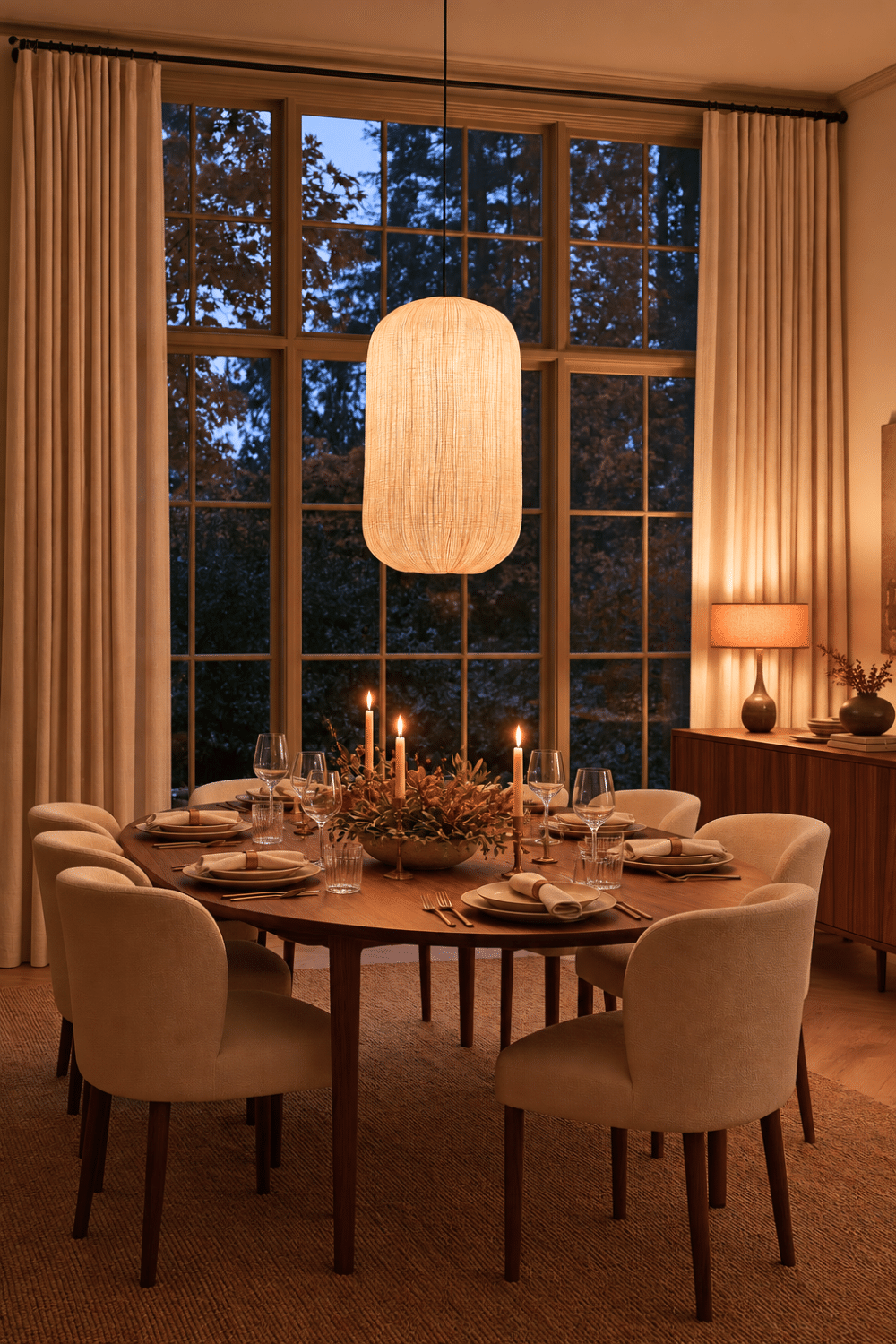
Why Some Dining Rooms Make You Lose Track of Time
Some dining rooms have a way of making dinner stretch a little longer than planned. In a cozy dining room, the plates may be nearly empty and the glasses half-finished, yet no one seems ready to get up. One conversation becomes another, someone remembers a story they have to tell, and eventually you glance at the clock and wonder how the evening slipped by so quickly.
Then there are rooms that create the opposite feeling. They may be beautifully decorated and perfectly finished, yet something about sitting there feels a little formal, exposed, or uncomfortable. Dinner ends, the plates are cleared, and everyone naturally begins moving somewhere else. It is easy to assume the difference comes down to style, but often it has much less to do with how the room looks than with how it makes people feel.
The spaces we want to linger in tend to send several subtle signals at once. The distance between people feels comfortable. The chairs make it easy to settle in. The light softens as the evening continues. Sound does not bounce harshly around the room, and there is enough visual calm for our attention to stay with the people sitting across from us. None of these details needs to call attention to itself, but together they can completely change the experience of being at the table.
Ahead, we will look at five design principles that can help create that lingering feeling through comfort, light, sound, proportion, and visual ease. And you do not need to redesign the entire room to get there. Sometimes one thoughtful adjustment is enough to turn “Should we clear the table?” into “Stay a little longer.”
Bring People Close Enough for Conversation
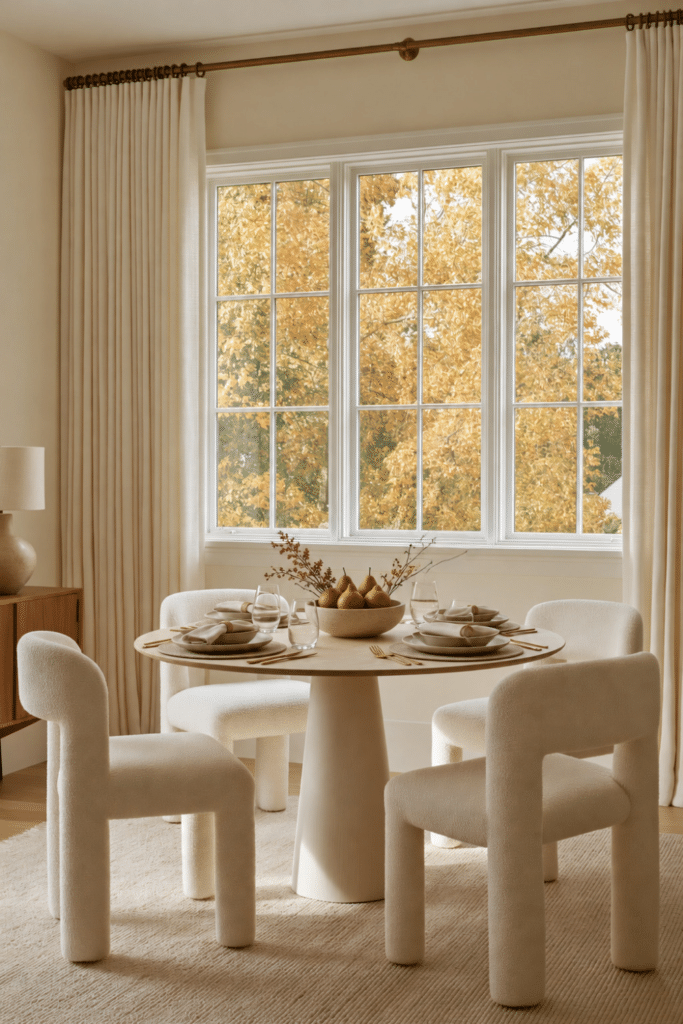
One of the easiest ways to make a dining room feel more connected is to pay attention to the distance between the people sitting around the table. A beautiful room can still feel surprisingly formal if the table is oversized, the chairs are spaced too far apart, or a small gathering is scattered across a surface meant for twice as many guests.
The right dining room layout makes conversation feel easier. People can speak naturally, hear one another without effort, and stay engaged without feeling separated by too much empty space. Round and oval tables encourage this naturally, but rectangular tables can feel just as intimate when the scale suits the way the room is actually used.
The goal is simple: enough room to move, close enough to connect.
- Choose a table size that works for the number of people who dine there most often.
- Keep enough space between chairs for comfort without creating unnecessary gaps.
- If four people use an eight-person table, gather the place settings toward one end rather than spreading everyone out.
- Consider round or oval tables when you want conversation to flow easily around the entire table.
- Leave comfortable circulation space without pushing the dining area so far apart that it begins to feel disconnected.
- Let the proportions of the room guide the furniture rather than assuming a larger table will always feel more impressive.
When the scale feels right, the room becomes easier to settle into. Conversation flows without effort, and the table begins to feel less like a formal arrangement of furniture and more like a place where people naturally want to stay.
Styling Note: Sit in every chair you regularly use and notice how far away the person across from you feels. If the room looks intimate from the doorway but feels distant once you sit down, the table scale or seating arrangement may be working against you.
Make the Chair Worth Staying In
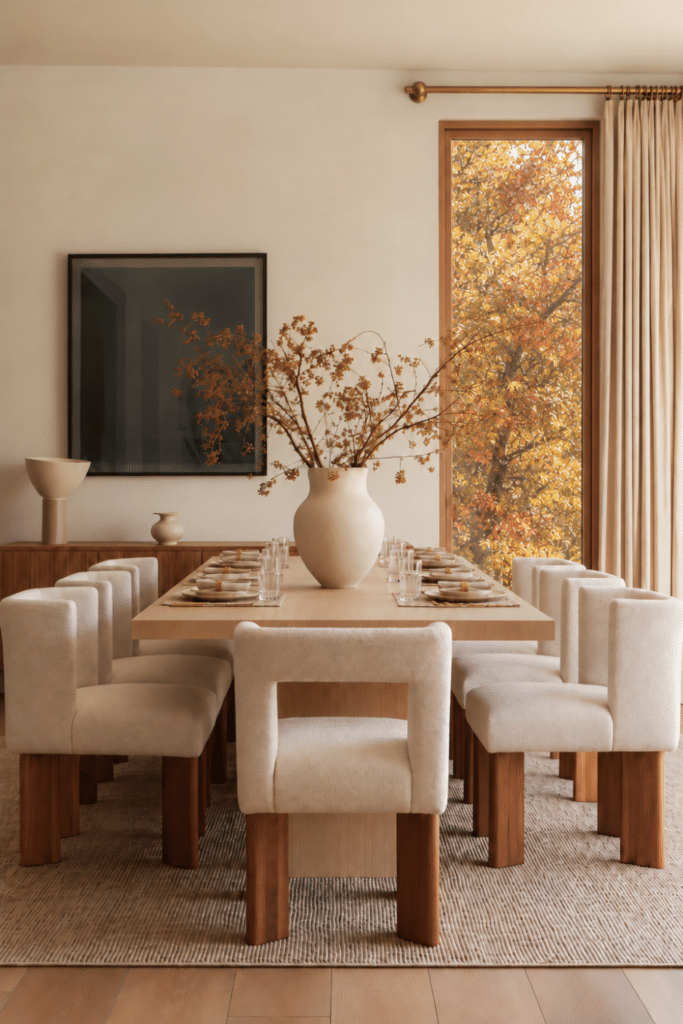
A beautiful dining chair can still shorten the evening if it stops feeling comfortable twenty minutes into dinner. Physical comfort quietly affects how long people want to remain at the table, which means the chair matters just as much as the lighting, styling, or centerpiece. A cozy dining room should feel comfortable after the first twenty minutes, not only when you first sit down.
The best comfortable dining chairs support the body without looking bulky or overly casual. A gently curved back, adequate seat depth, soft upholstery, or even a well-shaped woven seat can make a noticeable difference. The goal is not to turn the dining room into a lounge. It is to create enough support and freedom of movement that guests can settle in without constantly adjusting their posture.
Look for comfort that feels supportive, not oversized.
- Choose chairs with backs that support the body rather than forcing you to sit rigidly upright.
- Make sure the seat depth feels comfortable without cutting into the backs of the legs.
- Check that the seat height works naturally with the table and leaves enough room for knees underneath.
- Consider upholstered dining chairs or lightly padded seats for longer meals.
- Use armchairs where space allows, especially at the ends of a rectangular table.
- If you love bench seating, choose one with enough depth and back support to stay comfortable beyond a quick meal.
When the seating feels good, the entire room begins to send a quieter message: you do not have to rush. Guests can shift, lean back, and settle into the evening without thinking about the chair at all, which is exactly what good design should allow.
Styling Note: Try the one-hour test. Sit in your dining chair long enough to read, work, or enjoy a cup of tea. If you start shifting constantly after twenty minutes, your guests probably do too.
Lower the Light and Soften the Room
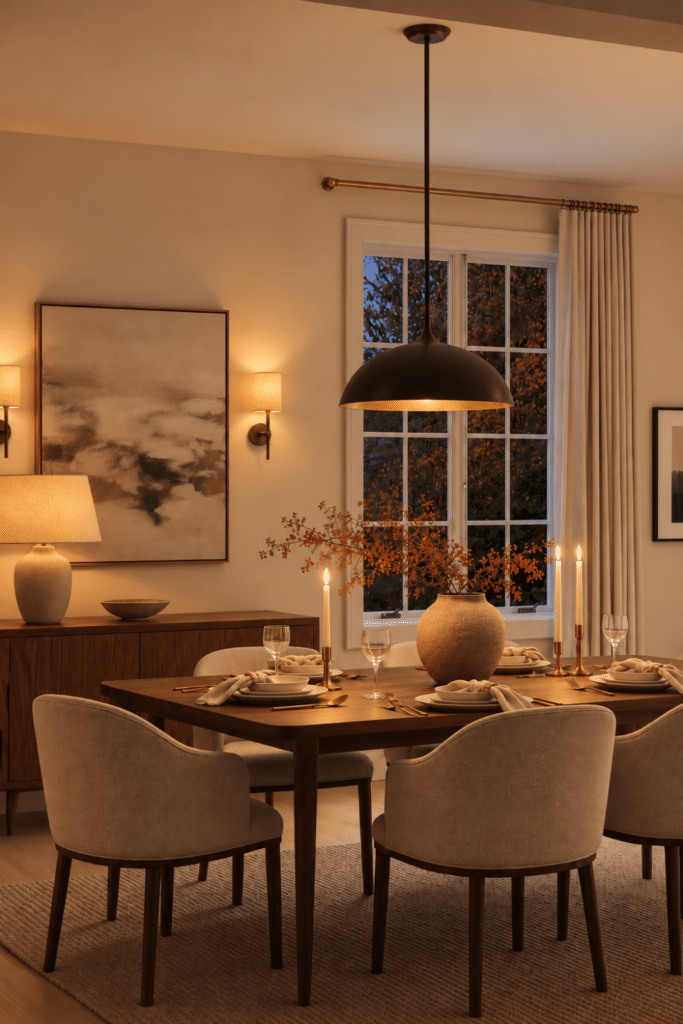
Lighting can change the entire emotional tone of a dining room before a single decorative detail is added. A room that feels bright and energetic during the day should be able to soften as evening settles in, creating a sense that the pace has shifted too. When the light becomes gentler, the table feels more intimate, and the rest of the room quietly fades into the background.
Good dining room lighting rarely comes from one bright fixture alone. A harsh overhead light can make even a beautifully designed room feel exposed, while layered lighting creates depth and warmth. A pendant or chandelier can anchor the table, shaded lamps and sconces can soften the perimeter, and candlelight adds a subtle glow that makes the room feel more relaxed without requiring more decor.
Light the gathering, not every inch of the room.
- Use a pendant or chandelier to visually anchor the dining table rather than lighting the entire room evenly.
- Add a dimmer whenever possible so the brightness can shift from daytime tasks to evening meals.
- Place a shaded lamp on a sideboard or console to create a softer pool of light beyond the table.
- Use wall sconces to add warmth at eye level without overwhelming the room.
- Introduce candlelight for a gentle layer of movement and glow.
- Let the edges of the room remain slightly dimmer so attention naturally stays near the table.
Layered lighting helps create the feeling of an intimate dining space because it gives the room somewhere to settle. As the corners soften and the light gathers around the table, the dining room begins to feel separate from the busyness of the day.
Styling Note: After sunset, turn off the brightest overhead lighting and use only the layers you would keep on during dinner. If the room immediately feels more inviting, you may not need to add another decorative object at all.
Soften the Sound, Not Just the Look
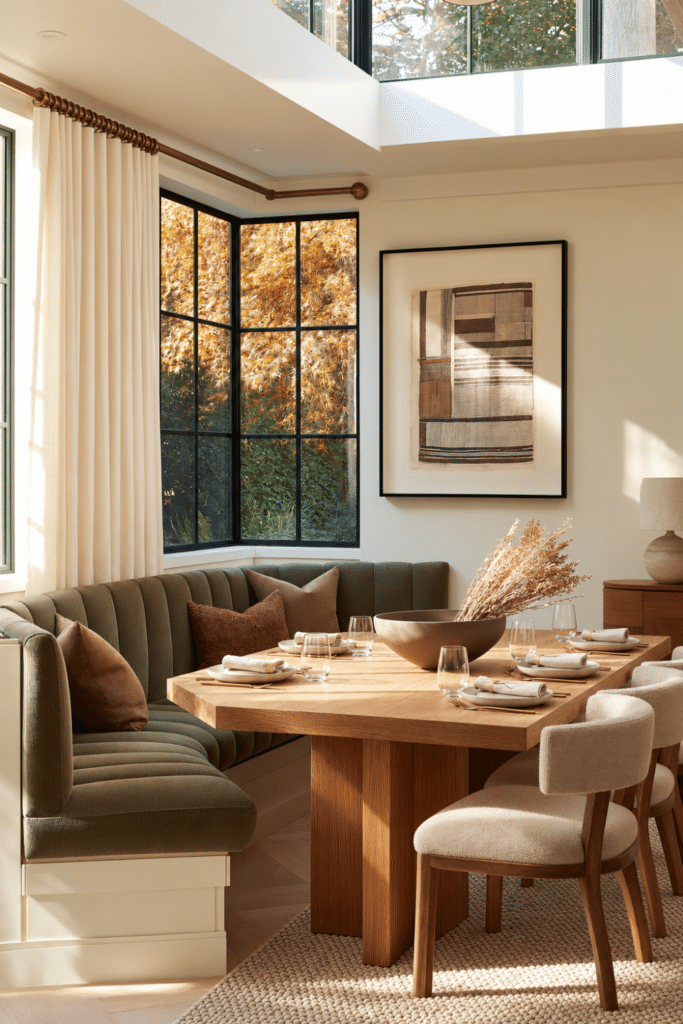
A dining room can look beautifully layered and still feel unexpectedly harsh once people begin talking. Hard floors, large windows, bare walls, glassware, ceramics, and metal fixtures all reflect sound, which can make conversation feel louder and more tiring than the room itself suggests.
Dining room acoustics improve when soft materials interrupt some of that reflection. A rug beneath the table, full-length curtains, upholstered dining chairs, or even fabric shades can help absorb sound without changing the character of the room. The goal is not to make the space silent. It is to soften the sharpness enough that voices, laughter, and the clink of dishes feel warmer and easier to live with.
Add softness where sound has nowhere to land.
- Use an appropriately sized dining room rug to soften footsteps and chair movement.
- Hang full-length curtains around large windows to reduce reflected sound.
- Choose upholstered dining chairs or a padded banquette when the room contains many hard finishes.
- Add fabric shades or woven window treatments for another subtle acoustic layer.
- Use artwork, framed textiles, or other substantial wall pieces to break up large bare surfaces.
- Bring in linen through a tablecloth, placemats or napkins when you want additional softness without adding more decor.
When a room sounds softer, it often feels more private and more comfortable too. Conversation becomes easier to follow, laughter feels less sharp, and the small sounds of dinner fade into the background instead of competing for attention.
Styling Note: Clap once in the empty dining room. If the sound feels sharp or noticeably echoes, add one larger soft surface before reaching for several smaller decorative pieces.
Give the Eye Somewhere Calm to Land
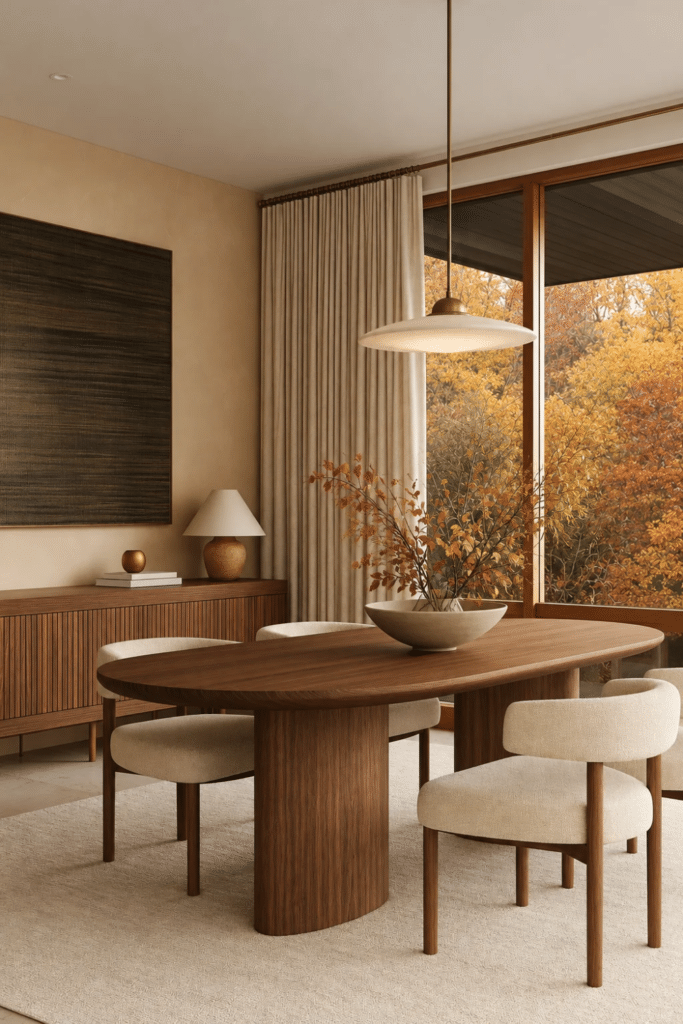
Even a beautiful dining room can feel restless when too many elements are competing for attention at once. A pendant, artwork, sideboard, centerpiece, window view, pottery, and rich wood grain can all add character, but they do not all need to be the star. What makes a cozy dining room memorable is often not how much there is to notice, but how comfortably the eye can move through the space.
Visual richness comes from layering materials, texture, and meaningful details. Visual competition happens when every surface is styled, every corner has a focal point, and nothing is allowed to recede. Leaving some areas quieter gives the stronger design moments more presence and helps the room feel easier to settle into.
One or two moments lead. Everything else supports.
- Keep the dining table free of unnecessary objects between gatherings.
- Style a sideboard with a few intentional pieces instead of filling the entire surface.
- Repeat materials and colors throughout the room to create visual continuity.
- Leave negative space around artwork, furniture, and decorative objects.
- Use natural texture and beautiful materials instead of adding more accessories.
- Let a garden view, autumn foliage, or changing evening light become part of the room when possible.
When the eye has somewhere to rest, the entire dining room atmosphere begins to slow down. Instead of scanning from one object to the next, attention naturally returns to the food, the conversation, and the people sharing the table.
Styling Note: Sit at the table instead of evaluating the room from the doorway. If several areas immediately compete for your attention, quiet one or two of them and notice how much calmer the room feels.
Design for the Part of Dinner That Happens After Dinner
A dining room can look beautiful before anyone sits down, but the real test comes later, when dinner is finished and no one seems eager to leave. That feeling rarely comes from one perfect decorative choice. It grows from the way the room supports closeness, physical comfort, softer light, quieter sound, and enough visual calm to let everyone simply settle in.
You do not need to redesign the entire room to create more of that feeling. Instead, notice what interrupts your comfort now. Maybe the chairs encourage you to get up too quickly. Perhaps the room feels overly bright after sunset, conversation echoes against hard surfaces, or the table feels larger than the gathering around it. Choose one thing and adjust that first.
The most inviting cozy dining room is not necessarily the one with the most beautiful furniture. It is the one that quietly makes staying feel easier.
Because ultimately, the goal is not simply to create a room where people want to eat. It is to create one they are in no hurry to leave.

Save this post to Pinterest for the next time you want to create a dining room that encourages slower meals, easier conversation, and a little more time together.
Explore more Design Therapy on Divine Decor Finds for thoughtful ways to create a home that supports how you want to feel and live every day. 🌿
Leave a Reply