Shape May Be the Missing Layer
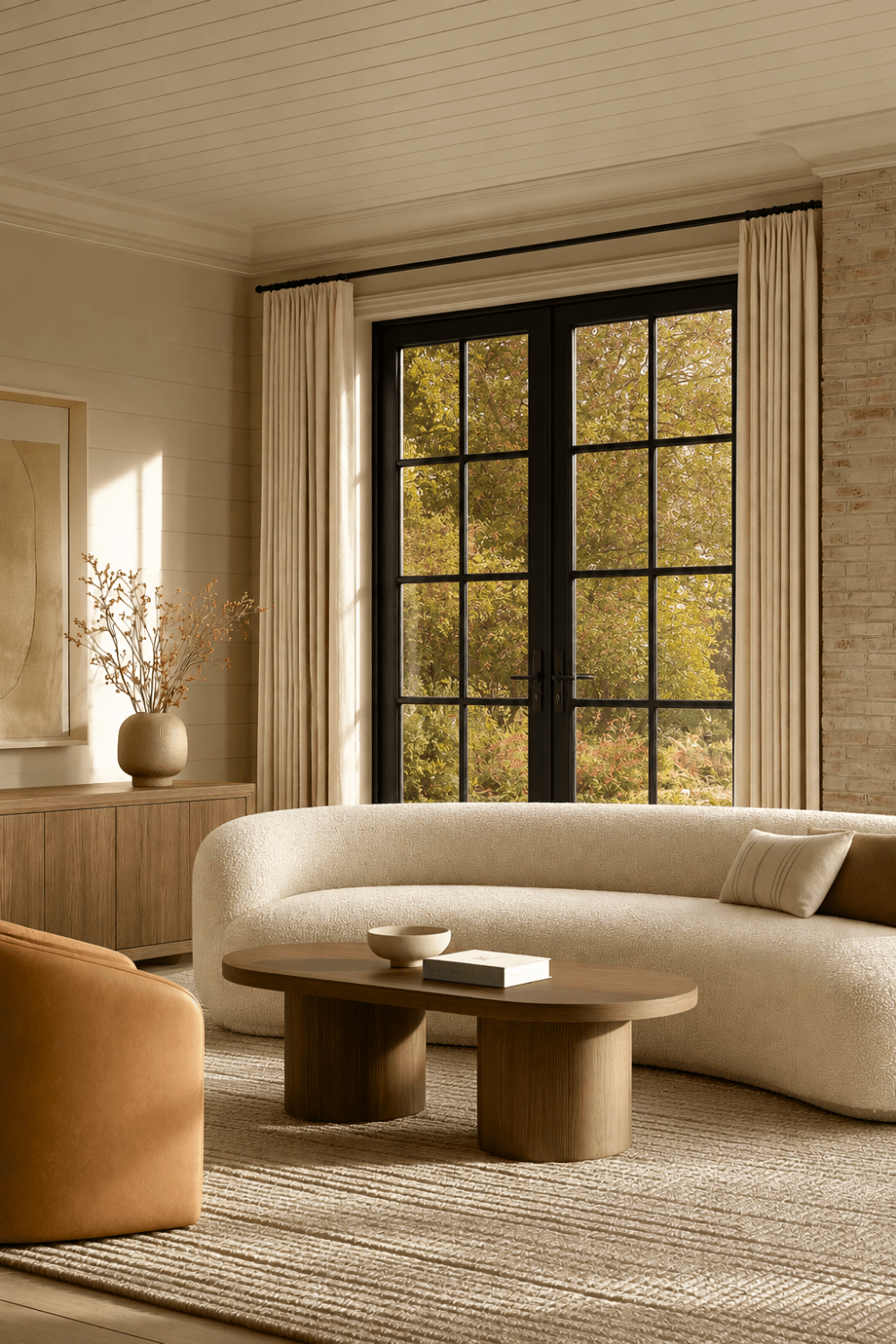
Have you ever looked around a room you have carefully decorated and wondered why it still does not feel as inviting as you imagined? The colors work, the furniture is beautiful, and you may have already added the pillows, lighting, artwork, and little details that were supposed to make everything come together. Yet somehow, the room still feels a little formal or harder than you want it to. Sometimes the missing piece is not another layer of decor at all. It may be something as simple as introducing curved furniture.
We often try to change the feeling of a room by changing its color, adding texture, or bringing home one more decorative piece. Those details certainly matter, but they are not the only things shaping how we experience a space. The outline of the pieces around us can influence the atmosphere just as quietly, creating a sense of ease or structure before we have consciously noticed why.
That is why I love looking at a room through this lens. Instead of immediately asking, What should I add?, we can ask a much more interesting question: What kind of shape would change the way this room feels?
The answer does not have to involve replacing everything you own. In fact, one thoughtful change may be enough to shift the entire room. A single piece placed in the right spot can interrupt what feels too rigid, create a gentler sense of movement, and make the space feel more welcoming without adding another decorative layer.
Sometimes a room is not asking for more. It is simply asking for a different shape.
Notice the Hard Lines Already in the Room
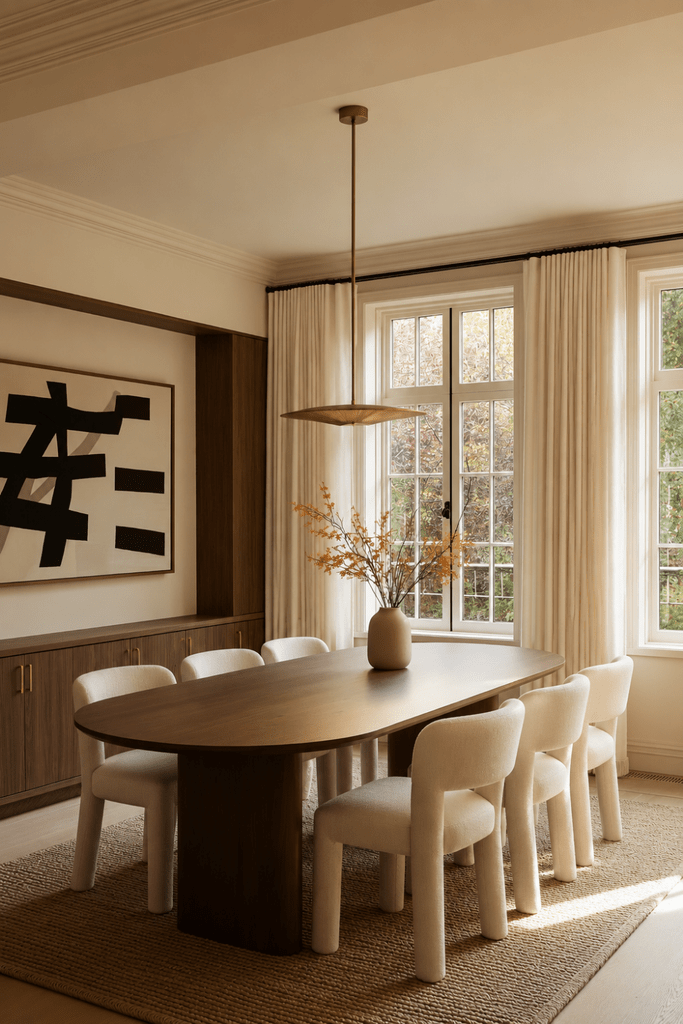
A room can feel beautifully styled and still carry a certain stiffness that is hard to explain at first. Often, the reason is already built into the space. Walls, windows, doorframes, cabinetry, shelving, rugs, artwork, and many of the furniture pieces we naturally choose are made up of straight horizontal and vertical lines. None of those elements are a problem on their own. The feeling changes when nearly everything in the room begins repeating the same geometry.
When those harder lines dominate, a space can start to feel more structured, formal, or visually still than you intended. This is where contrast becomes important. Curved furniture can feel especially effective because its silhouette interrupts the geometry that already surrounds it, giving the eye something different to follow and creating greater visual balance without requiring additional decor.
Before deciding what the room needs, take a moment to notice the shapes that are already there:
- Start with your largest furniture pieces and notice their overall silhouettes.
- Look for how many sofas, tables, consoles, rugs, and pieces of artwork are rectangular.
- Pay attention to the shapes of your lighting and smaller seating pieces too.
- Consider the architecture of the room before deciding what kind of furniture to introduce.
- Notice whether one particular corner or grouping feels especially rigid or boxed in.
You may discover that nothing is actually “wrong” with the room. The furniture silhouettes may simply be asking for a little more contrast. Once you begin noticing shape as its own design layer, it becomes much easier to understand why certain rooms feel effortless while others feel slightly more formal than you want them to.
Styling Note: Stand in the doorway and, for a moment, ignore the colors and finishes completely. Look only at shape. If nearly everything you see is rectangular, that is a useful clue about what the room may be missing.
Let One Curved Piece Change the Conversation
Once you begin noticing how many straight lines already exist in a room, it can be tempting to swing in the opposite direction and start adding curves everywhere. But the most beautiful rooms rarely need that much correction. Curves often have more impact when they are selective, giving one piece enough presence to change the atmosphere without making the room feel overly styled.
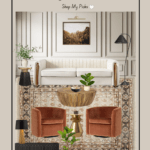
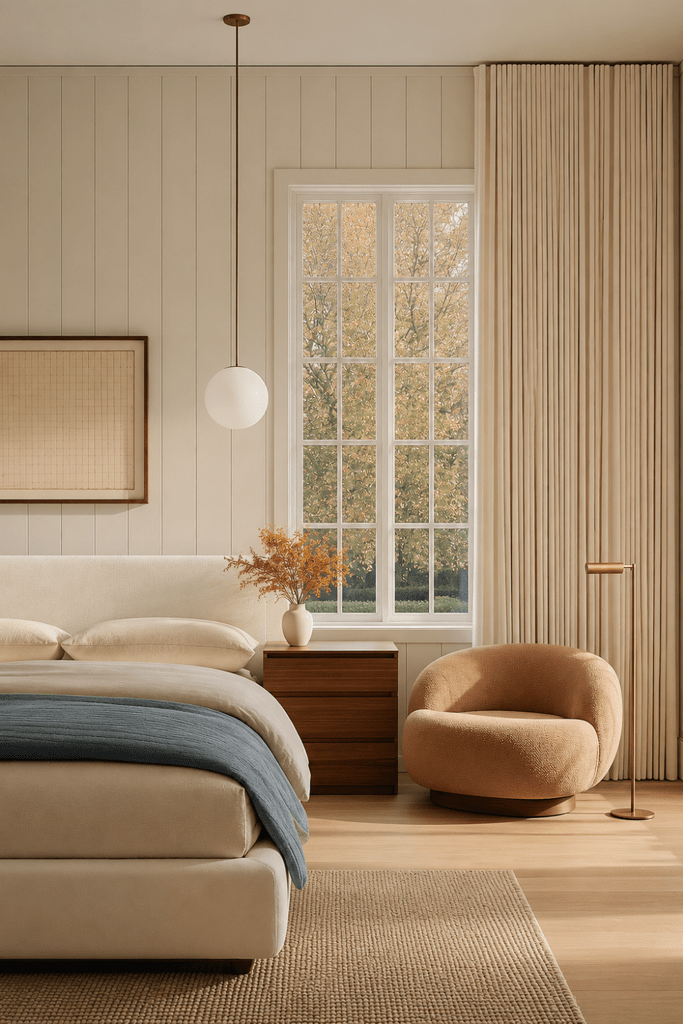
A single piece of curved furniture can create that shift when its scale and proportion are strong enough to register. In a living room filled with a rectangular sofa and linear built-ins, an oval coffee table may be all that is needed. A bedroom with mostly straight-edged pieces might feel softer with one curved accent chair or a gently shaped nightstand. In a dining room, a circular table can introduce a sense of ease against more structured architecture.
When choosing one softer silhouette, let the room tell you where it belongs:
- Look for the area where straight lines feel most dominant.
- Choose one piece with enough visual weight to create meaningful contrast.
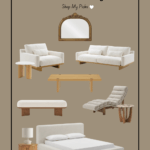
- Consider a curved sofa, accent chair, coffee table, bench, nightstand, or mirror rather than several smaller objects.
- Pay attention to scale and proportion so the new piece feels connected to the furniture already there.
- Let that one shape stand out instead of immediately repeating it throughout the room.
This is where restraint becomes part of the design. You do not need an entire collection of rounded furniture or several pieces of sculptural furniture competing for attention. One thoughtful choice can soften the room while allowing everything else to remain familiar.
Styling Note: If you are adding only one softer silhouette, make it substantial enough to matter. A well-scaled chair or coffee table will influence the feeling of the room far more than several small decorative pieces.
Use Softer Shapes Where You Want People to Settle
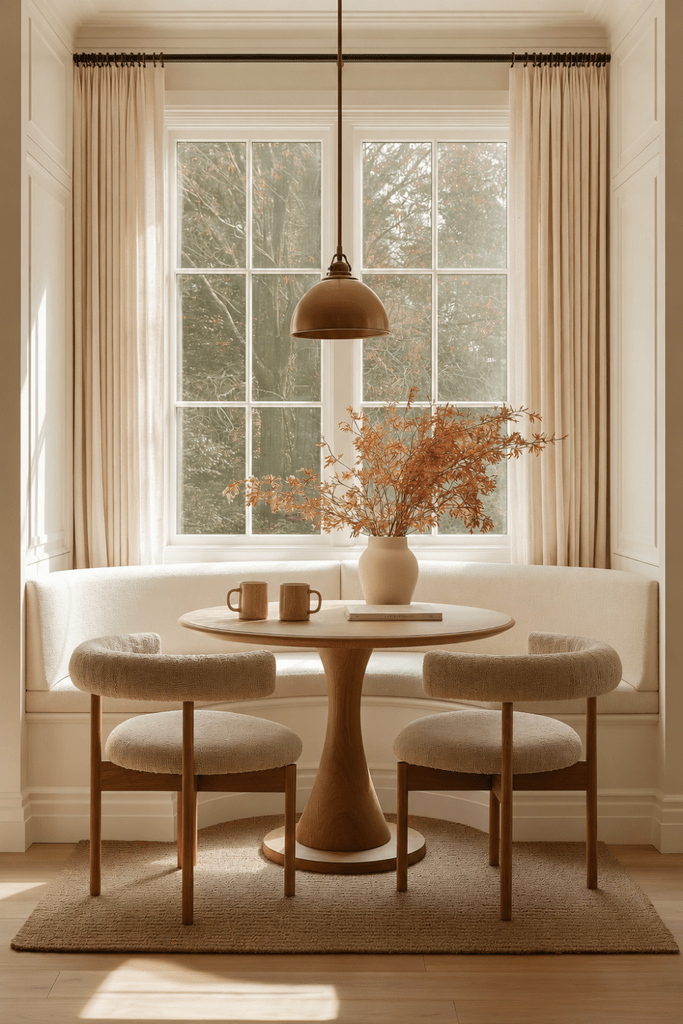
Some parts of the home are meant to move you through them. Others are meant to make you stay. A reading corner, breakfast nook, bedroom, or conversation area should feel different from a hallway or entryway because the purpose is different. The furniture layout can quietly reinforce that purpose, helping a space feel more suited to lingering, resting, or connecting with someone else.
This is where organic shapes in interior design become especially meaningful. A generously shaped chair can make a reading corner feel more enveloping, while a round breakfast table can make a small dining area feel more intimate and conversational. In a bedroom, a gently shaped headboard can soften the wall behind the bed, while seating arranged toward one another can encourage interaction rather than directing every seat toward a television.
Before choosing a shape, think about what you want people to do in that part of the room:
- Use generous seating with softer silhouettes in places meant for reading or relaxing.
- Consider a round table in a breakfast nook where you want meals to feel casual and connected.
- Arrange chairs so they face one another when conversation is the priority.
- Use furniture with rounded edges in areas where you want movement to feel easy and unhurried.
- Pay attention to visual flow so the placement of each piece supports the way the space is actually used.
The most successful organic forms do more than make a room look beautiful. They help communicate how the space is meant to be experienced. A chair can suggest that this is a place to stay awhile. A table can invite people to gather closer. A furniture arrangement can make conversation feel like the natural thing to do.
That is what makes this approach feel so personal. You are not simply decorating around a style. You are shaping the room around the moments you want to have there.
Styling Note: Choose furniture according to the behavior you want to encourage. The best shape is not simply the prettiest one. It is the one that helps the space live the way you want it to.
Balance Curves With Straight Lines
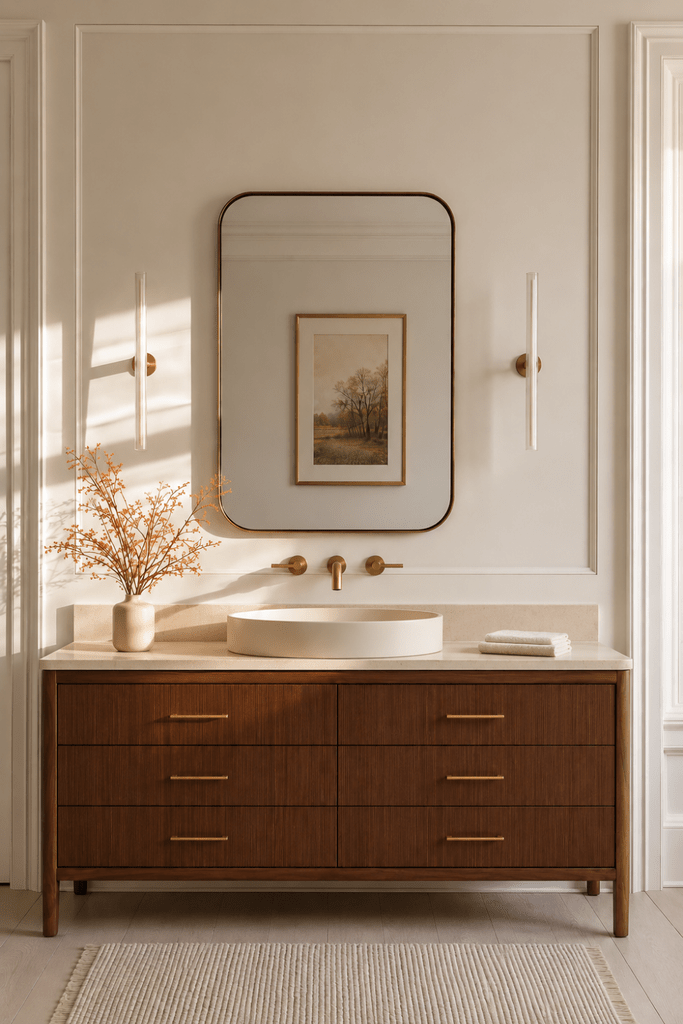
Once you begin noticing the effect of softer silhouettes, it is easy to want more of them. But a room rarely feels sophisticated because every piece speaks the same visual language. The real magic comes from contrast. Softness feels softer when it has structure around it, and straight lines feel less rigid when they are balanced by something with a little more movement.
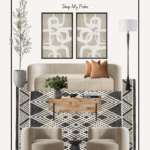
This is why curved furniture often works best as part of a mixed composition rather than as the dominant shape throughout the entire room. A curved sofa can feel more striking beside a rectangular coffee table. A rounded chair gains definition next to a linear console. An oval dining table can feel elegant when paired with simpler, more architectural chairs. These combinations create visual rhythm, allowing the eye to move between structured and fluid forms instead of encountering the same silhouette again and again.
To create softness without losing structure:
- Pair one curved or rounded piece with furniture that has cleaner, straighter lines.
- Let organic forms stand out instead of repeating them across every major piece.
- Use sculptural furniture selectively so each piece has room to feel special.
- Pay attention to furniture silhouettes across the entire room, not just one grouping.
- Aim for visual balance rather than trying to make every shape match.
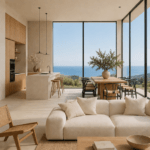
This balance feels especially natural in Organic Modern interiors, where nature-inspired forms often sit beside restrained architecture, tailored upholstery, and simple wood furniture. The room feels warm without becoming overly casual, and expressive without looking themed.
The goal is not to remove structure. It is to soften it just enough that the room feels more relaxed and visually alive.
Styling Note: When you introduce a rounded piece, resist the urge to repeat that shape everywhere else. Often, the contrast between one soft silhouette and several clean lines is exactly what makes the room feel thoughtful and refined.
Let Shape Improve the Way the Room Flows
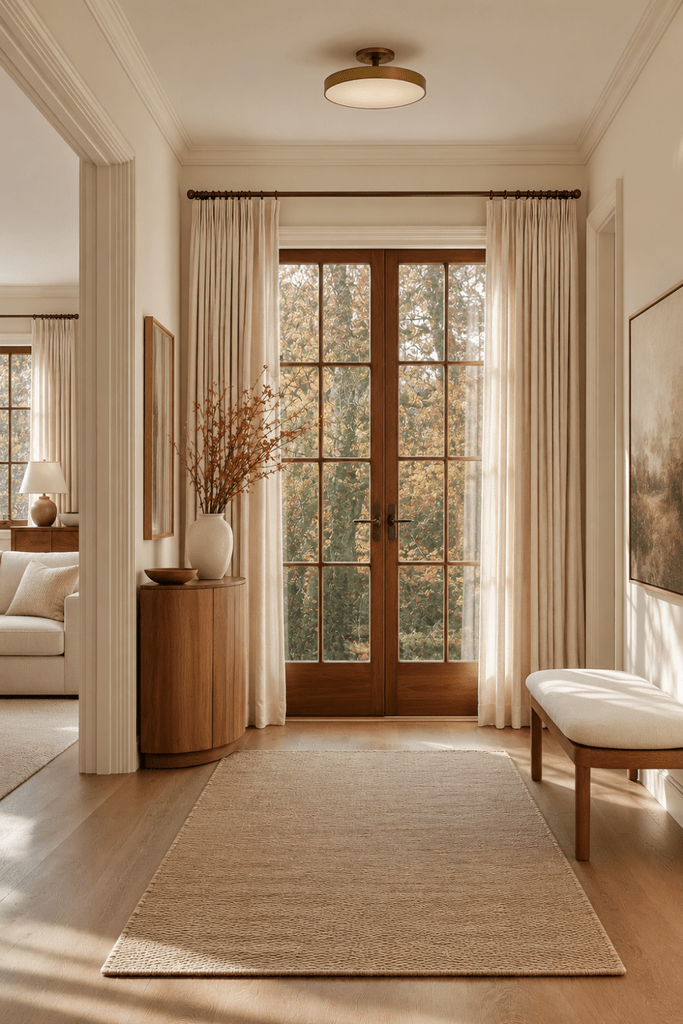
Sometimes a room feels awkward not because anything is technically misplaced, but because moving through it requires a little too much effort. You sidestep the corner of a coffee table, squeeze between a chair and the wall, or instinctively change your path around a bulky piece. Over time, those small interruptions can make a space feel less relaxed than it looks.
This is where furniture shape can support better visual flow. Rounded edges and oval forms can soften the places where circulation feels tight, especially in small living rooms, narrow spaces, entryways, and open-concept rooms with more than one traffic path. An oval coffee table can make it easier to move around a seating area, while a round dining table may feel more natural in a compact or square room. In a transitional space, a softly shaped bench or console can feel less intrusive than a piece with sharper corners.
When evaluating the flow of a room, consider how the furniture affects the way you actually move through it:
- Walk the main paths through the room and notice where you naturally slow down or change direction.
- Consider an oval or round table where sharp corners interrupt circulation.
- Use pieces with rounded edges in tighter areas where every inch of clearance matters.
- Pay attention to scale and proportion so the furniture does not overwhelm the available space.
- Make sure there is enough clearance around each piece before relying on shape alone to solve the layout.
Organic shapes in interior design can make a composition feel more fluid, but they cannot compensate for furniture that is simply too large for the room. Good furniture layout still begins with proper dimensions and comfortable clearances. Shape becomes most effective when it works with those practical decisions rather than replacing them.
A room feels more welcoming when living in it feels easy. When you can walk, sit, gather, and move through the space without constantly negotiating around the furniture, the entire room begins to feel more natural and settled.
Styling Note: Walk the route you take most often through the room. If you are constantly navigating around the same sharp corner or bulky piece, shape may be part of the problem.
A Softer Room Does Not Need More Stuff
A room does not always become more inviting because you added another accent pillow, decorative object, color, or seasonal layer. Sometimes the most meaningful change comes from noticing how the shapes already within the space are working together.
Curved furniture can be one simple way to create that shift. Notice the geometry that dominates the room, introduce one softer form where you want more comfort or connection, balance it with structure, and pay attention to how naturally you can move around it.
When a room feels slightly off, the answer does not always have to be more. One thoughtful change may be enough to make the furniture you already love feel completely different.
A welcoming home is often created through relationships between pieces. When shape, structure, comfort, and movement begin working together, the room can feel softer and easier to settle into, not because you added more, but because what was already there began to relate differently.
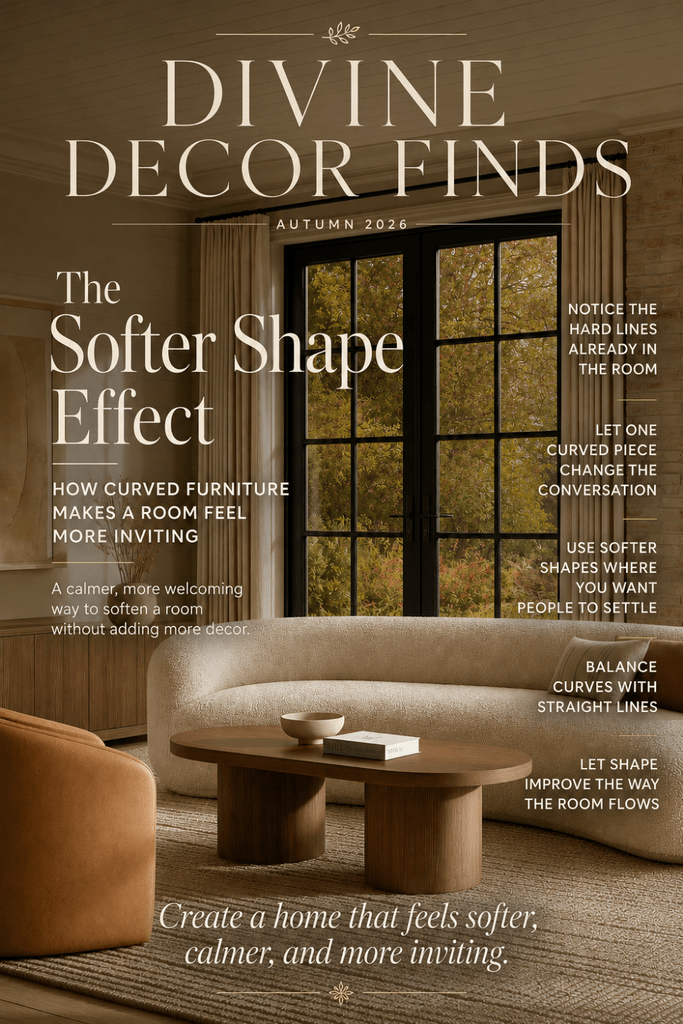
Save this post to Pinterest for the next time a room feels like it needs something, but you are not quite sure what. 🤍
Explore more Design Therapy ideas on Divine Decor Finds for thoughtful ways to create a home that feels as good as it looks. 🌿