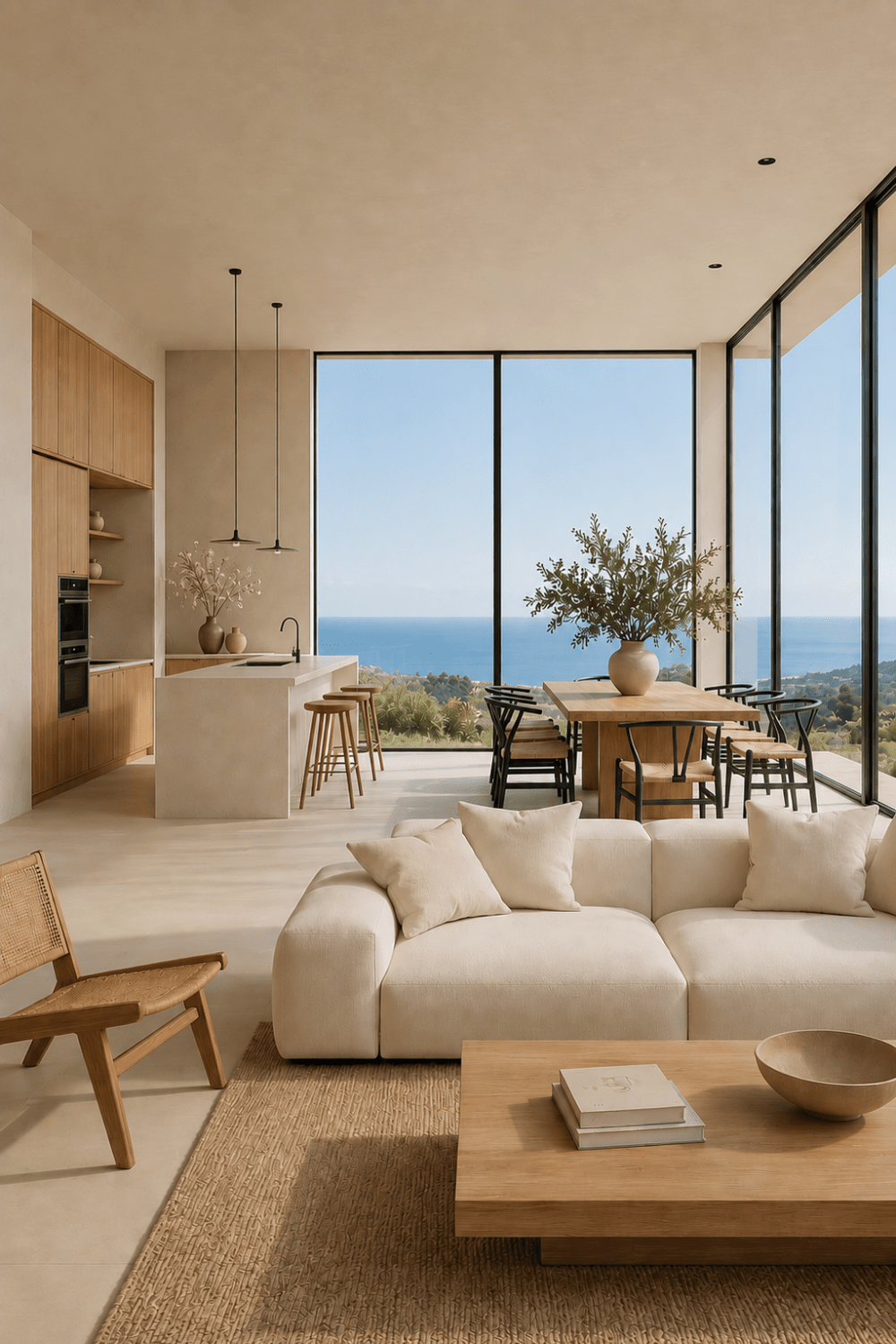
Why Some Rooms Feel Easier to Be In
Have you ever walked into a room and felt yourself exhale before you even had the chance to look around? The space wasn’t necessarily larger, more expensive, or perfectly decorated. It simply felt right. That quiet sense of ease is often created by visual breathing room, the intentional space that allows a room to feel composed rather than crowded.
Some homes seem to welcome you the moment you step inside. Your eyes move effortlessly from one beautiful detail to the next, and nothing competes for your attention. Other spaces can feel strangely overwhelming, even when they’re clean, stylish, and filled with beautiful things. You may not be able to explain why, but your mind is working a little harder the entire time you’re in the room.
One of the most overlooked principles of great interior design isn’t another piece of furniture or the latest decorating trend. It’s knowing when to leave space untouched. The areas we choose not to fill can be just as important as the ones we carefully style. They give our homes a sense of balance, allowing every beautiful object, architectural detail, and meaningful piece to stand out instead of getting lost in the visual noise.
In this article, I’ll show you why this simple design principle has such a powerful effect on the way a home feels, and how you can begin creating it in every room without sacrificing warmth, personality, or the pieces that make your house feel like home. By the end, you’ll start seeing your spaces through an entirely new lens, and you may discover that creating a more peaceful home isn’t about adding something new at all. Sometimes, it’s about giving what’s already there a little more room to breathe.
What Visual Breathing Room Really Means
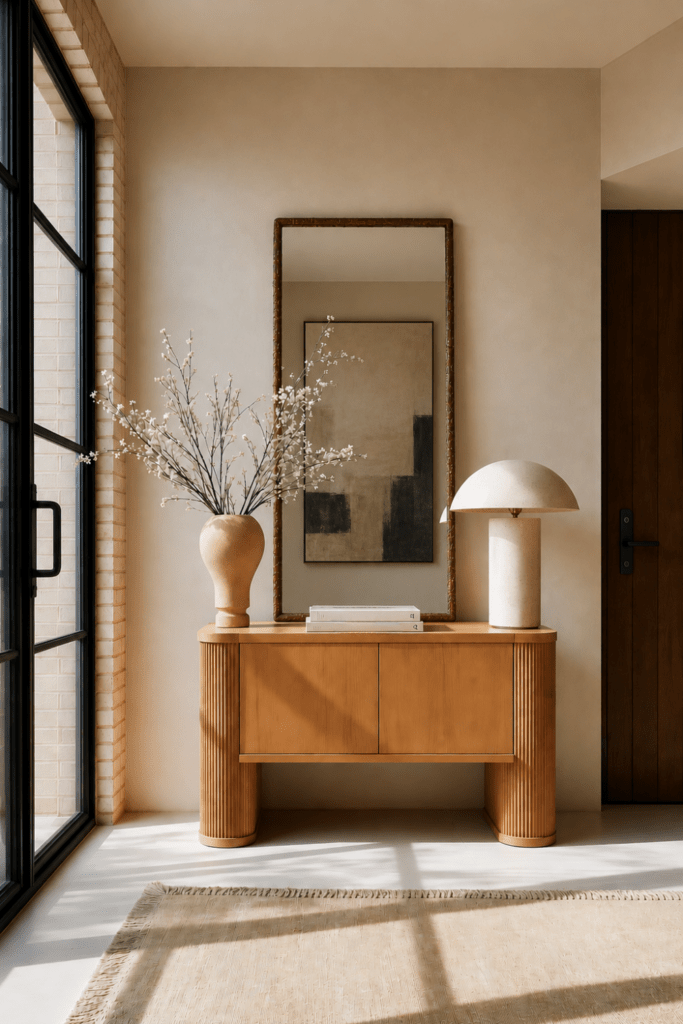
Some of the most beautiful rooms don’t ask for your attention. They quietly invite it. Nothing feels crowded or overwhelming, yet the space doesn’t feel empty either. Every piece seems to belong, and your eyes move effortlessly from one beautiful detail to the next. That’s the quiet power of visual breathing room.
At its core, this design principle is the intentional openness around furniture, artwork, decor, and architectural details. It’s not simply unused space or an unfinished room. It’s a deliberate choice that allows every element to contribute to the overall composition. Professional designers often refer to this as negative space in interior design, the areas that support the objects around them rather than compete for attention. Empty space feels accidental, as though something is missing. Negative space feels purposeful because it gives each piece room to breathe, creating a more harmonious and balanced room design.
To create more visual breathing room in your home:
- Leave part of a tabletop, shelf, or console intentionally uncovered instead of filling every available inch.
- Group decorative objects together rather than scattering small accessories across a surface.
- Choose one or two well-scaled statement pieces instead of several smaller items competing for attention.
- Give artwork enough surrounding wall space so it naturally becomes the focal point.
- Step back from the room and look for opportunities to create a visual pause, allowing your eyes to rest before moving to the next beautiful detail.
This approach isn’t about owning less or removing everything you love. It’s about thoughtful home styling that gives meaningful pieces the attention they deserve. Just as a conversation benefits from moments of silence, a beautifully designed room feels more inviting when every object has space to be appreciated.
Styling Note: The next time you style a shelf or console table, stop before every inch is filled. A little intentional openness often makes your favorite pieces feel even more beautiful.
Why Your Eyes Crave Space
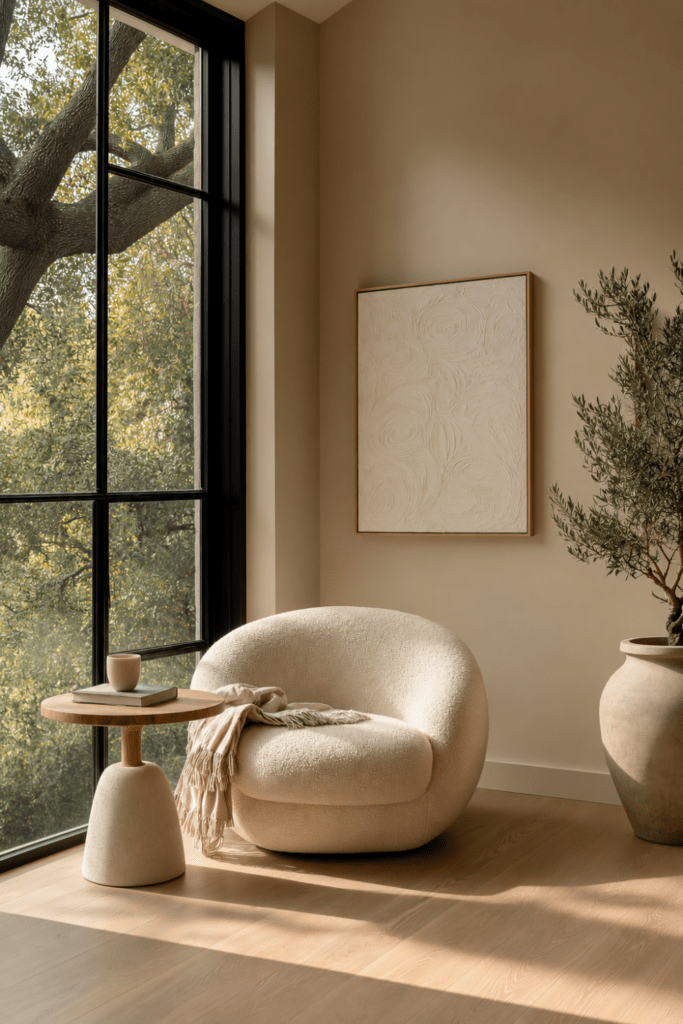
Have you ever walked into a room and immediately felt at ease without knowing why? Often, it’s not because of the color palette or the furniture. It’s because your eyes aren’t working overtime. Even when we’re not consciously studying a space, our eyes are constantly scanning our surroundings, taking in shapes, textures, colors, patterns, and objects. When everything competes for attention, our brains have more visual information to process. That’s where design psychology begins to influence how a room feels.
Think of your attention like a conversation. If several people are talking at once, it becomes difficult to focus on any one voice. A room can create a similar experience. Crowded surfaces, tightly arranged furniture, bold patterns, and an abundance of decorative accessories all contribute to visual clutter, giving your eyes more decisions to make. While interior design can’t eliminate every source of stress, reducing visual noise can support a calmer environment by removing unnecessary distractions. Open areas become a natural resting place for the eyes, helping establish a clear visual hierarchy so your attention knows exactly where to land.
To create a room that feels easier for your eyes to process:
- Give your main focal point enough surrounding space so it naturally draws attention without competing with nearby decor.
- Leave open areas between furniture groupings instead of filling every corner with decorative accents.
- Limit the number of statement pieces in a single view, allowing each one to stand on its own.
- Edit surfaces that feel visually busy by removing a few smaller accessories rather than adding more.
- View your home as a series of moments, alternating beautiful focal points with quieter spaces that give your eyes a chance to rest.
This is one reason luxury hotels, art galleries, museums, and thoughtfully designed boutiques often feel so calming. Paintings aren’t displayed edge-to-edge, and sculptures aren’t crowded together. The surrounding space becomes part of the experience, quietly directing your attention toward what matters most. The same principle applies at home. Whether you’re styling a bookshelf, arranging a living room, or decorating a small apartment, separation allows each element to feel more intentional. A room doesn’t have to entertain your eyes at every moment. Some parts of it can simply allow them to rest.
Styling Note: The next time you’re styling a room, imagine you’re curating a small gallery rather than filling empty space. The openness around a favorite piece is often what makes it feel worthy of noticing.
Every Beautiful Room Has a Rhythm
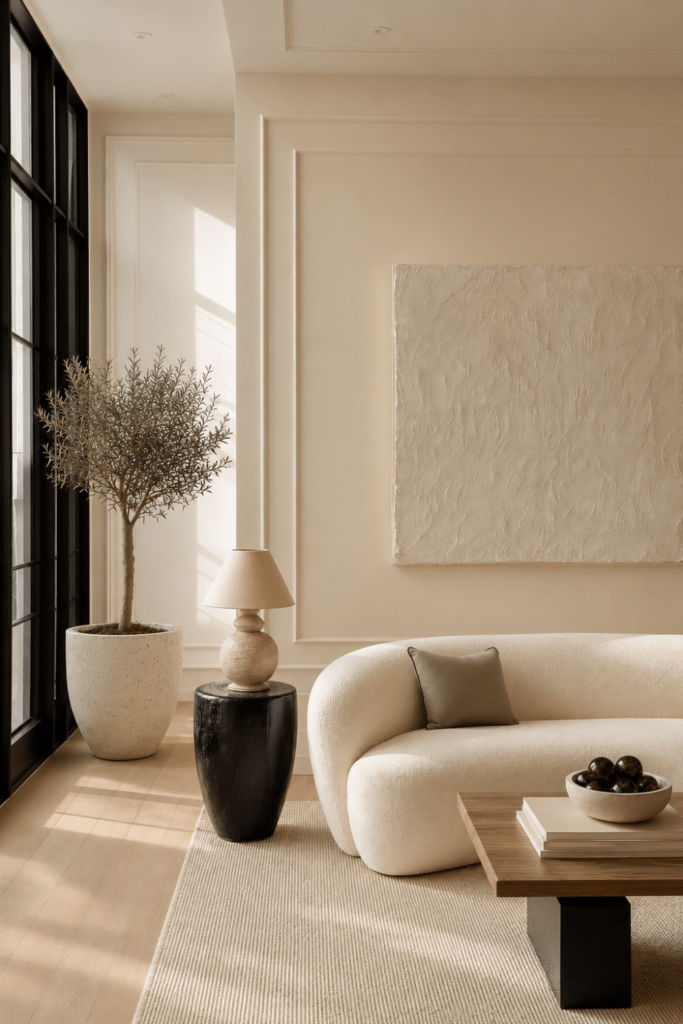
Have you ever noticed how your favorite song isn’t made up of constant sound? It moves between moments of energy and moments of quiet. The notes create interest, but the pauses give those notes meaning. Without silence, music becomes noise. Beautiful interiors work much the same way. They rely on visual rhythm, a balance between areas that capture your attention and areas that allow your eyes to rest.
A thoughtfully designed room isn’t uniformly styled from corner to corner. Instead, it creates a gentle back-and-forth between moments of richness and moments of restraint. A layered console table may be followed by an open stretch of wall. A cozy seating area filled with soft textures can feel even more inviting when it’s next to an uncluttered walkway. A sculptural pendant light naturally stands out when the dining table beneath it is kept simple. Designers often think of this as compression and release. One moment draws your attention, while the next gives your eyes a visual pause before moving through the space again. The result is a greater sense of visual harmony.
To create more visual rhythm in your home:
- Choose one primary focal point in each room and allow surrounding pieces to play a supporting role.
- Alternate richly styled areas with quieter spaces that give your eyes a chance to rest.
- Repeat materials such as warm wood, natural stone, or linen to create a sense of continuity throughout the room.
- Carry one metal finish consistently across lighting, hardware, or decor for a more cohesive look.
- Let a restrained color palette and recurring organic shapes create interest instead of relying on additional accessories.
One of the easiest ways to understand this principle is to think about competition versus hierarchy. Competition happens when several beautiful objects all demand your attention at once. A bold light fixture, oversized artwork, colorful decor, and heavily styled shelves can each be stunning on their own, but together they compete for the same moment. Visual hierarchy creates a different experience. One feature naturally leads, while the others quietly support it. Strong focal points in interior design help organize a room, giving your eyes a comfortable place to begin before discovering the details that follow.
This shift changes the way you approach thoughtful decorating. Instead of asking, What else should I add? you begin asking, Where does this room need energy, and where does it need quiet? That’s one of the defining qualities of Organic Modern interiors. Rather than filling every surface, they rely on natural materials, layered textures, and intentional repetition to create warmth. The room feels complete not because it’s filled with beautiful things, but because every element contributes to a calm, balanced room design.
Styling Note: When styling a room, identify one element that deserves to lead the composition. If everything tries to be the focal point, nothing truly stands out.
The Art of Knowing When to Stop
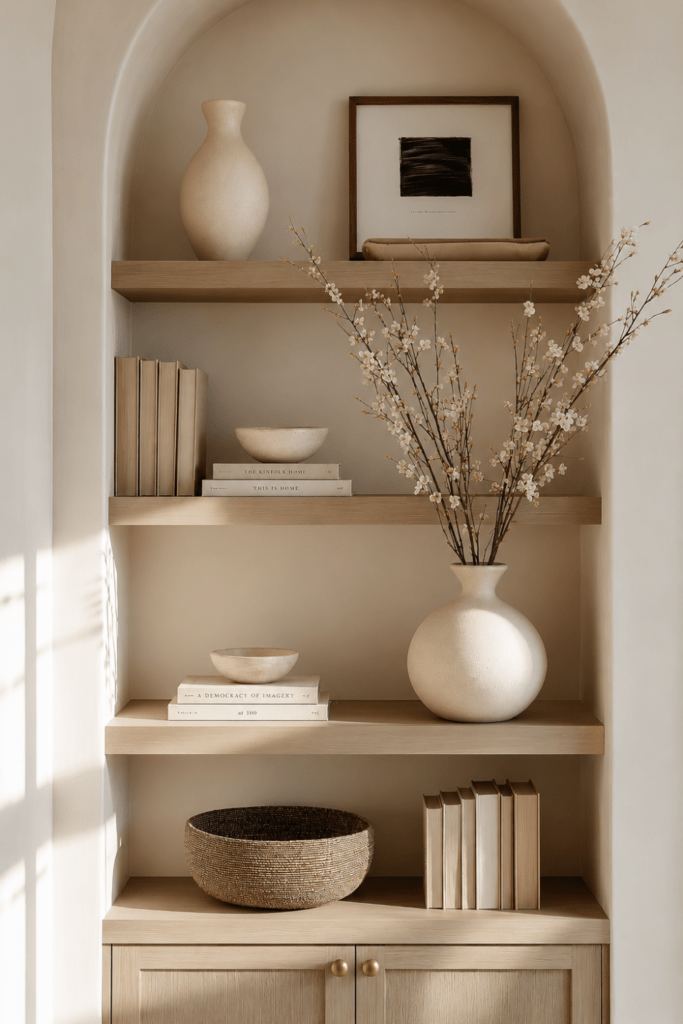
One of the hardest parts of decorating isn’t deciding what to add. It’s recognizing when you’ve already added enough. Beautiful rooms rarely feel complete because they’re filled with more objects. They feel complete because every piece has a purpose, and nothing competes for attention without a reason.
Before making another styling decision, pause and consider what the room is trying to say. Is it meant to feel calm, welcoming, cozy, or sophisticated? Once you’ve identified that feeling, choose one element that deserves to lead the composition. Whether it’s a beautiful piece of artwork, a sculptural light fixture, or a window framing the outdoors, allowing one feature to take center stage creates clarity instead of competition.
To decorate with more intention:
- Clear one surface, shelf, or wall completely before deciding what belongs there.
- Return only the pieces that add function, beauty, meaning, or balance.
- Replace several small accessories with one larger statement piece that creates presence.
- Leave part of a tabletop visible, preserve open pathways, and allow space between decorative groupings.
- Step back and view the room from the doorway before deciding whether anything else is needed.
One simple question can guide every decorating decision:
Does this object add meaning, function, or balance, or is it simply filling an available space?
That question shifts your mindset from collecting beautiful things to decorating with intention. Instead of moving the same accessories from one shelf to another, you begin editing with purpose. You reduce visual clutter not by removing your personality, but by giving your favorite pieces the space they deserve. This is where intentional home styling begins. The goal isn’t perfection. It’s creating enough openness for beauty to be noticed.
Knowing when to stop is not about having less for the sake of less. It’s about recognizing when the room has already said enough. Your home should tell your story, but it doesn’t need to tell every chapter all at once. The pieces that matter most become even more meaningful when they’re surrounded by space instead of competing with it.
Styling Note: The next time you finish styling a room, resist the urge to add one last accessory. Live with the space for a day or two before changing anything. More often than not, you’ll discover it was already complete.
Leave a Little Space Untouched
Beautiful homes aren’t created by filling every wall, shelf, or surface. They’re created through thoughtful choices, where every piece has room to be seen, appreciated, and enjoyed. Open space isn’t the absence of design. It’s an intentional part of the composition.
If you’re inspired to try this approach, start with one small area. Edit your coffee table, simplify a nightstand, restyle a bookshelf, or clear an entryway console. Then live with the change for a few days. Instead of asking whether the space looks finished, notice how it feels. A more composed home doesn’t happen all at once. It’s created one thoughtful decision at a time.
Visual breathing room gives a home permission to feel quieter, more intentional, and less demanding of the people who live there. It allows furniture, architecture, meaningful objects, and everyday moments to take their rightful place without competing for attention.
Sometimes the most powerful design decision is not choosing what to add, but trusting that a little untouched space can be beautiful on its own.
Save this post to Pinterest so you can return to these design principles whenever you need a gentle reminder that sometimes less truly is more. 🤍
If you’re looking for more thoughtful decorating ideas and slow-living inspiration, explore the Design Principles & Tips collection here on Divine Decor Finds. 🌿