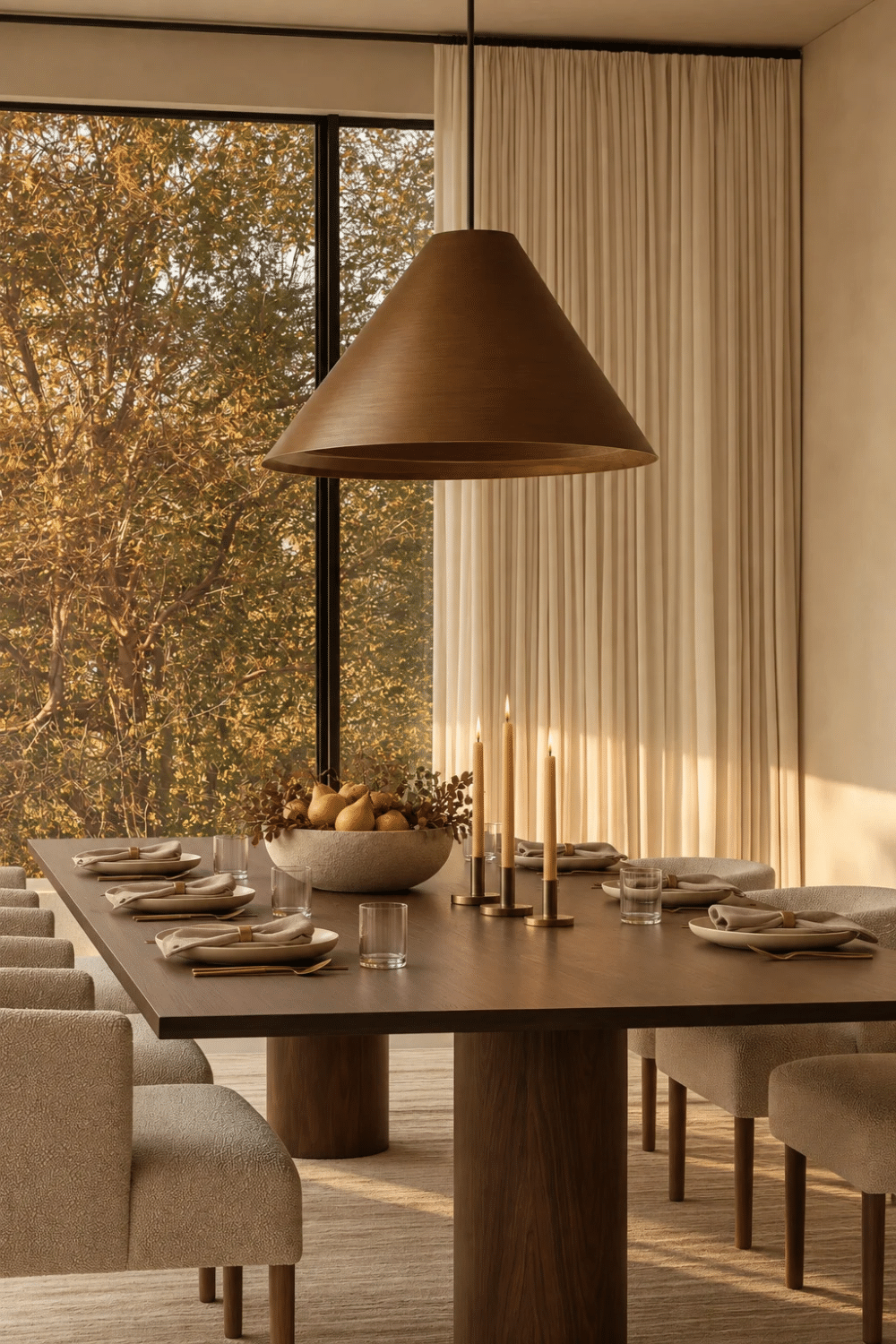
When a Beautiful Table Leaves No Room for Dinner
There is a moment before Thanksgiving dinner when everything finally comes together. The candles are waiting to be lit, the glasses catch the afternoon light, and the table looks almost too beautiful to disturb. But then the serving dishes arrive, chairs are pulled closer, and suddenly there is nowhere comfortable to put anything. Beautiful Thanksgiving table decor can make dinner feel more memorable, but when every open inch is styled, the table can quickly become harder to actually use.
It is easy to fall into the idea that making the day feel special means adding more. Another candle. A few decorative accents. Something seasonal tucked between the plates. Yet every object is sharing the same limited space with glasses, dishes, food, and the people who will soon reach across the table to pass one another their favorite recipes.
A beautiful table should support those moments, not compete with them. It can still feel layered, warm, and celebratory without being filled from one end to the other. Often, the difference comes down to a few thoughtful decisions about space, sightlines, repetition, materials, and lighting.
Ahead, we will look at five simple ways to create a table that feels special while still leaving room for dinner to unfold naturally. You may find that you do not need another decorative piece at all. Because the most beautiful table is not necessarily the one with the most on it. It is the one that makes people feel comfortable enough to settle in, pass the food, keep talking, and stay a little longer.
Design the Table Around How Dinner Will Actually Happen
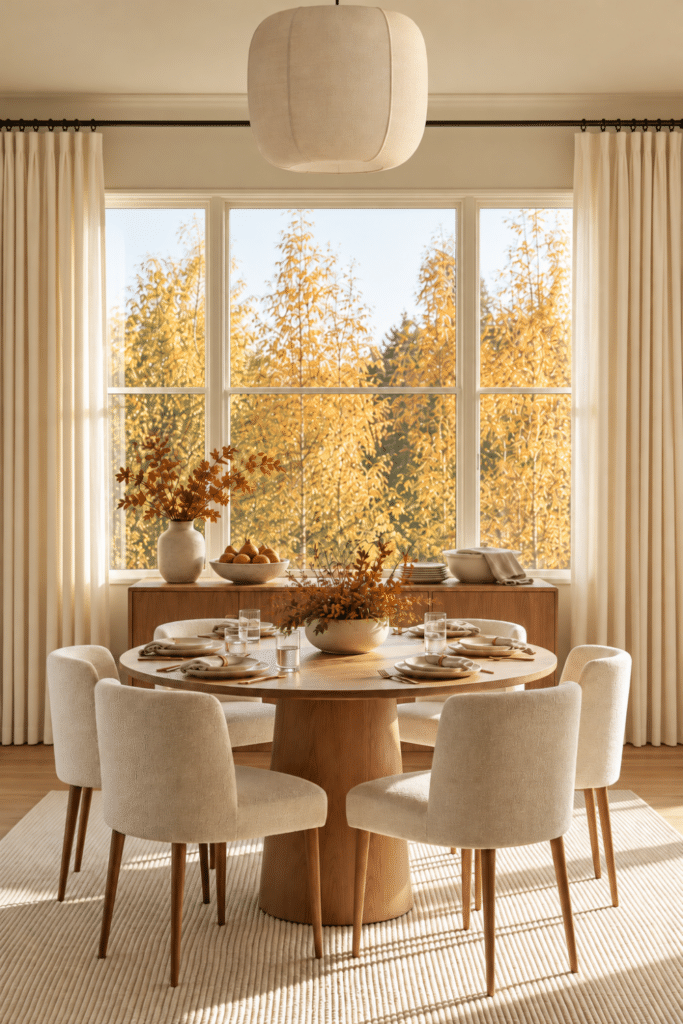
Before thinking about candles, flowers, or decorative details, start with a simpler question: How will people actually use this table? A Thanksgiving dinner table has to do much more than look beautiful. It needs to hold plates and glasses, make room for serving dishes, accommodate guests comfortably, and still leave enough space for food to be passed without everyone carefully navigating around the decor.
That is why thoughtful table styling begins with function. If dinner will be served family-style, the center of the table needs to stay especially open. If food will be served from a buffet table or sideboard, you have a little more freedom to give the decorative elements presence. Guest count matters too. Eight people gathered around a six-person table will require a very different Thanksgiving table setting than a smaller dinner with extra room between chairs.
Before decorating, decide how the meal will move around the table.
- Set out dinner plates, glasses, and any extra utensils your guests will need.
- Place your largest serving platters and casserole dishes on the table temporarily.
- Leave an open serving lane through the center for bowls and platters that need to be passed.
- Keep decorative objects away from areas where guests will naturally reach.
- Adjust the plan for children, mobility needs, or additional seating.
- If food will stay on a buffet table, use some of that newly available space for a slightly fuller focal moment.
Once the practical pieces are in place, decorate only the space that is genuinely left. It takes away the pressure to recreate a perfect photograph and creates something far more meaningful: a table designed around the people who will actually gather there.
Styling Note: Do a quick rehearsal before Thanksgiving Day. Set out your largest serving platter and casserole dish. If your centerpiece suddenly has nowhere to go, it was using space dinner actually needed.
Keep the Centerline Low and Visually Light
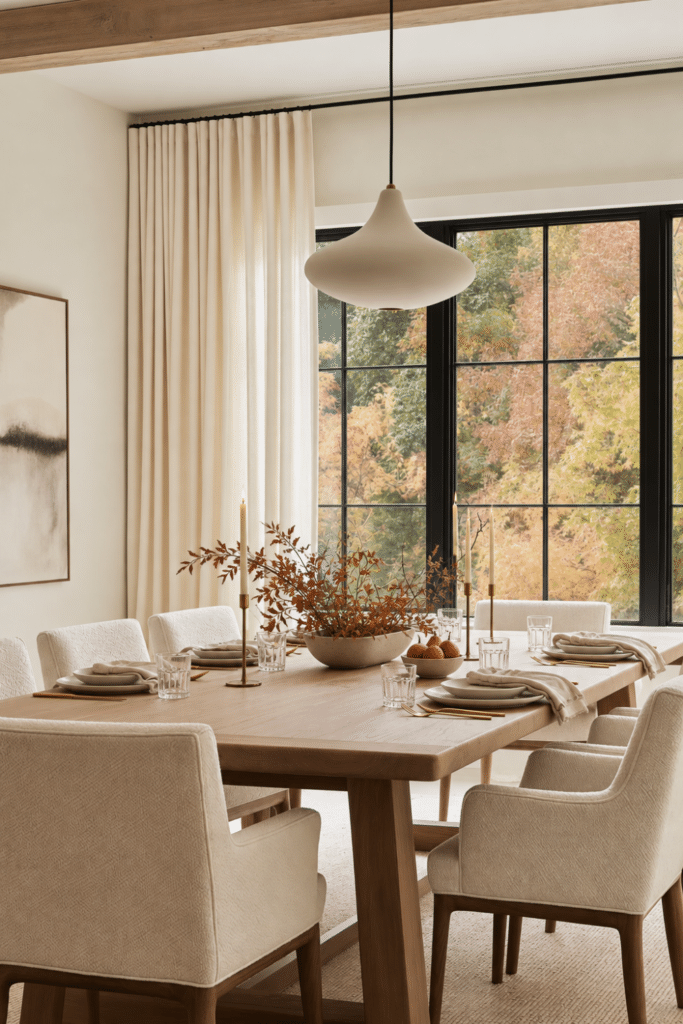
A beautiful centerpiece should add atmosphere, not make guests lean around it to see one another. One of the easiest ways to keep the table feeling calm is to protect what I like to think of as the conversation line, the visual space between the people sitting across from each other.
This is where height and visual weight matter. A slender taper candle can rise above the table without feeling intrusive because the eye can easily move around it. A dense arrangement at the same height feels much heavier and can quickly become a barrier. Thanksgiving table decor feels calmer when the centerpiece adds atmosphere without becoming a wall between guests.
A simple framework to follow is: Low + Airy + Easy to See Through.
- Use a shallow ceramic bowl or low floral arrangement as the main focal point.
- Choose small bud vases instead of one large, dense arrangement.
- Lay a few graceful branches horizontally rather than building upward.
- Add seasonal fruit in a low bowl for color without bulk.
- Use slender taper candles to introduce height without blocking sightlines.
- Leave enough space between decorative elements for the table to feel open.
A low centerpiece does not have to feel minimal or unfinished. Layering texture, warm materials, subtle color, and candlelight can still create an elegant Thanksgiving table while keeping the focus where it belongs: on the people gathered around it.
Styling Note: Sit in one of the dining chairs once the table is finished. If you have to tilt your head to see the person across from you, lower or simplify the centerpiece.
Create Rhythm Instead of Filling Every Gap
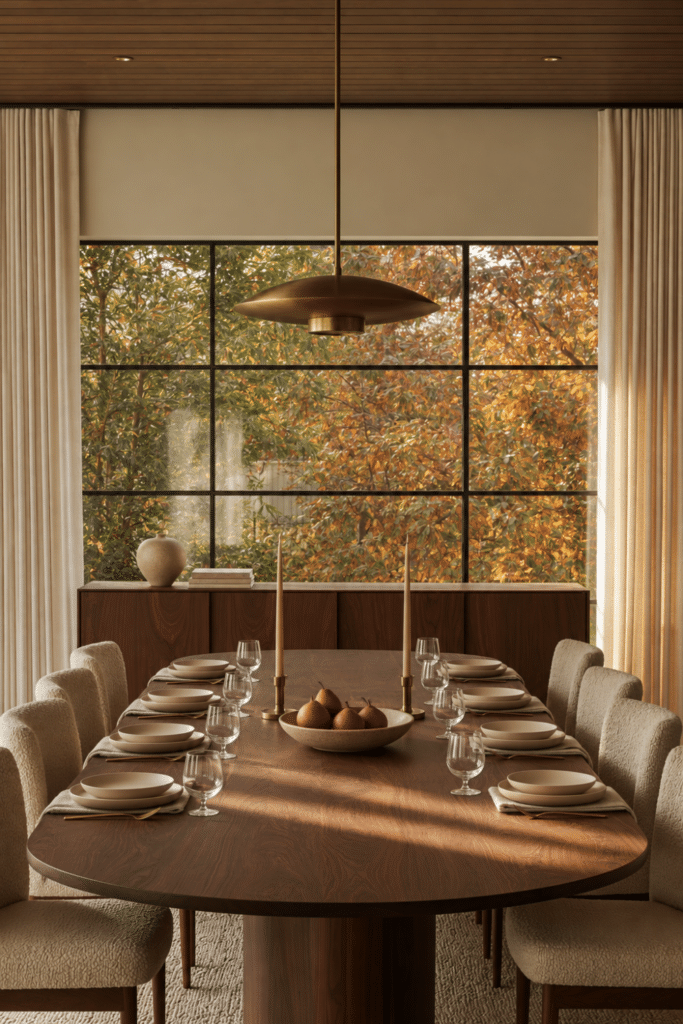
A table can feel thoughtfully styled without placing something in every open space. In fact, the most elegant arrangements often rely on repetition more than abundance. When the same candle shape, napkin fold, glassware style, or seasonal tone appears more than once, the eye begins to recognize a rhythm, and the table feels connected without becoming crowded.
This is where a restrained Thanksgiving tablescape can still feel rich and intentional. Repeating a few elements creates cohesion, while the open spaces between them give each detail more presence. A candle, a stretch of bare tabletop, a low bowl, another open space, then a second candle can feel far more polished than filling the entire center with unrelated objects.
Think in intervals: Repeat + Pause + Repeat.
- Repeat one material or object several times instead of introducing many different accents.
- Use matching candlesticks, glassware, or folded linen napkins to create visual consistency.
- Let Thanksgiving place settings become part of the overall rhythm rather than treating them as separate from the decor.
- Leave sections of the table completely open between decorative moments.
- Use seasonal fruit or small vessels sparingly to reinforce color without adding clutter.
- Avoid filling an empty spot simply because it looks unfinished from above.
Those pauses are what make simple Thanksgiving decor feel calm rather than sparse. Once food is served, glasses are lifted, plates are passed, and conversation fills the room, the table naturally becomes more visually active. Leaving room for that movement is part of the design.
Styling Note: Photograph the table before guests arrive. If your eye jumps from one decorative moment to another without resting, remove or regroup a few pieces until the table begins to read as one composition.
Let Materials and Color Carry the Season
A Thanksgiving table does not need obvious seasonal symbols to feel warm and unmistakably autumnal. Often, the season comes through more beautifully in the materials you choose, the colors you repeat, and the way natural elements are woven into the setting. Linen, pottery, aged brass, amber glass, stoneware, woven textures, and warm wood tones all bring a quiet richness that feels especially suited to this time of year.
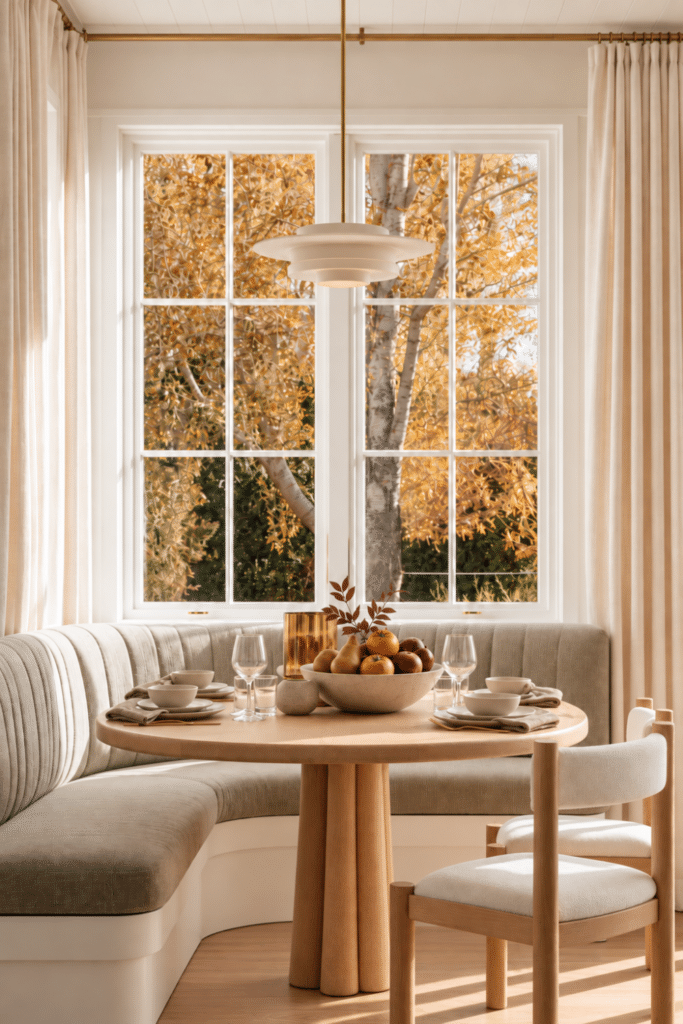
Thanksgiving table decor often feels more sophisticated when the season comes through in materials, texture, and color rather than layers of themed accessories. Start with what is already present in your dining room. A white oak table can feel beautiful with oatmeal linen, cinnamon-toned fruit, and aged brass. A darker wood table may pair naturally with ivory, stone, and soft olive. The goal is not to force a specific palette, but to build seasonal warmth around the finishes you already love.
Choose the palette first, then let it guide the details.
- Build the foundation with ivory, oatmeal, mushroom, or warm stone.
- Let your existing wood tone, whether white oak, walnut, maple, or something deeper, become part of the palette.
- Add muted rust, cinnamon, camel, tobacco, or soft olive for seasonal depth.
- Use aged brass or amber glass for a subtle reflective layer.
- Let pears, pomegranates, persimmons, grapes, herbs, or seed heads contribute natural color.
- Repeat your chosen accent tone only a few times so the table still feels calm.
Seasonal food can become part of the visual story too. A bowl of pears, a cluster of persimmons, or a few pomegranates can bring color and texture to a neutral Thanksgiving table while still feeling connected to the meal itself. The result feels warmer and more grounded because the table reflects the season rather than simply decorating for it.
Styling Note: Choose one autumn color from outside your window, then repeat it only two or three times across the table. A little repetition creates atmosphere without turning the table into a theme.
Let Candlelight Do Some of the Decorating
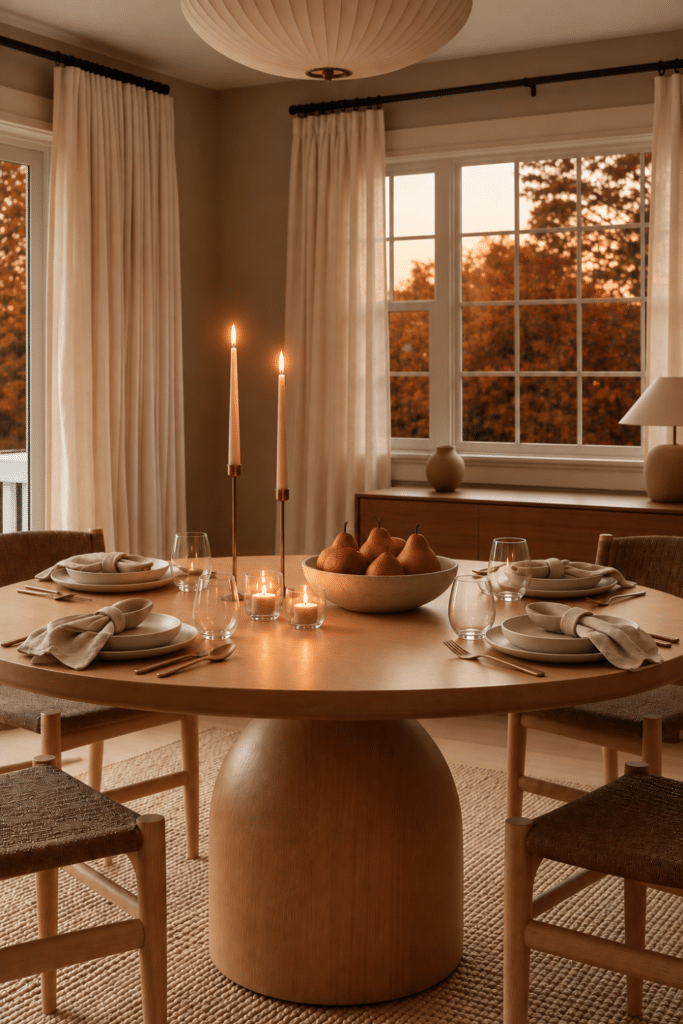
As the afternoon light begins to fade, a Thanksgiving table can suddenly feel more beautiful without adding a single new object. Candlelight has a way of softening the room, catching the edges of glassware, warming pottery and linen, and creating the sense that something special is about to happen.
That is why lighting can sometimes do more for the table than another decorative accessory. A few slender tapers or low votives add warmth without taking up much visual space, and their glow brings depth to materials that may have looked simple in daylight. For Thanksgiving entertaining, that shift in atmosphere can be enough to make the entire table feel complete.
Before adding more decor, light the candles and look again.
- Use slender taper candles to add height without creating visual bulk.
- Mix in a few low votives for a softer layer of light near the tabletop.
- Choose hurricane-style holders when you want a little more protection around the flame.
- Keep candle heights varied but controlled so the table still feels calm.
- Position flames away from loose greenery, serving areas, and places where sleeves may pass.
- Use unscented candles around food, and consider flameless versions when an open flame is not practical.
An elegant Thanksgiving table often changes once dinner actually begins. Glasses catch the glow, serving dishes arrive, and people settle into their seats. What may have looked slightly sparse earlier in the day can suddenly feel warm, layered, and full of life.
Styling Note: Style the table for the moment your guests will actually experience it, not only for the photograph you take before they arrive. Sometimes the finishing touch is simply turning down the room lights and lighting the candles.
Leave Room for the Gathering
A beautiful Thanksgiving table does not need to be the fullest one in the room. Often, it becomes more inviting when there is enough space for the meal to unfold naturally. A little more room for serving dishes, clearer sightlines, thoughtful repetition, seasonal materials, and warm candlelight can do more than another layer of decor.
Before adding anything else, try setting the functional table first. Place the plates, glasses, serving pieces, and anything your guests will actually use. Then decorate what remains. You may find that one small adjustment, like lowering the centerpiece, removing an extra decorative layer, or repeating fewer materials, is enough to make the whole table feel calmer and more intentional.
The best Thanksgiving table decor leaves enough room for everything that makes the day meaningful: good food, easy conversation, and the people gathered around it.
Your table does not need to impress everyone before they sit down. It needs to make them want to stay once they do.
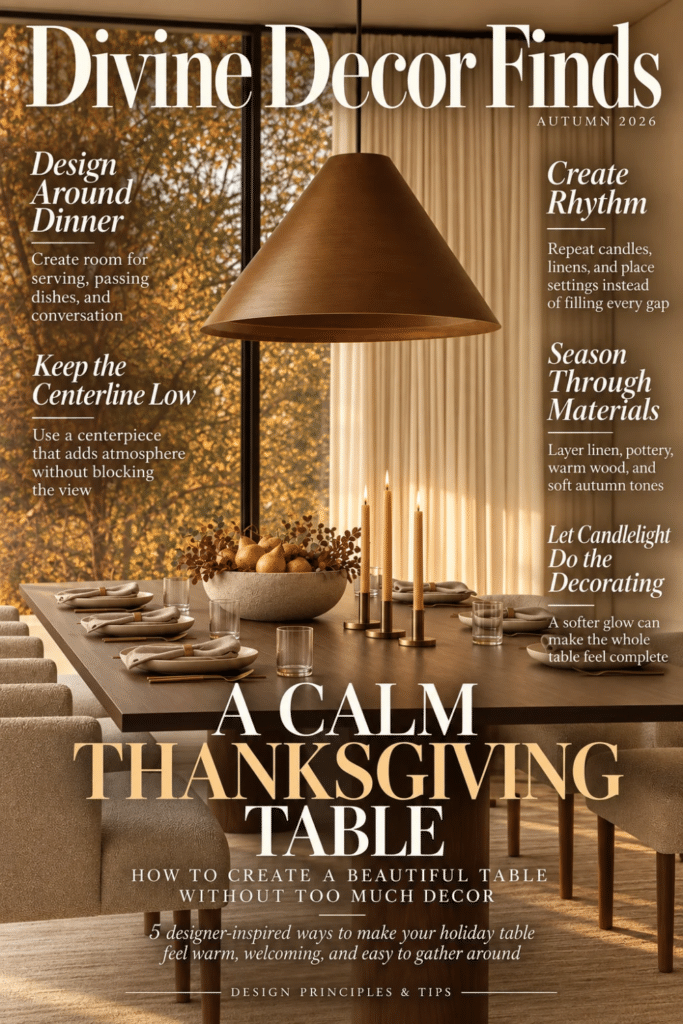
Save this post to Pinterest for the next time you want to create a Thanksgiving table that feels beautiful, welcoming, and easy to gather around.
Explore more Design Principles & Tips on Divine Decor Finds for thoughtful ways to create a home that feels warm, balanced, and beautifully yours. 🌿
Leave a Reply