When More Decorations Stop Making the Tree Better
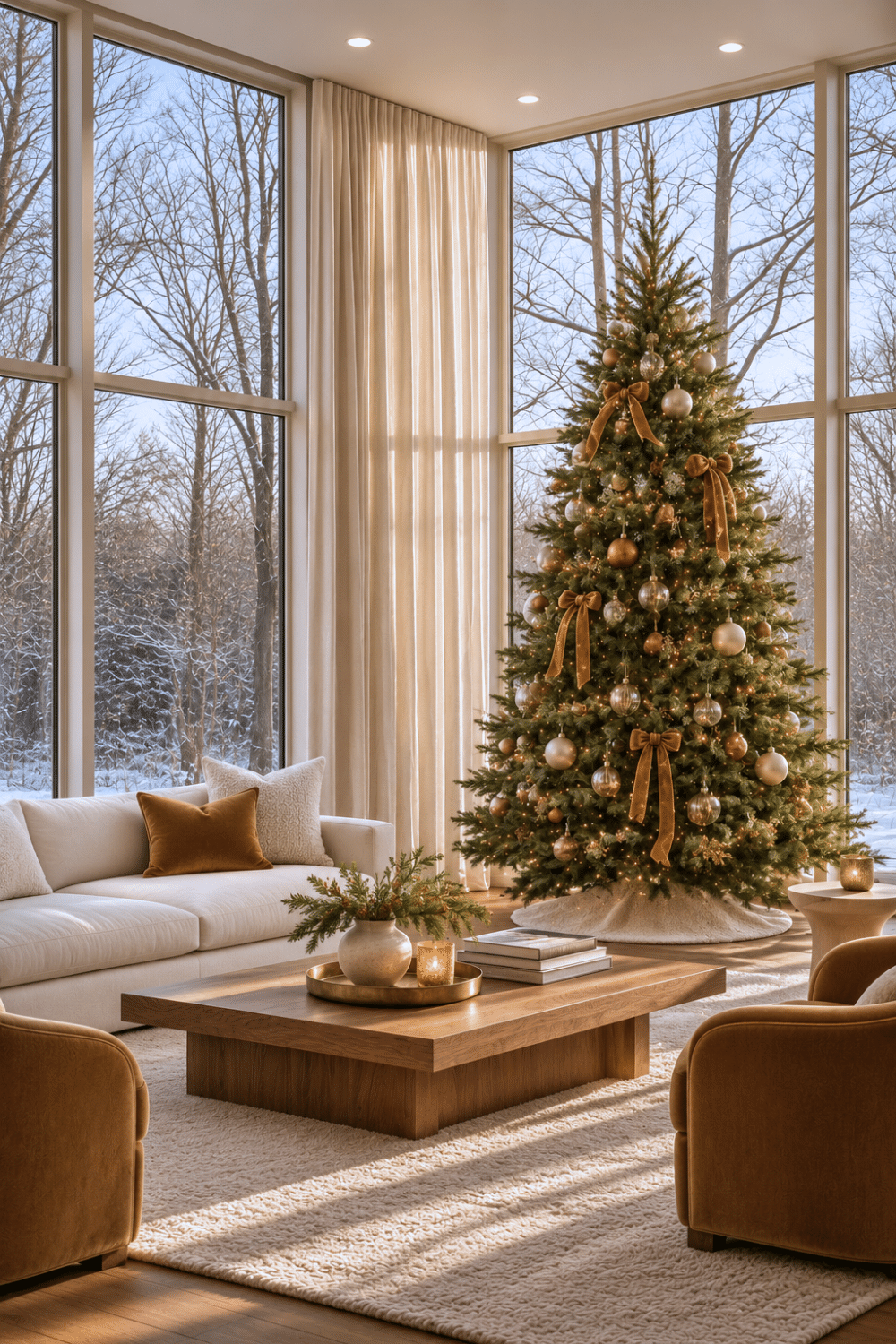
The boxes are open across the floor, the room has taken on that familiar December glow, and you step back expecting to feel that little rush of there it is. Instead, your eyes move from branch to branch, searching for what seems to be missing. Maybe one more decoration here. Something larger there. Yet a truly elegant Christmas tree does not need every branch covered to feel abundant, finished, and worthy of being the focal point of the room.
Sometimes the moment a tree begins to feel less polished is the same moment we start trying too hard to make it feel complete. We see an opening and assume it needs filling, when that little bit of breathing room may be exactly what allows everything around it to feel more intentional.
Fullness is not simply about how much you add. It comes from shape, depth, proportion, repetition, and knowing when the eye already has enough to enjoy. The tree itself should still be part of what makes the room beautiful.
Ahead, we will use five simple design principles to create more presence with less excess, including one of the most important decorating skills of all: knowing when to stop.
Because before you reach back into another box, it may be worth asking a different question:
What if the tree does not need more? What if it simply needs a better edit?
1. Build the Silhouette Before You Decorate
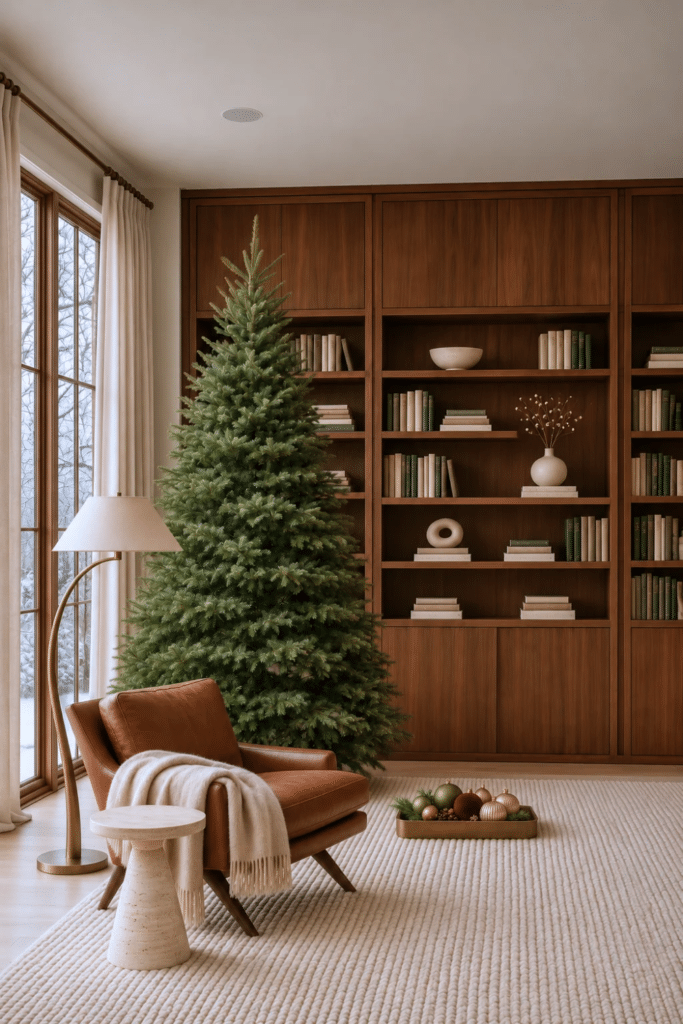
Before you add a single decorative layer, look at the tree itself. The foundation of an elegant Christmas tree is a strong silhouette that already feels balanced before the decorating begins.
It is easy to assume every opening needs to be filled, but a full Christmas tree does not need to look perfectly dense. A little irregularity keeps the shape feeling natural, while thoughtful branch placement creates the structure that makes everything else look more intentional.
Create fullness with the branches first. Decor should enhance the silhouette, not manufacture it.
- Step back and study the tree as one overall shape instead of focusing on individual branches.
- On an artificial tree, fluff branches outward, upward, and slightly forward to create depth.
- Separate branch tips so they overlap naturally instead of forming obvious rows.
- Rotate the tree if one side has better density or a more balanced natural tree shape.
- With a real tree, gently reposition flexible branches and correct only the gaps that feel genuinely distracting.
Once the silhouette feels balanced, Christmas tree decorating becomes much easier. You are no longer trying to disguise the tree. You are simply refining what is already working.
Styling Note: Take a quick photo of the undecorated tree from the doorway. Seeing it flattened into an image makes uneven density, awkward gaps, and an off-balance shape much easier to spot.
2. Light the Tree From the Inside Out
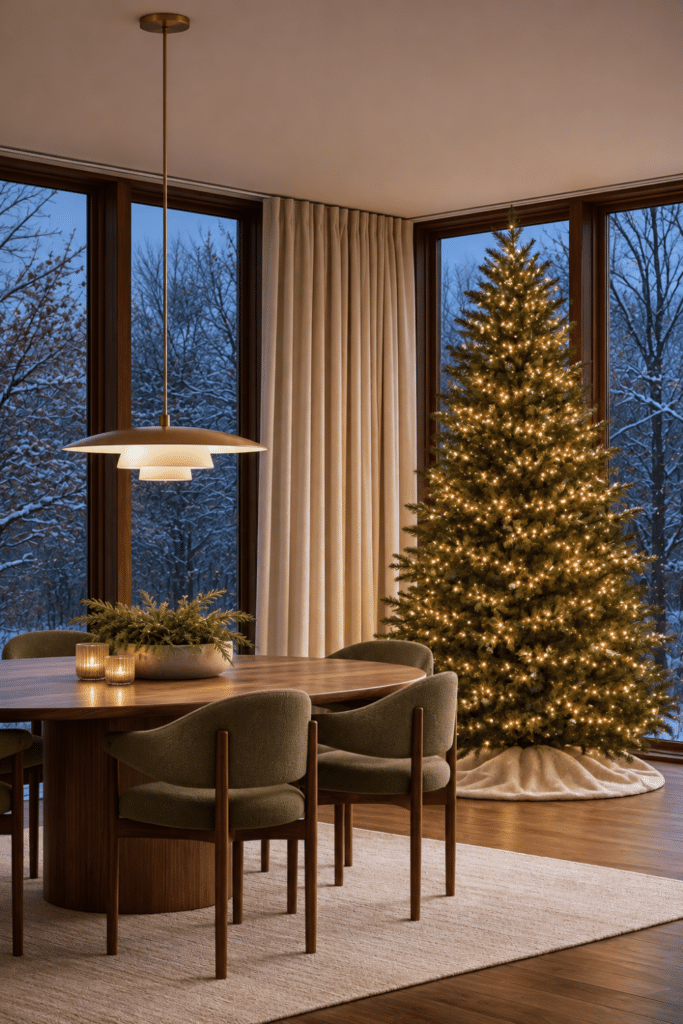
Once the shape of the tree feels balanced, the next layer is light. Good tree lighting should do more than make the surface sparkle. It should pull the eye inward, revealing the depth of the branches and giving the tree a fuller, more dimensional presence.
This is where Christmas tree lights can quietly do a lot of the visual work. When every strand sits only along the outer edge, the tree can look flat. By placing some lights closer to the trunk, some through the middle, and others toward the branch tips, you create contrast and visual depth without needing to add more decor.
Think of the lights as layers, not one glowing surface.
- Tuck some lights deeper into the tree near the trunk to create an inner glow.
- Bring other sections forward through the middle and outer branches for dimension.
- Avoid wrapping strands in obvious horizontal bands around the perimeter.
- Step back often and look for areas that feel overly bright or noticeably dark.
- Keep the light temperature consistent, preferably a soft warm white for a more elevated look.
- Leave a few quieter pockets of shadow so the glow still has contrast.
A layered Christmas tree feels richer because the eye can see into it, not just across it. That depth makes the tree feel substantial even before the next decorative layer is added.
Styling Note: Turn off the room lights and look at the tree by itself before adding anything else. If the silhouette still feels dimensional in the dark, your tree lighting is doing exactly what it should.
3. Use Ribbon or Garland to Create Movement, Not Coverage
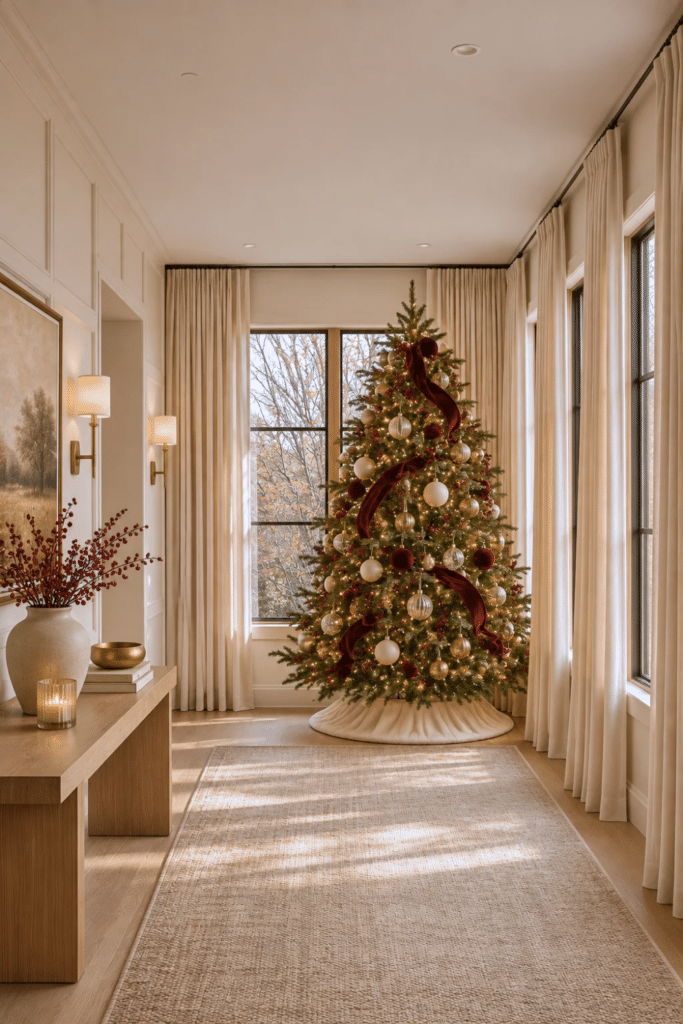
Ribbon and garland can add softness and rhythm to a tree, but they work best when they move through the branches instead of covering them. The goal is to guide the eye gently from one area to another while still allowing the tree itself to remain visible.
Too much Christmas tree ribbon can quickly make the branches disappear beneath the decoration. A lighter approach creates a more layered Christmas tree because the material appears, disappears, and then returns in another area, giving the eye a natural path to follow.
Let decorative lines move through the tree instead of sitting on top of it.
- Use ribbon in loose vertical or diagonal sections rather than wrapping it tightly around the entire tree.
- Tuck sections into the branches so the ribbon feels woven through the tree instead of laid across the surface.
- Leave generous spaces between placements to preserve greenery and visual movement.
- Consider alternatives such as wooden beads, delicate metallic garland, paper chains, or natural materials depending on your style.
- Repeat the material just enough to create rhythm without allowing it to become the dominant feature.
Ribbon is completely optional. A tree can feel polished without it, especially when the shape, lighting, and other layers are already doing their job.
The most beautiful tree styling often gives the eye somewhere to travel and somewhere to rest. That balance keeps the tree feeling relaxed instead of overly symmetrical or visually busy.
Styling Note: Step back several feet after adding ribbon or garland. If your eye notices the ribbon before it notices the tree, remove a section.
4. Create Fullness With Scale, Repetition, and Ornament Rhythm
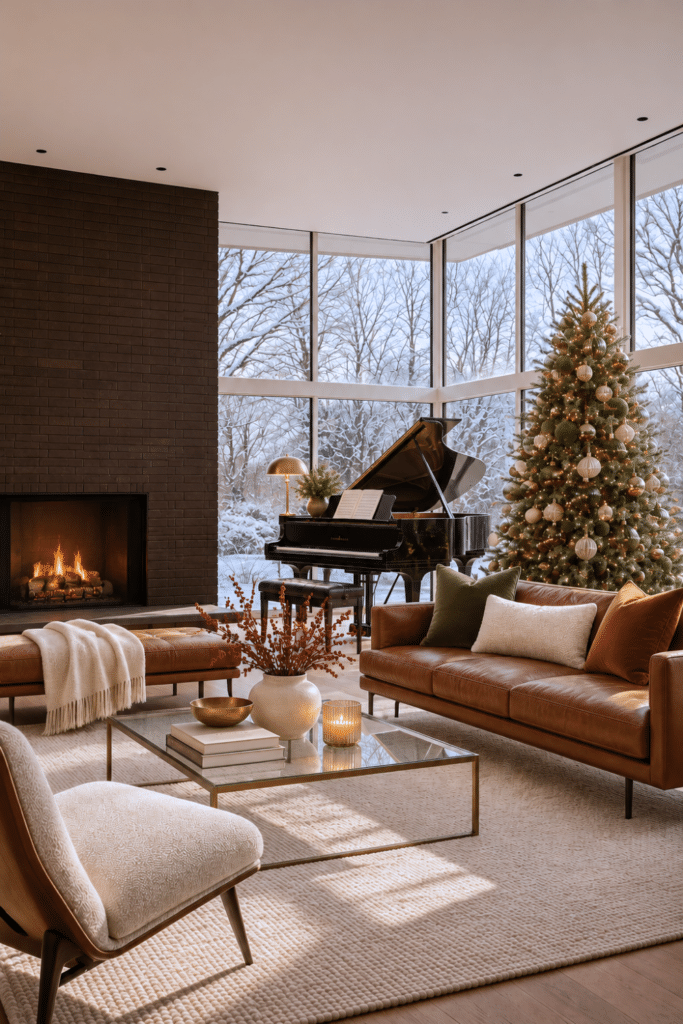
Once the tree has shape, light, and movement, ornaments are what give it personality. What makes an elegant Christmas tree feel abundant is not the number of ornaments, but the way scale and repetition create visual rhythm.
Instead of hanging one ornament on every visible branch tip, think in layers. A thoughtful mix of sizes and finishes creates richness while still leaving enough greenery for the eye to rest.
Use scale, repetition, and rhythm to make the tree feel collected rather than crowded.
- Start with your largest Christmas ornaments and place some deeper into the branches to create depth.
- Use medium ornaments to carry the main color story throughout the tree.
- Save smaller ornaments for branch tips, subtle gaps, and areas that need a little extra sparkle.
- Create occasional ornament clusters instead of spacing every piece evenly.
- Repeat a cohesive color palette so the eye recognizes a pattern as it moves around the tree.
- Mix finishes such as matte, glass, metallic, wood, paper, or velvet, but keep visible stretches of greenery between groupings.
Repetition gives Christmas tree styling a sense of intention, while variation keeps it from feeling overly perfect. The result is a tree that looks layered and substantial without losing the beauty of its natural shape.
It also gives meaningful or one-of-a-kind ornaments more room to stand out instead of disappearing into a sea of decoration.
Styling Note: Choose two or three ornament types to repeat throughout the entire tree before adding special pieces. Repetition creates the polished foundation; the ornaments with a story give it personality.
5. Finish the Tree, Then Edit It
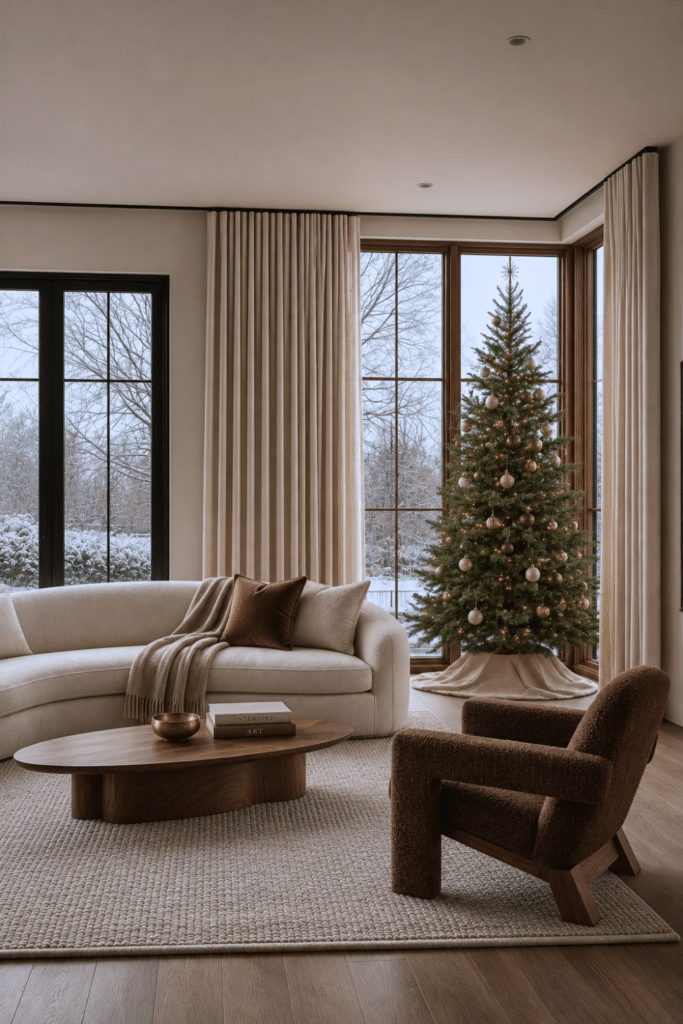
Once the tree looks finished, resist the urge to keep adjusting every branch from a few inches away. Step across the room instead. From that distance, you can see the tree as part of the entire space and notice where the Christmas tree decor feels balanced, where it feels busy, and where a little breathing room would make everything else stand out more.
This is where Christmas tree styling shifts from adding to editing. A beautiful tree does not need every branch filled, and negative space is not something to fix. It is what allows the eye to appreciate the details that remain.
The final decorating step is subtraction.
- View the tree from its main sightline and check the overall visual balance.
- Make sure the tree topper feels proportionate rather than oversized or disconnected.
- Check that the tree skirt or base treatment supports the palette without becoming another focal point.
- Look for areas where ornaments, ribbon, or decorative picks are competing for attention.
- Remove anything that feels repetitive, crowded, or unnecessary.
- Preserve visible greenery and allow a few branches to remain almost undecorated.
- If the tree is visible from multiple rooms, walk around it and check the balance from each angle.
The finished tree should feel calm enough that you want to sit near it, not so visually busy that you keep searching for something else to change. At some point, decorating becomes trusting that what is already there is enough.
Styling Note: Remove one decoration from the busiest area of the tree, then step back. If the tree immediately feels more polished, you have found the value of editing.
Let the Tree Still Be a Tree
When you step back and look at the tree from across the room, the goal is not to see how much you managed to fit onto it. You want to see shape, glow, movement, and a sense that every layer belongs there.
An elegant Christmas tree feels finished not because every branch is decorated, but because every layer has a purpose.
Before adding one more ornament, ribbon, or decorative pick, ask yourself: Does this make the tree more beautiful from across the room? Sometimes the answer will be yes. Other times, the best change may be reshaping a branch, moving a strand of lights deeper into the greenery, repositioning one larger ornament, or taking something away.
You may already own everything you need to make the tree feel more polished. The transformation can come from better placement, stronger repetition, and giving the details you love enough space to be noticed.
The branches do not need to disappear beneath the decorations. Let them show. Let the lights breathe. Let the ornaments have room to matter.
Because when the editing is finished, the tree should still feel like a tree, only more intentional, more beautiful, and completely at home in the room around it.
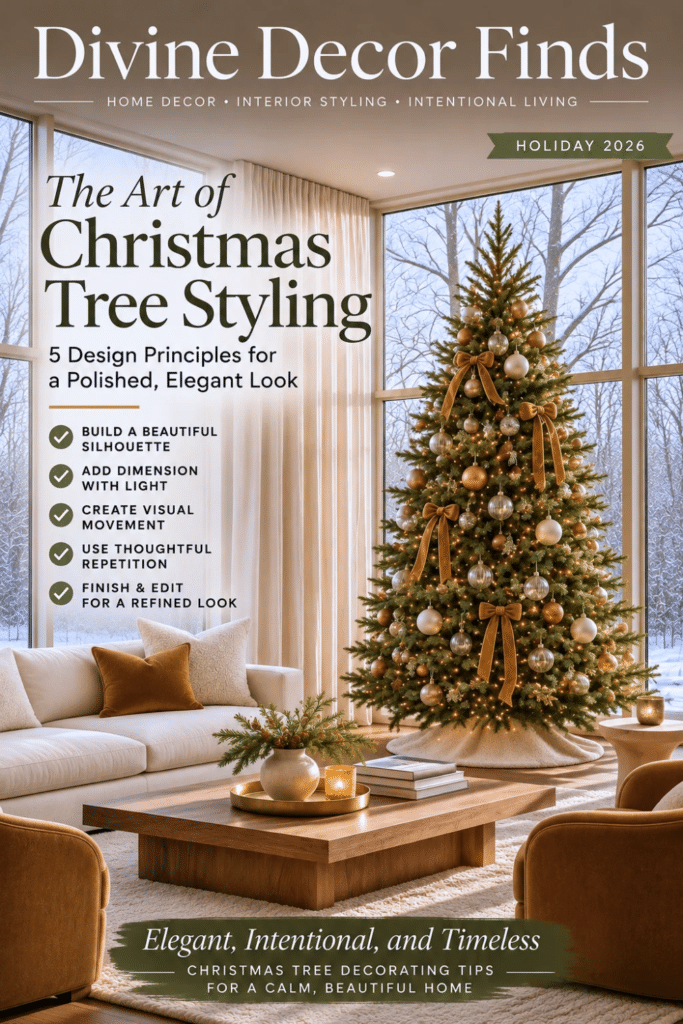
Save this post to Pinterest for inspiration when you are ready to give your Christmas tree a more polished, elevated look.
Explore more Design Principles & Tips on Divine Decor Finds for thoughtful ways to create a home that feels calmer, more intentional, and beautifully yours. 🌿
A little inspiration for a calmer home
If you enjoyed this post, I’d love to have you join me for The Sunday Edit. Every Sunday, I share thoughtful decorating ideas, curated home finds, and a personal note to help you create a home that feels calm, warm, and beautifully yours.
Subscribe free to The Sunday Edit

Leave a Reply