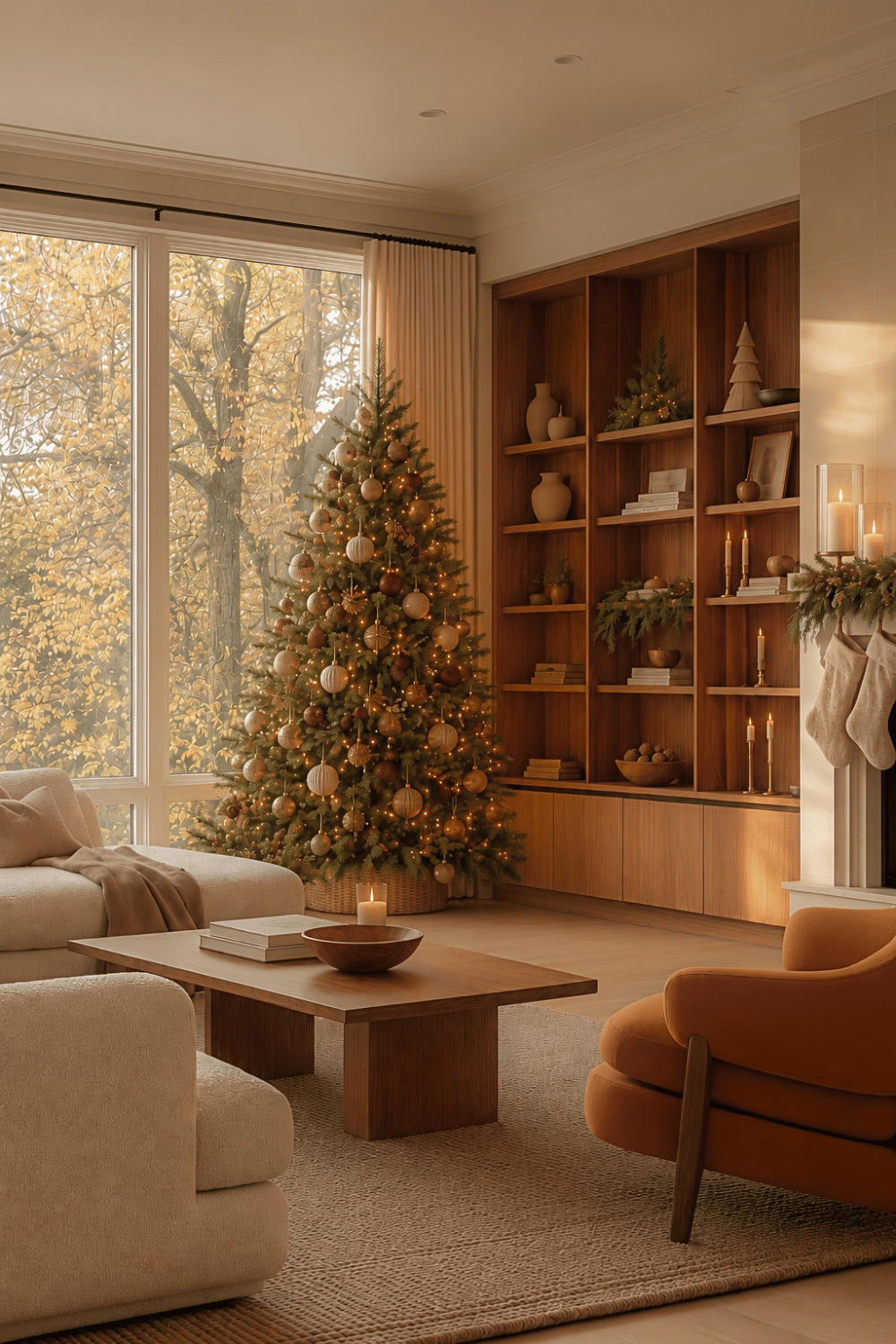
What If Christmas Could Feel Quieter?
There is a moment when the season can begin to feel like too much. The tree is glowing, favorite pieces have come out of their boxes, and the home should feel magical, yet a room that normally gives you a sense of ease suddenly feels busier than you remember. That is what draws me to minimalist Christmas decor. Not because I want the season to feel smaller, but because I want the things that make it meaningful to have enough room to be felt.
I still want the glow of lights in the evening, the greenery, the traditions, and the pieces that carry memories from one year to the next. I simply do not think every shelf, table, and empty corner needs something added to it for the season to feel special.
In fact, I think the opposite can happen. When everything is asking for our attention, the details we love most can begin to disappear into the room. But when there is a little more space around them, we notice the warm light against the wall, the shape of the tree, the ribbon tied just right, or the ornament we have been hanging for years.
Maybe the goal is not to fit more into our homes this season. Maybe it is to decide what deserves our attention, give those things room to shine, and let the quiet become part of the magic.
Give Christmas a Visual Hierarchy
A room begins to feel visually busy when everything is asking to be noticed at once. The tree, mantel, coffee table, shelves, windows, and side tables may each look beautiful on their own, but when every surface carries the same decorative weight, the eye has nowhere to settle.
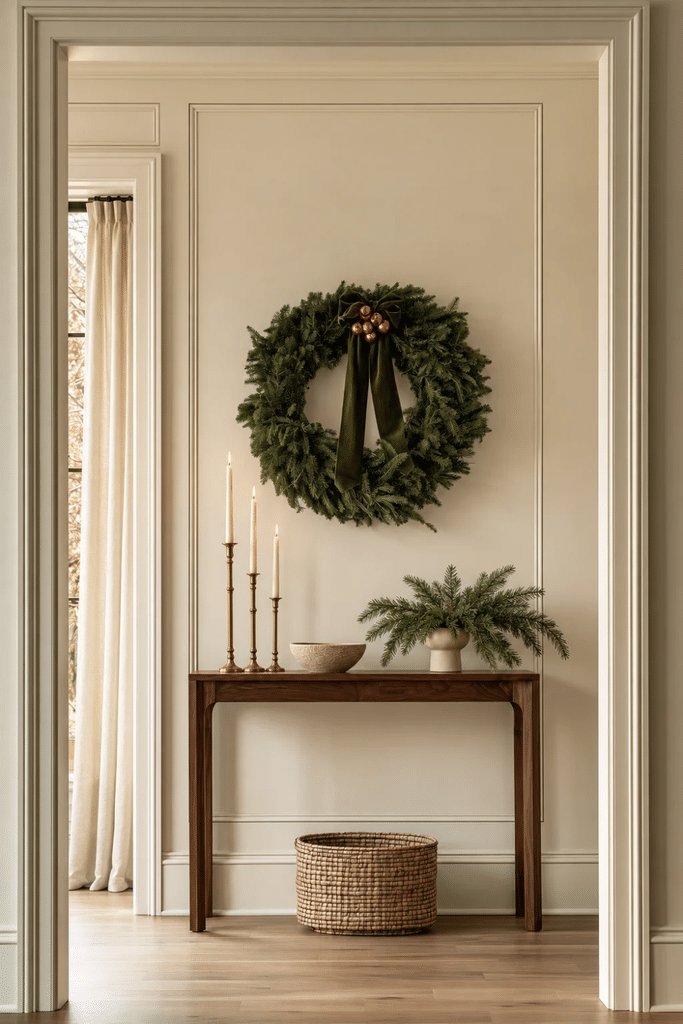
That is why visual hierarchy matters so much with minimalist Christmas decor. Instead of trying to make every corner feel equally festive, choose one moment to lead the room and let everything else support it. Your Christmas tree might be the obvious focal point, while a simple candle arrangement, a little greenery, or a few meaningful objects quietly echo the season nearby.
Think of the room in three layers: Hero Moment → Supporting Details → Quiet Space.
- Choose one hero moment. Let the tree, mantel, dining table, or another meaningful area carry most of the visual impact.
- Keep supporting details simpler. A small wreath, a pair of taper candles, or one evergreen branch can reinforce the mood without competing for attention.
- Leave some surfaces mostly untouched. An open shelf, a clear side table, or an undecorated stretch of wall gives the eye somewhere to rest.
- Vary the decorative intensity. Not every arrangement needs lights, ribbon, greenery, ornaments, and candles all at once.
- Step back and look at the room as a whole. If your eye keeps bouncing from one area to another, one or two places may need to become quieter.
Negative space is not something missing from the room. It is what allows the decorated areas to feel intentional. A softly glowing tree becomes even more beautiful when it has a little breathing room around it, and a simple mantel feels more special when every nearby surface is not trying to tell another story.
Leaving something undecorated does not make Christmas feel less present. Sometimes it is exactly what allows the magic you did choose to become more noticeable.
Styling Note: Decide what you want someone to notice first when they enter the room. Let everything else support that moment rather than compete with it.
Make Room Before You Add Christmas
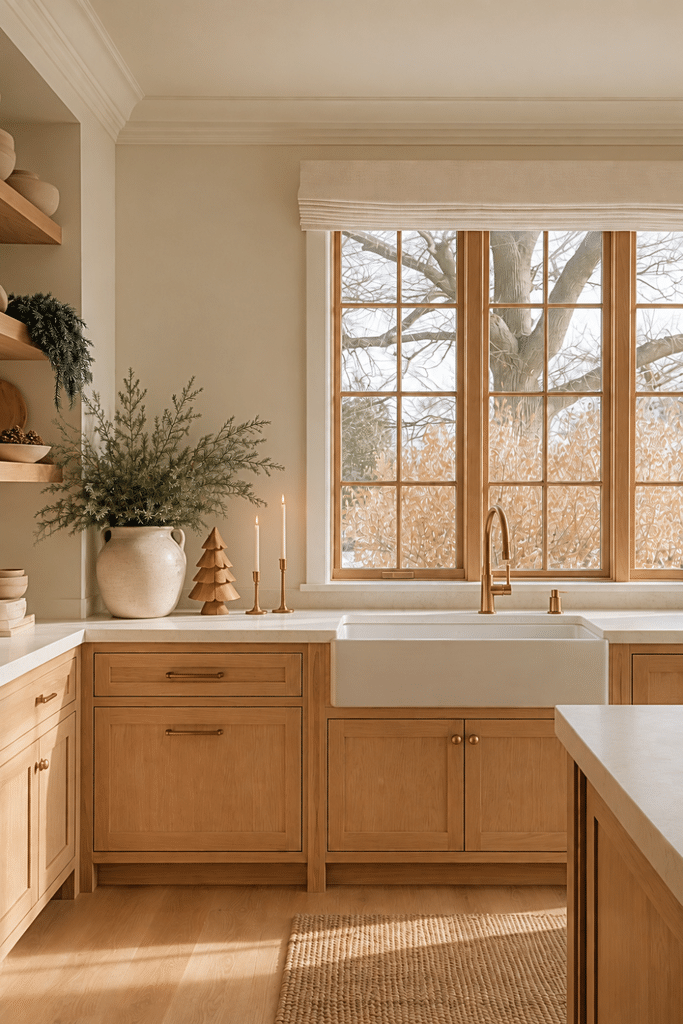
One of the easiest ways for holiday decorating to start feeling overwhelming is to layer Christmas on top of everything that is already there. The everyday vase stays, the books stay, the bowl stays, the framed photo stays, and then greenery, candles, ornaments, and seasonal objects are added around them. Individually, each piece may be beautiful. Together, the room can begin to feel crowded before you even realize what changed.
A calmer approach is to think in terms of substitution rather than accumulation. Christmas needs space before it needs more things. Before you add something seasonal, look at what is already occupying the surface and decide whether any of it can take a short break until January.
Try making space before you style it:
- Remove a few everyday accessories from console tables, shelves, coffee tables, or mantels before adding anything seasonal.
- Replace rather than layer. Swap a decorative vase for a simple evergreen arrangement instead of placing both together.
- Protect some open surface area so each seasonal piece has enough breathing room to feel intentional.
- Temporarily store objects that compete for attention rather than shifting them to another crowded corner.
- Leave some empty space alone. Not every open spot is asking to be decorated.
This is where the question What can leave before something new comes in? becomes surprisingly useful. It changes the decorating process from trying to fit Christmas into the room to making thoughtful room for it.
And that shift can make the whole experience feel lighter. You are not removing the personality of your home. You are simply giving the season enough space to arrive without asking everything else to compete with it.
Styling Note: Take a quick photo before decorating. As you add holiday pieces, look back at it and decide which everyday objects can quietly disappear until January.
Translate Your Home Into Christmas
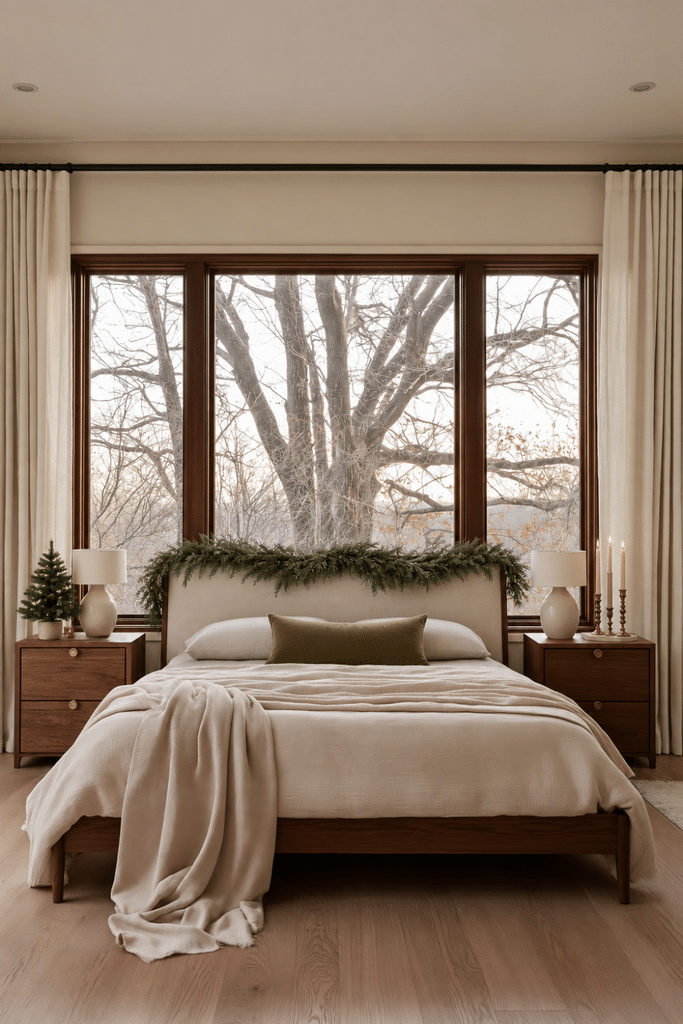
The most beautiful holiday rooms still feel like the people who live there. Christmas should not erase the character you have spent the rest of the year creating. It should feel like a seasonal translation of it, using the same colors, materials, and textures in a slightly more festive way.
That is one of the reasons minimalist Christmas decor can feel so natural in an Organic Modern home. Instead of introducing an entirely new visual language for December, begin with what is already working. If your room is grounded in walnut, ivory, olive, aged brass, pottery, and linen, let those same elements guide the holiday layer.
Look at what your home is already telling you:
- Walnut can inspire deeper wood tones through natural ornaments, carved trees, or warm brown ribbon.
- Ivory can continue through stockings, ceramics, and linen ribbon so the room stays soft and cohesive.
- Olive naturally connects with evergreen, making fresh or realistic greenery feel like an extension of the existing palette.
- Aged brass can repeat through candleholders, bells, or small ornaments without introducing another finish.
- Pottery can become seasonal simply by changing what it holds, such as evergreen branches, winter stems, or pinecones.
- Oatmeal linen can carry into table runners, stockings, or ribbon, adding warmth without making the room feel heavily decorated.
The question I would ask before bringing in anything new is:
Does this feel like Christmas in my home, or simply like Christmas in general?
That small distinction can completely change the way you shop and decorate. Neutral Christmas decor and natural Christmas decorations feel most convincing when they relate back to the room instead of being layered on top of it as a separate theme.
The goal is not to make your home look unfamiliar for a few weeks. It is to let the rooms you already love feel a little more luminous, nostalgic, and seasonal.
Styling Note: Let the materials already in your room lead your holiday choices. Christmas feels more natural when it grows from what is already there.
Use Repetition Instead of Quantity
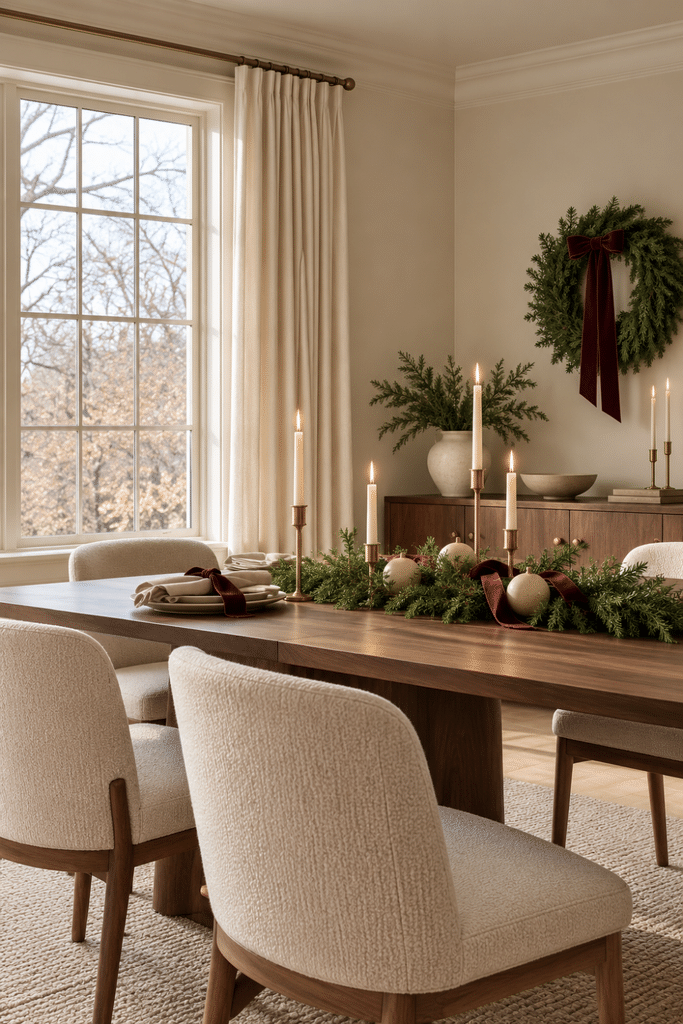
A room can feel visually busy even when it is not filled with very many things. Sometimes the real issue is that too many different ideas are happening at once. One ribbon here, another color there, several types of greenery, mixed metals, different candle styles, and ornaments that do not quite relate to one another can make the room feel more restless than festive.
Repetition creates the opposite effect. When the same few details appear throughout the room, the eye begins to recognize a pattern. That visual rhythm is what helps holiday decorating feel cohesive, even when the room still has plenty of personality.
Choose a few details worth repeating, then let them carry the story:
- Use one variety of greenery throughout the room so the tree, wreath, mantel, and smaller arrangements feel connected.
- Repeat one ribbon in a few intentional places, such as deep burgundy velvet on the tree, wreath, and dining table.
- Stay consistent with one metallic finish like aged brass rather than introducing several competing metals.
- Choose one candle style and repeat it in different heights or groupings for a more collected look.
- Repeat an ornament shape or material instead of filling the tree with too many unrelated styles.
- Carry one seasonal color through the room in small doses so the eye notices the connection without feeling surrounded by it.
This does not mean everything needs to match. In fact, the room will usually feel more interesting when there is some variation in scale, texture, and placement. The repetition simply creates a visual thread that ties those differences together.
It also gives you permission to stop searching for one more decoration to make the room feel finished. A few beautiful ideas repeated with intention can create far more atmosphere than a collection of unrelated pieces competing for attention.
Styling Note: If the room feels busy, look for what feels unrelated before deciding that everything needs to come out. Sometimes removing one competing color, material, or motif is enough to make the whole space feel more cohesive.
Decorate the Moments You Want to Remember
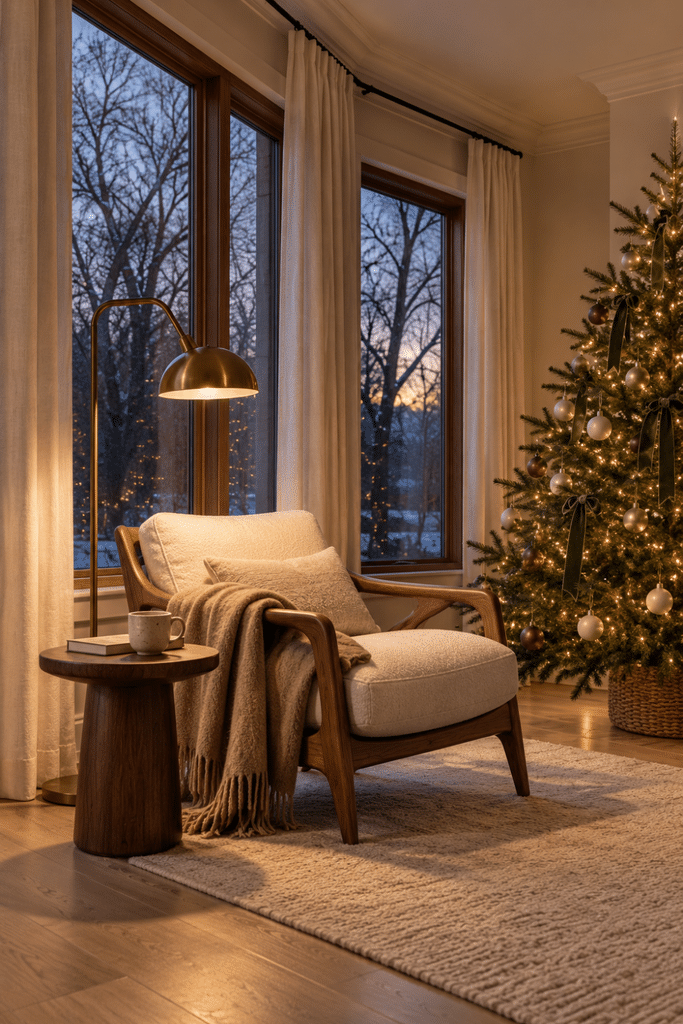
It is easy to start decorating by looking around the room and asking what still feels empty. Another candle could go there. A garland might fit across that shelf. The kitchen counter could use something seasonal. But the spaces we remember most at Christmas are rarely the ones with the most decorations. They are the ones where something meaningful actually happened.
That is where minimalist Christmas decor becomes less about how much is in the room and more about how you want to live in it. Instead of decorating every available surface, think about the moments you hope will define the season and give those places a little more attention.
Ask yourself: Where will Christmas actually happen in my home?
- If morning coffee beside the tree is your favorite ritual, make that corner especially comfortable with soft lighting, a warm throw blanket, and somewhere convenient to set your mug.
- If gathering around the table matters most, focus your energy there with beautiful linens, candlelight, and a simple centerpiece that still leaves plenty of room for conversation and food.
- If quiet evenings are what you look forward to, let the tree lights, lamps, and comfortable seating create the atmosphere rather than filling the room with more objects.
- If baking is part of your tradition, keep the kitchen counters open enough to actually use them and add only a few seasonal details that make the space feel special.
- If wrapping gifts is something you enjoy, create one thoughtful place where paper, ribbon, scissors, and tags can be used comfortably instead of spreading supplies throughout the house.
- If welcoming family or friends is at the heart of the season, pay attention to the entry, dining area, and places where people naturally settle rather than decorating rooms no one will spend much time in.
When you decorate around experiences, the decorations stop being the destination. They become part of the setting. The greenery on the table frames dinner together. The lights on the tree soften an ordinary evening. The candle beside your favorite chair becomes part of the memory of slowing down with a book when everything outside feels busy.
That is what I want Christmas at home to feel like. Not a collection of beautifully styled surfaces, but a backdrop for the moments we will actually carry with us after the decorations are packed away.
Styling Note: Put the most effort into the places where your life naturally gathers. Those are the spaces you are most likely to remember.
Let the Quiet Be Part of the Magic
Minimalist Christmas decor is not about stripping the season down until it feels empty. It is about making enough room for the things that matter most to be noticed, appreciated, and actually enjoyed.
Choose what matters. Give it room. Repeat it thoughtfully. Then let yourself live inside it.
The tree does not need to compete with every shelf. The table does not need to hold everything at once. And every quiet corner does not need another decoration simply because there is space for one. When the room has a little breathing room, the details you chose with intention begin to feel even more meaningful.
Perhaps the quietest parts of a holiday room are not empty at all. They are what allow the lights to glow a little brighter, the greenery to feel more beautiful, and the pieces carrying memories to finally have our attention.
That is the kind of Christmas home I find myself drawn to most. One that still feels warm, nostalgic, and full of wonder, but also gives you somewhere to exhale and simply enjoy being there. 🤍

Save this post to Pinterest for the next time you want to create a holiday home that feels festive, beautiful, and peacefully yours.
Explore more Design Therapy on Divine Decor Finds for thoughtful ways to create a home that supports how you want to feel and live. 🌿



Leave a Reply