Sometimes One Corner Is Enough
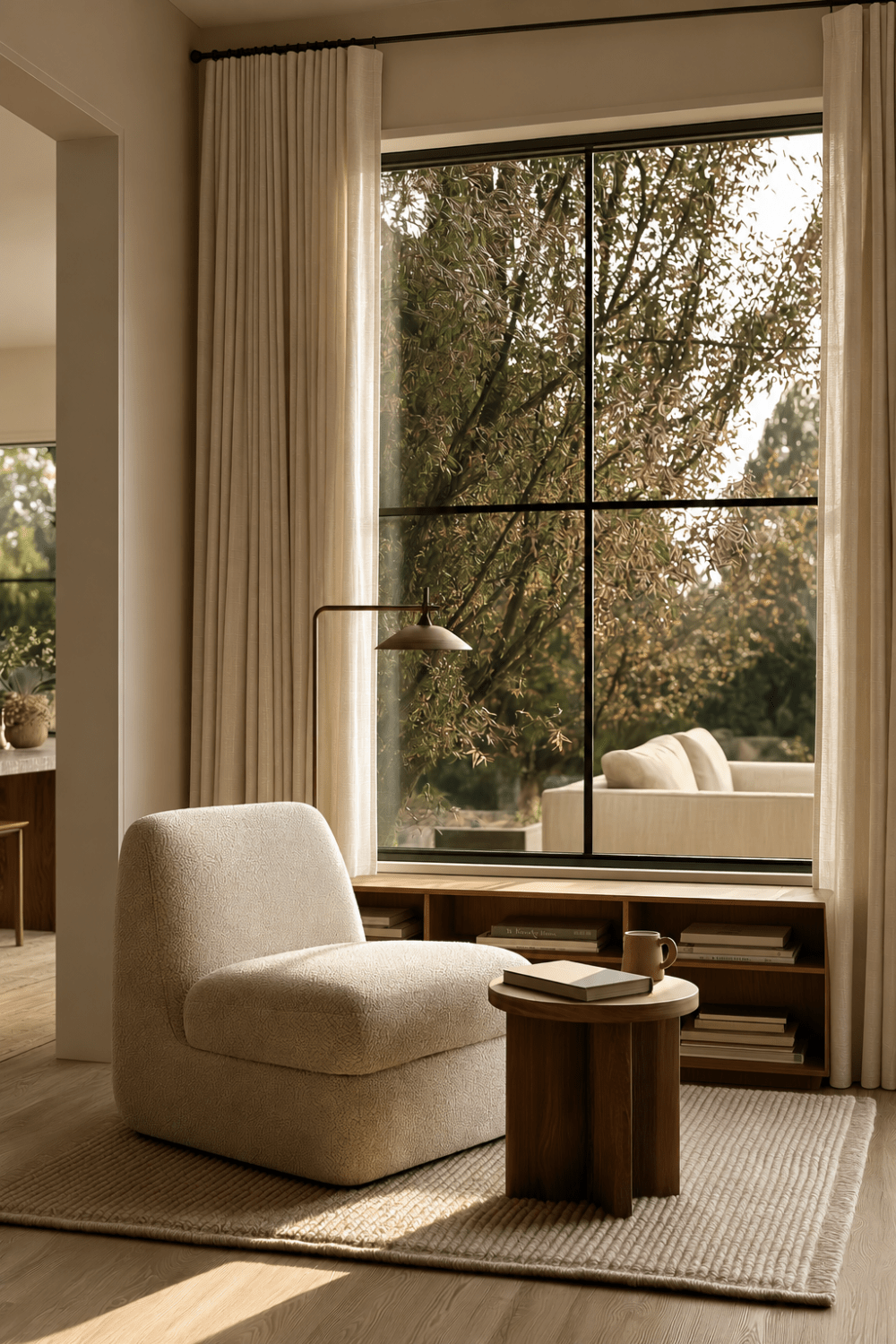
There are days when home can feel full of noise even when the rooms themselves are quiet. The television is within view, your laptop is still sitting nearby, and everyday responsibilities seem to follow you from one space to the next. Sometimes what you crave is simply one place where the pace feels different. A small reading nook can create that sense of retreat without requiring a spare room, a renovation, or much space at all.
It may begin with a few unused feet beside a window, an overlooked corner of the bedroom, or a quiet edge of the living room. What makes that small area feel special is not how much decor you add, but how intentionally you separate the experience from everything happening around it.
The direction of the chair, what falls within your line of sight, the way the floor or lighting defines the space, and even the position of surrounding furniture can make one corner feel surprisingly removed from the larger room.
That means you do not need a dedicated library, a built-in window seat, or a sprawling home to create somewhere that invites you to slow down. With a few thoughtful spatial choices, even the smallest corner can begin to feel like a place you naturally want to retreat to at the end of the day.
Give the Nook One Clear Purpose
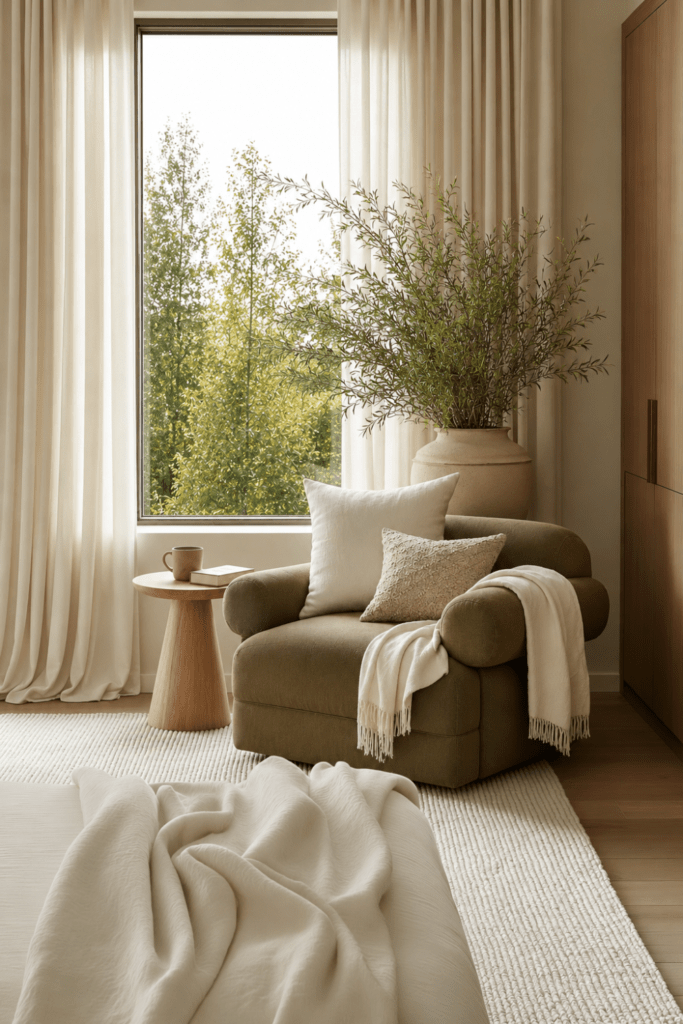
A small reading nook works best when it knows what it is for. That may sound simple, but it is easy to overfill a tiny space with good intentions. A chair for reading becomes a place for journaling, coffee, storage, hobbies, and extra decor until the corner starts to feel more busy than restorative.
Begin with the experience you want most. If reading is the primary purpose, let every choice support that first. The right seat, good light, and a surface within reach will usually matter more than another decorative object.
To keep the nook focused and functional:
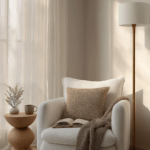
- Choose supportive seating you can comfortably stay in for a while.
- Add a reading light that works for the time of day you use the space most.
- Keep a small table within easy reach for a book, mug, or glasses.
- Leave enough open surface space for the things you are actually using.
- Add storage only if it supports the routine, such as a basket for current books.
- Limit secondary activities to one closely related ritual, like morning coffee or journaling.
This is what makes functional small spaces feel intentional rather than crowded. A small retreat at home does not need to accommodate everything you enjoy. It simply needs to make one experience easier to return to.
Your reading corner can still feel beautiful, but let beauty come from usefulness first. The more clearly the nook supports the way you genuinely want to spend time there, the more naturally you will use it.
Styling Note: Ask yourself, “What do I want to reach for when I sit here?” Let the answer determine what earns a place within arm’s reach.
Turn Away From the Room’s Main Activity
Sometimes a reading nook does not need more furniture. It simply needs a different point of view.
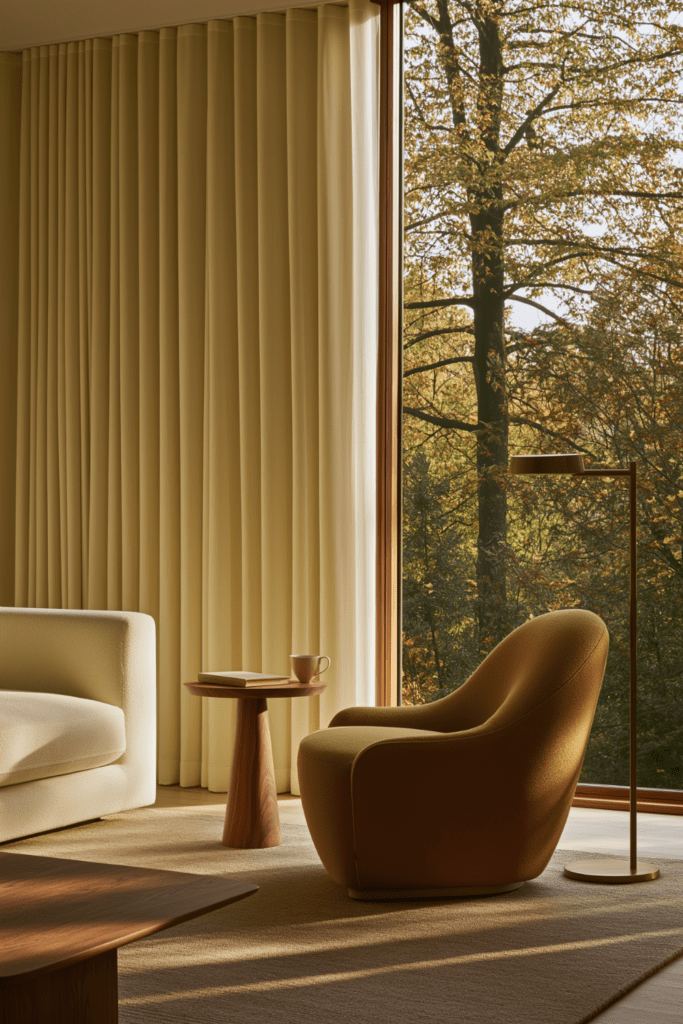
The direction a chair faces can completely change how connected it feels to the rest of the room. A seat aimed toward the television, dining table, or main conversation area naturally keeps your attention tied to whatever is happening there. Turn that same chair toward a window, bookshelf, or quieter wall, and the corner begins to feel more separate almost immediately.
Use intentional furniture placement to create a little distance:
- Angle the chair away from the television or busiest part of the room.
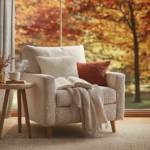
- Face the seat toward a window, artwork, or another calming view.
- Position a bench perpendicular to the room’s main furniture arrangement.
- Let the side or back of a chair create a subtle boundary beside a desk or dining area.
- Keep the nook just outside the room’s main traffic path whenever possible.
- Leave enough space around the seating so the corner feels intentional rather than squeezed into place.
This kind of furniture zoning can create the feeling of a room within a room without adding a divider or purchasing anything new. The shift is subtle, but it changes what your attention meets when you sit down.
A small reading nook often feels quieter when it is not visually participating in everything else happening around it. Sometimes turning the chair fifteen or twenty degrees is enough to make the space feel like it belongs to a different rhythm.
Styling Note: Sit in the chair before finalizing the layout and notice what fills your view. If your eye immediately lands on the television, workspace, or busiest pathway, keep turning until your attention has somewhere calmer to settle.
Create a Soft Boundary Without Adding Walls
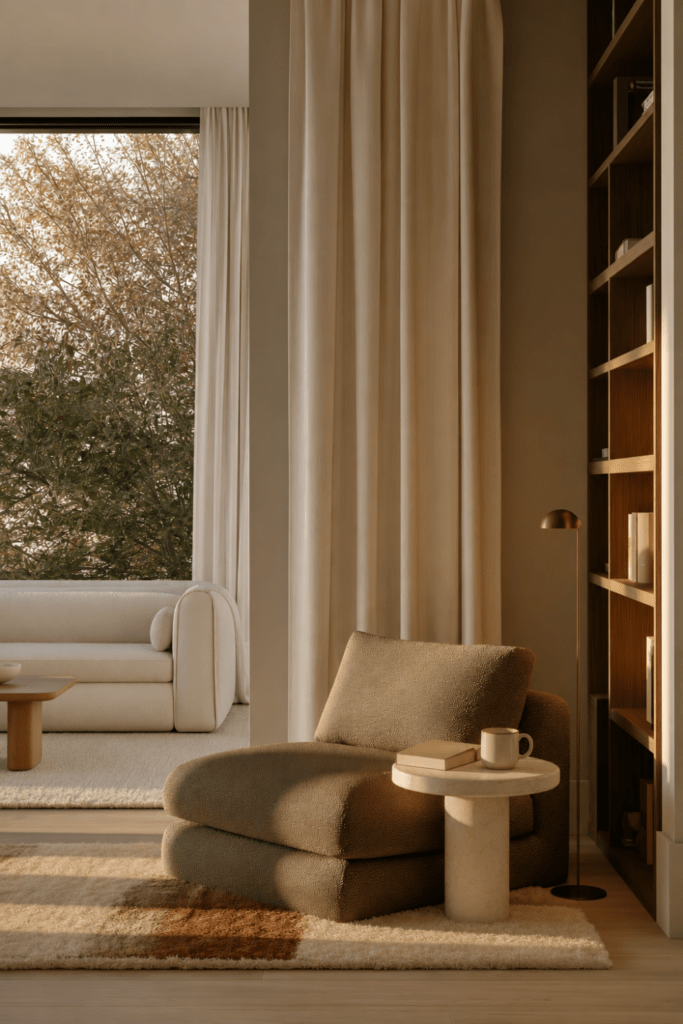
A small reading area can feel separate from the rest of a room without ever being closed off. This is where micro-zoning becomes useful. Instead of building a wall or adding a bulky divider, you use subtle design cues to tell the eye, “this part of the room has a different purpose.”
The boundary can be created through the floor, the furniture, the lighting, or even a shift in material. The goal is not to box the nook in. It is to give it just enough definition that it feels intentional.
Simple ways to create a soft boundary include:
- Place a small area rug beneath the chair and side table.
- Use a floor lamp to create a focused pool of light.
- Let the edge of a bookcase or low cabinet frame one side of the nook.
- Angle the furniture slightly differently from the rest of the room.
- Use curtains or a change in texture to soften the transition.
- Position a console or low piece of furniture nearby to give the area a visual edge.
You do not need to use every zoning tool at once. In fact, one or two clear cues are usually more effective. A rug and a lamp may be enough. Or perhaps the chair’s orientation and the edge of a bookcase already create the separation you need.
This kind of visual boundary can make a room within a room feel surprisingly distinct while keeping the larger space open and connected. The nook still belongs to the room, but it carries a different mood and purpose.
Styling Note: Begin with the footprint. A rug placed beneath the chair and side table can visually claim the nook before you add another layer.
Balance Refuge With a View
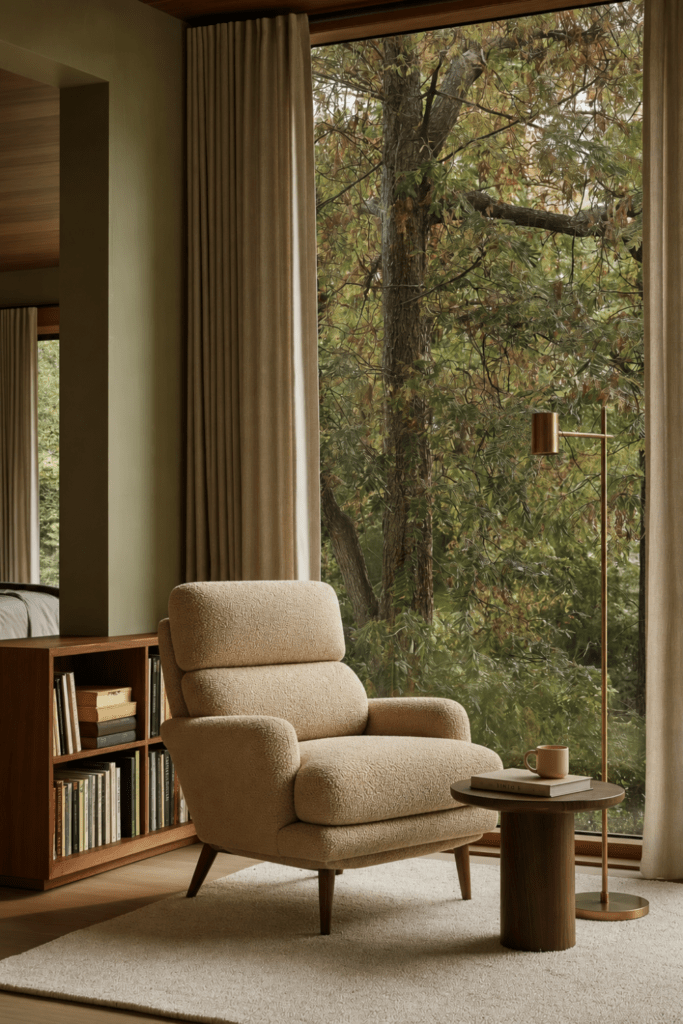
Some reading nooks feel comfortable the moment you sit down, even when the design itself is simple. Often, the difference comes from balance. The seat feels protected enough to settle into, but the view ahead still feels open.
A chair placed with a wall behind it and a window in sight can feel more grounded than one floating in the center of a room. The same is true for a seat tucked beside shelving, framed by curtains, or softened by a tall lamp. These elements create just enough enclosure to make the space feel held without closing it in.
To create that balance:
- Place the seat with a wall, bookcase, or substantial furniture piece behind or beside it.
- Keep the view ahead open toward a window, artwork, or the larger room.
- Use curtains or a tall lamp to soften one side of the nook.
- Take advantage of bay windows, dormers, alcoves, or architectural recesses when available.
- Avoid squeezing oversized furniture into a footprint that needs breathing room.
- Leave enough open space around the seat so the nook feels sheltered, not cramped.
This is where restorative home design becomes less about adding more and more about understanding placement. Too much enclosure can make a small space feel boxed in. Too little can leave it feeling exposed and disconnected.
A small reading nook often feels most inviting when it offers both. Something solid behind you creates a sense of support, while something pleasant ahead gives your attention room to wander.
Styling Note: Look for a location that gives you something solid behind you and something beautiful ahead. That simple combination can make even a tiny nook feel remarkably settled.
Let Repetition Turn the Nook Into a Ritual
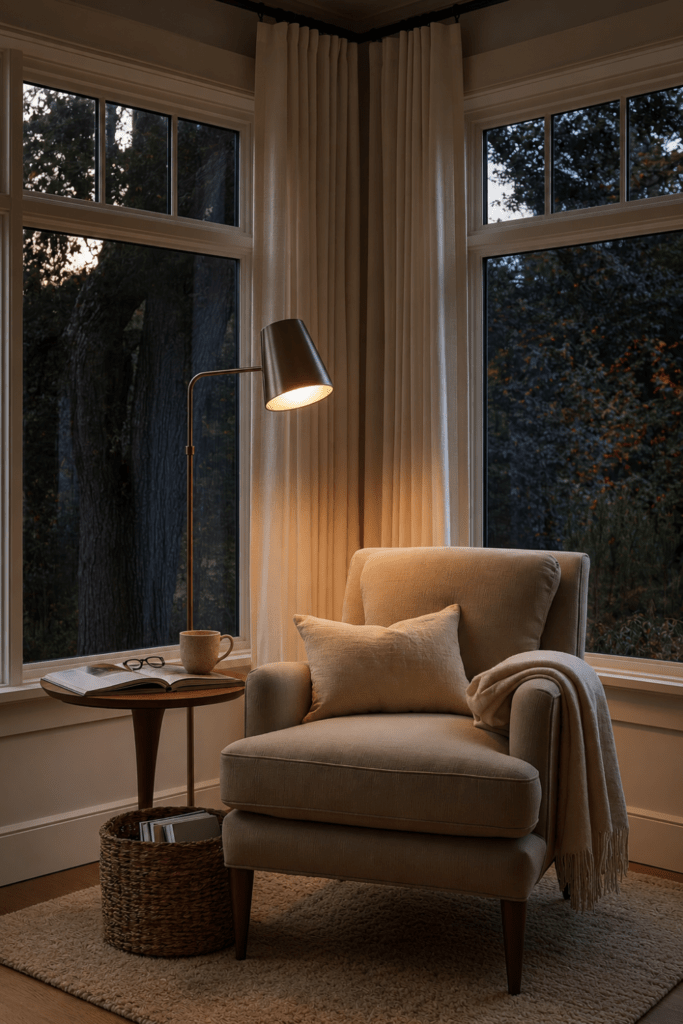
The most meaningful reading nooks are not the ones that look the most styled. They are the ones you actually return to.
When you begin using the same place for the same quiet activity, the space starts to develop its own rhythm. An evening chapter before bed, Saturday morning coffee, twenty quiet minutes after work, or journaling at the end of the day can gradually give the nook a stronger identity than any decorative object ever could.
Let the space support a ritual you will actually repeat:
- Read there at the same time each evening.
- Bring your morning coffee there on weekends.
- Keep one journal nearby for quiet reflection.
- Listen to music while you read instead of defaulting to another screen.
- Spend a few minutes there after work before moving into the rest of your evening.
- Keep only the things you regularly reach for within easy reach.
This is not about filling the corner with candles, baskets, or objects meant to make the ritual look complete. The design creates the setting. Repetition gives the setting meaning.
A small retreat at home becomes more personal when it begins to hold familiar habits. Over time, sitting down in that same chair can become a gentle cue that the pace of the day is about to change.
That is when a small reading nook becomes more than a styled corner. It becomes somewhere you know how to return to.
Styling Note: Live with the nook before adding more. After a week of regular use, you will know which objects genuinely support the ritual and which ones are only taking up space.
You Do Not Need an Entire Room to Retreat
A meaningful reading space does not have to begin with a spare room, a built-in window seat, or a perfectly styled library. Sometimes it begins with an overlooked corner and one simple decision to use that space differently.
Start by giving the nook one clear purpose. Turn the chair away from the room’s busiest activity. Create a soft boundary with a rug, lamp, or nearby piece of furniture. Look for a balance between something solid behind you and something peaceful ahead. Then return to the space often enough that it begins to develop its own rhythm.
A small reading nook becomes special because of how intentionally it is arranged and how consistently it is used, not because of how many accessories it contains.
So before buying anything new, look around your home for a corner that is already there but not quite doing anything for you. A few thoughtful shifts may be all it takes to give that space a completely different purpose.
Sometimes creating more calm at home does not require changing the whole room. It simply requires claiming one small part of it for a slower pace.
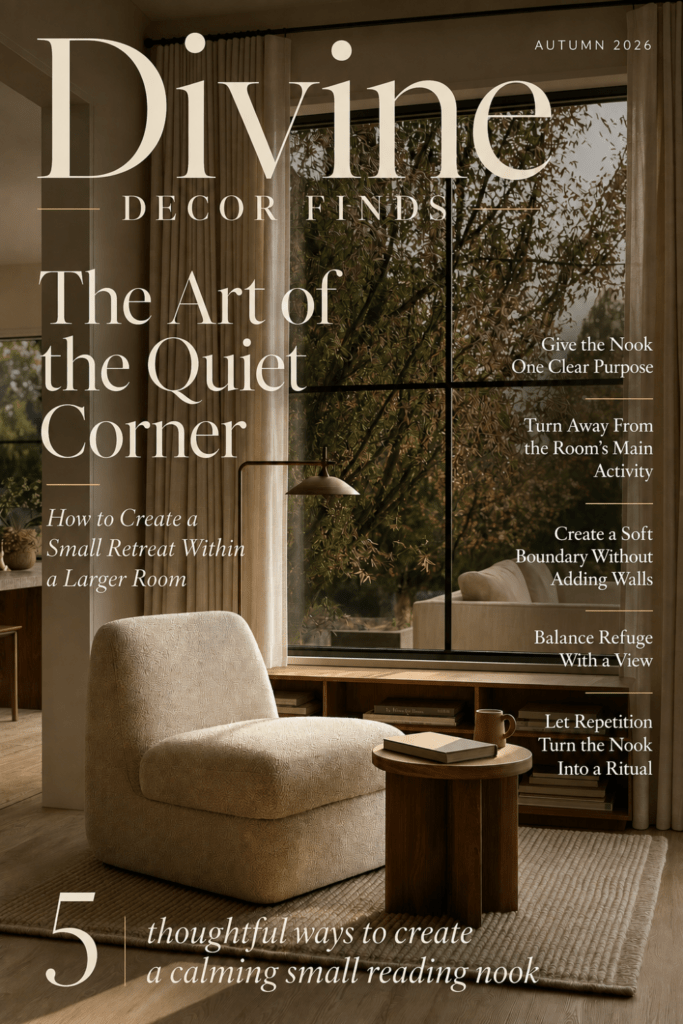
Save this post to Pinterest for inspiration when you are ready to turn an overlooked corner into a small reading retreat. 🤍
Explore more Organic Modern styling and restorative home ideas on Divine Decor Finds. 🌿