When More Light Starts Feeling Less Magical
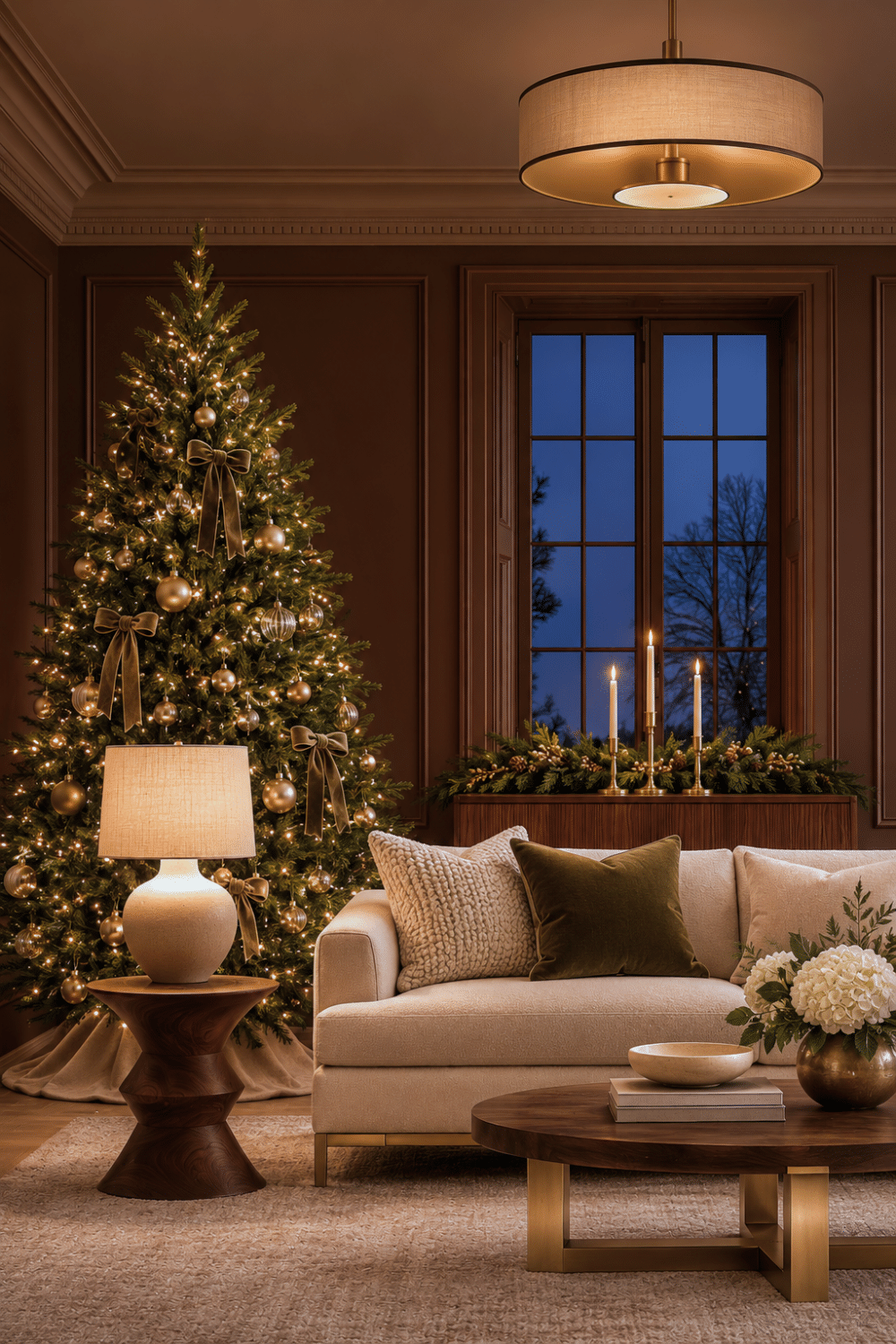
The tree is glowing in the corner, a lamp is warming the sofa beside it, a few candles flicker across the room, and the ceiling lights are still shining overhead. Everything is illuminated, yet instead of feeling soft and magical, the room somehow feels busier than it did before you turned everything on. Beautiful indoor Christmas lighting is less about how many lights you use and more about where the glow appears, what it illuminates, and what you allow to remain a little darker.
That distinction can completely change the way a home feels after sunset. We often associate Christmas with glow, so it is natural to assume that adding another illuminated detail will create more atmosphere. But when every corner is competing for attention, the eye never gets the chance to settle anywhere.
The solution is not necessarily another decoration or another strand of lights. It is learning how to create contrast, vary the intensity, and decide which parts of the room should quietly support the ones you want to notice most.
Ahead, we will look at five simple ways to shape that glow using many of the lamps and fixtures you may already own, so the room feels warmer and more dimensional without becoming visually busy.
Because sometimes the most magical change is not turning one more light on.
It is knowing which one to turn off.
Dim the Room Before You Add the Christmas Glow
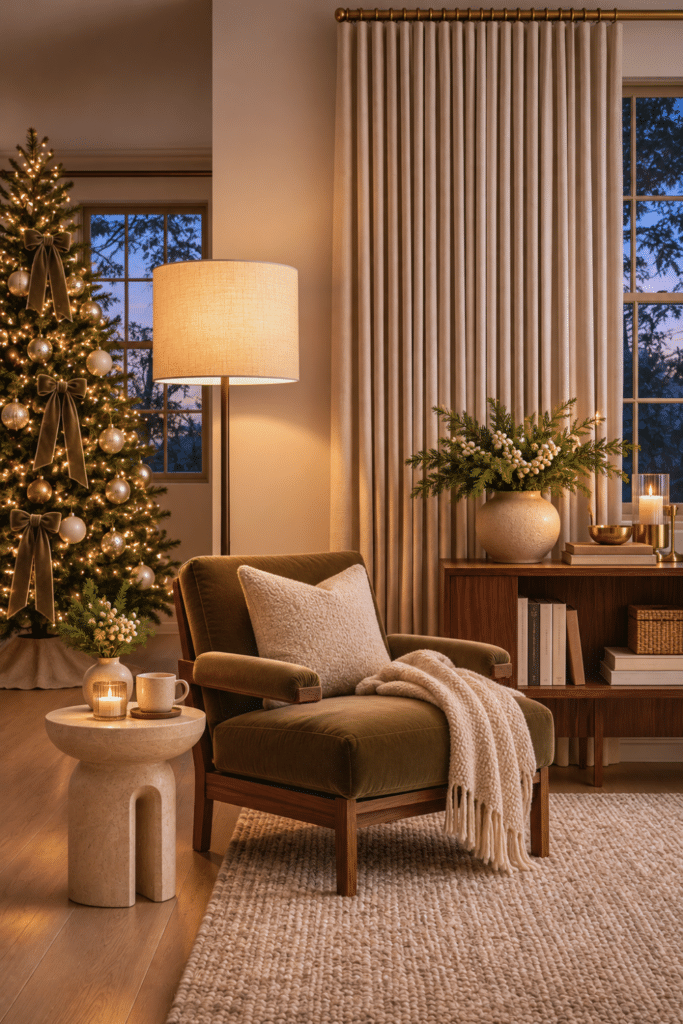
A room can be beautifully decorated for Christmas and still feel strangely flat after sunset. When bright ceiling fixtures, recessed lights, lamps, and seasonal accents are all glowing at once, the softness that makes December evenings feel special can disappear.
Indoor Christmas lighting becomes more atmospheric when everyday lighting steps into a supporting role. Lowering the overall brightness gives smaller sources more presence, creates contrast, and allows the room to feel layered instead of evenly lit.
Lower the background light before increasing the decorative light.
- Dim the main ceiling fixture instead of leaving it at full brightness.
- Turn off recessed lights that flatten the room.
- Use table and floor lamps to create softer pools of light around seating areas.
- Let natural shadows remain instead of filling every darker corner.
- Allow the tree and seasonal accents to become more visible before adding another source.
- Keep enough illumination for comfort and safe movement through the room.
The goal is not darkness. It is contrast. When some sources lead and others quietly support them, the room begins to feel slower, warmer, and more inviting as evening settles in.
Styling Note: Before buying another strand of lights, switch off the brightest ceiling fixture and turn on the tree and your favorite lamps. Give your eyes a few minutes to adjust before deciding whether the room actually needs anything else.
Keep the Light in One Warm Color Family
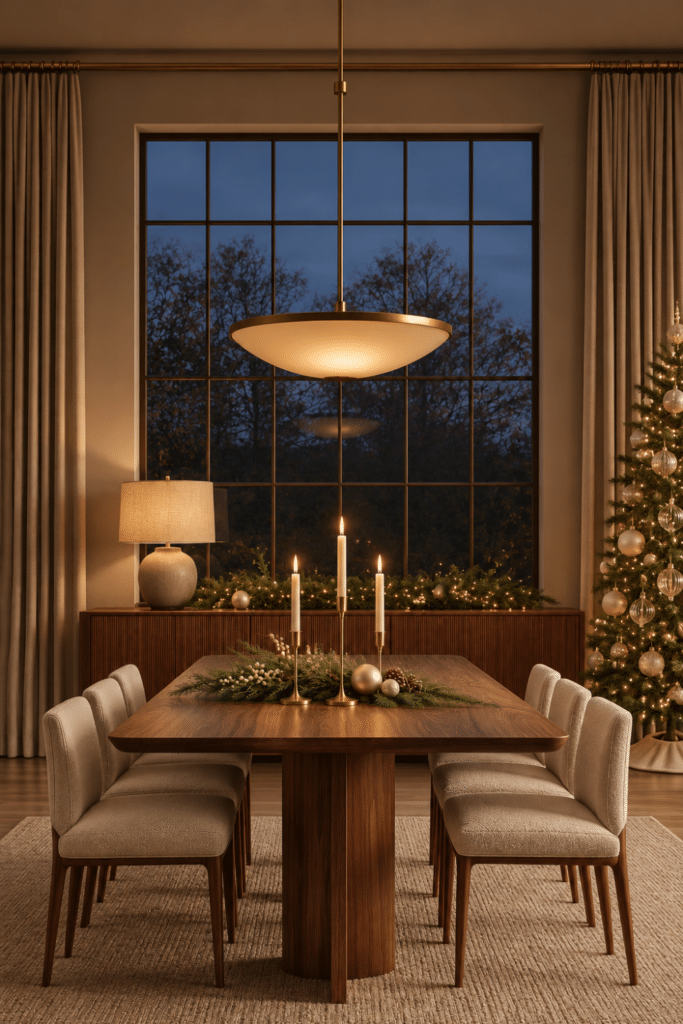
A room can be beautifully decorated and still feel slightly off when the light sources are pulling in different directions. Warm tree lights beside a cool overhead fixture, or golden candles next to stark white LEDs, can make the room feel fragmented instead of calm and cohesive.
Lighting harmony comes from keeping the overall glow within the same warm color family. Softer light tends to flatter walnut, oak, brass, evergreen, cream upholstery, linen, wool, and other natural holiday materials, helping the room feel more connected and atmospheric.
Keep the glow warm and consistent throughout the room:
- Choose warm white Christmas lights for the tree, garland, and other seasonal accents.
- Look for bulbs around 2700K or lower for a softer residential feel, while remembering that product labels can vary.
- Compare Christmas tree lights with nearby lamps before deciding they work well together.
- Avoid placing very cool white LEDs beside warm lamps or candles in the same sightline.
- Keep decorative light sources within a similar temperature rather than trying to match every bulb exactly.
- Adjust any fixture that looks noticeably whiter or bluer before adding more light.
When the tones work together, the eye stops noticing individual bulbs and begins experiencing the room as one complete atmosphere. The wood feels richer, the greenery deeper, and the entire space more settled.
Styling Note: Turn on every light source you plan to use, then step into the doorway and look at the room as a whole. If one source suddenly appears much whiter or bluer than everything around it, that is the one to adjust first.
Create Pools of Light at Different Heights
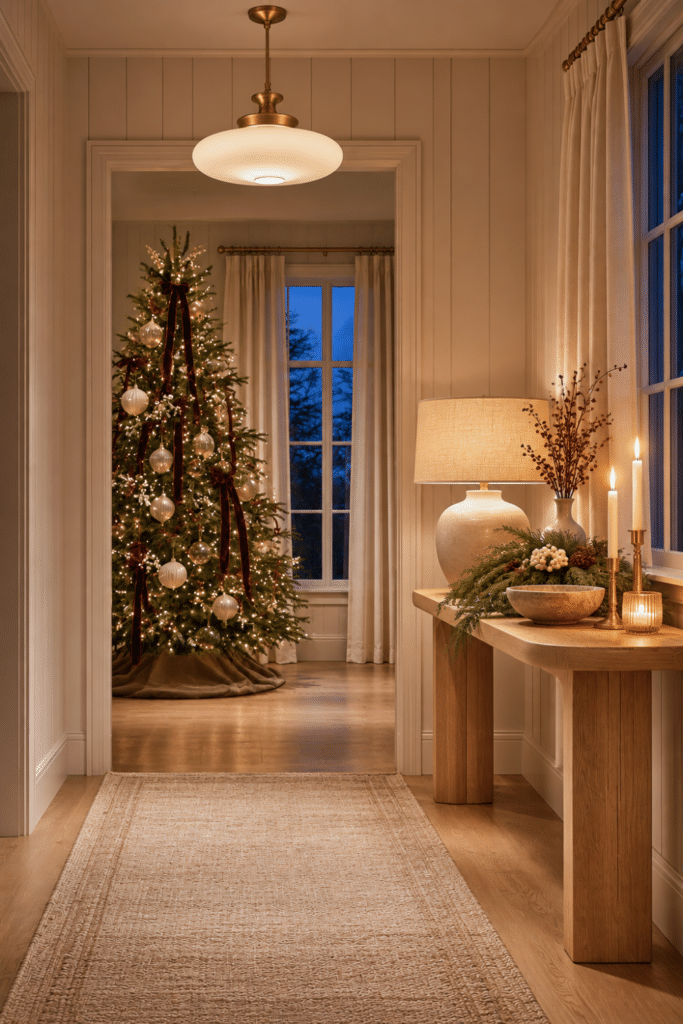
A room feels more intimate when the light is not all coming from the same level. Instead of one bright source washing over everything, smaller pools of light can guide the eye around the space and make each area feel a little more purposeful.
Layering indoor Christmas lighting at different heights creates dimension without requiring more decorations. Low light draws attention to tabletops and gathering spots, mid-level sources add warmth around seating and consoles, and higher sources help shape the room without flattening it.
Vary the height of your light sources to create a more layered effect:
- Use candles or fireplace glow as your lowest level of light.
- Add table lamps, console lamps, or tree lights at mid-height.
- Bring in a floor lamp, pendant, or selected overhead fixture for a higher layer.
- Spread the light around the room instead of clustering every glowing source in one corner.
- Choose linen, parchment, or other diffusing lampshades to soften the bulb and create gentler pools of light.
- Remember that you do not need all three levels in every room. The goal is variation, not a formula you have to follow perfectly.
When the light moves through the room at different heights, the space begins to feel more dimensional and inviting. One glow may pull you toward the tree, another toward a reading chair, while a lower source creates a quiet place to gather.
Styling Note: Take a quick photo of the room from the doorway after dark. It is often easier to spot whether all your light is clustered at one height when you see the space flattened into a single image.
Let the Christmas Tree Be the Brightest Story
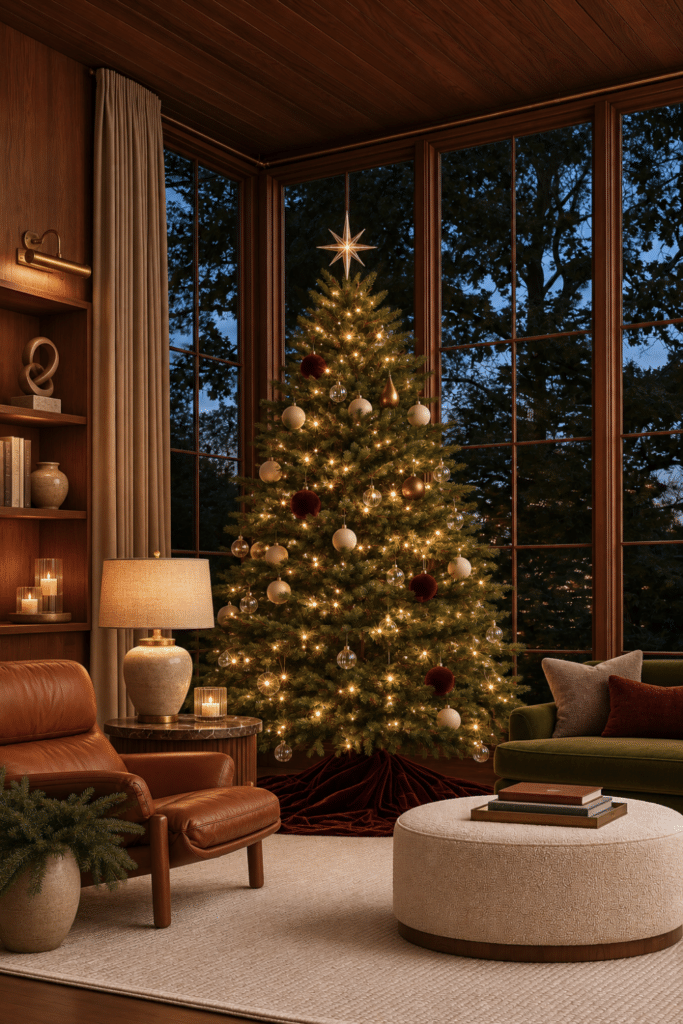
A Christmas tree feels most magical when the room gives it permission to be the star. If nearby garlands, shelves, windows, and ceiling fixtures are glowing just as brightly, the tree can start to feel like one illuminated object among many rather than the heart of the room.
Good Christmas tree lighting is really about hierarchy. The tree does not need to be overwhelmingly bright. It simply needs the strongest seasonal presence within its sightline, while the surrounding light stays softer and more supportive.
Think focal point first, supporting glow second.
- Choose warm white Christmas lights for a calmer, more cohesive effect.
- Tuck lights deeper into the branches instead of placing them only along the outer edges.
- Leave some branch structure visible so the tree still feels natural and dimensional.
- Use steady illumination rather than flashing or color-changing modes for a quieter holiday ambiance.
- Step back and view the tree from several angles to check for dark gaps or overly bright clusters.
- Dim nearby garlands, shelves, or overhead fixtures if they begin competing with the tree.
The best Christmas living room lighting often feels quieter than expected. When the surrounding room softens, the tree gains presence without needing more ornaments, more lights, or more decoration.
Styling Note: Stand where you most often enter the room. Your eye should find the tree naturally. If another illuminated feature catches your attention first, reduce that secondary light before adding anything else to the tree.
Leave a Little Darkness Between the Glow

A beautifully lit Christmas room still needs places where the light fades away. If every shelf, window, corner, and surface is illuminated, the room can start to feel visually restless, even when each individual light source is lovely.
The most successful indoor Christmas lighting often includes as much restraint as illumination, because darker areas are what allow the glow to feel special. Contrast gives the eye somewhere to rest and helps each pool of light feel more intentional.
Let some areas stay quiet so the glow has room to stand out.
- Leave a few corners darker instead of placing a lamp in every one.
- Keep sections of shelving or mantel decor unlit.
- Allow negative space around the tree so its light feels more prominent.
- Use Christmas candles selectively rather than scattering them throughout the room.
- Turn off unnecessary ceiling lights that compete with softer accent lighting.
- Step back and evaluate the whole sightline rather than styling each glowing area separately.
Real candles should always be attended and kept safely away from trees, dry greenery, ribbons, paper, and other combustible materials. Flameless candles can create a similar effect where an open flame is not practical.
When the room has both glow and shadow, the atmosphere becomes softer and more memorable. The tree feels brighter, candlelight feels warmer, and the quieter spaces make the entire room feel more intimate.
Styling Note: Once everything is turned on, switch off one light source. If the room suddenly feels calmer and the remaining glow becomes more noticeable, you have just found the value of contrast.
Let the Glow Do More With Less
Beautiful indoor Christmas lighting is not measured by how many things glow. It is created by giving each source enough space to make the room feel warmer, softer, and more magical.
Before adding another decoration, try changing one thing about the light you already have. Dim the ceiling fixture, move a lamp, replace one cool bulb, soften the tree lights, or leave one corner intentionally darker. Small adjustments can completely change the atmosphere without requiring anything new.
The goal is not to create less Christmas magic. It is to make the magic already there easier to notice.
Christmas light feels most beautiful when it does not illuminate everything. It simply draws your attention toward the places where you want to linger a little longer.

Save this post to Pinterest for inspiration when you are ready to create a softer, warmer holiday glow at home.
Explore more Design Principles & Tips on Divine Decor Finds for thoughtful ways to create a home that feels calmer, more intentional, and beautifully yours. 🌿



Leave a Reply