Your Home Has a Second Personality After Sunset
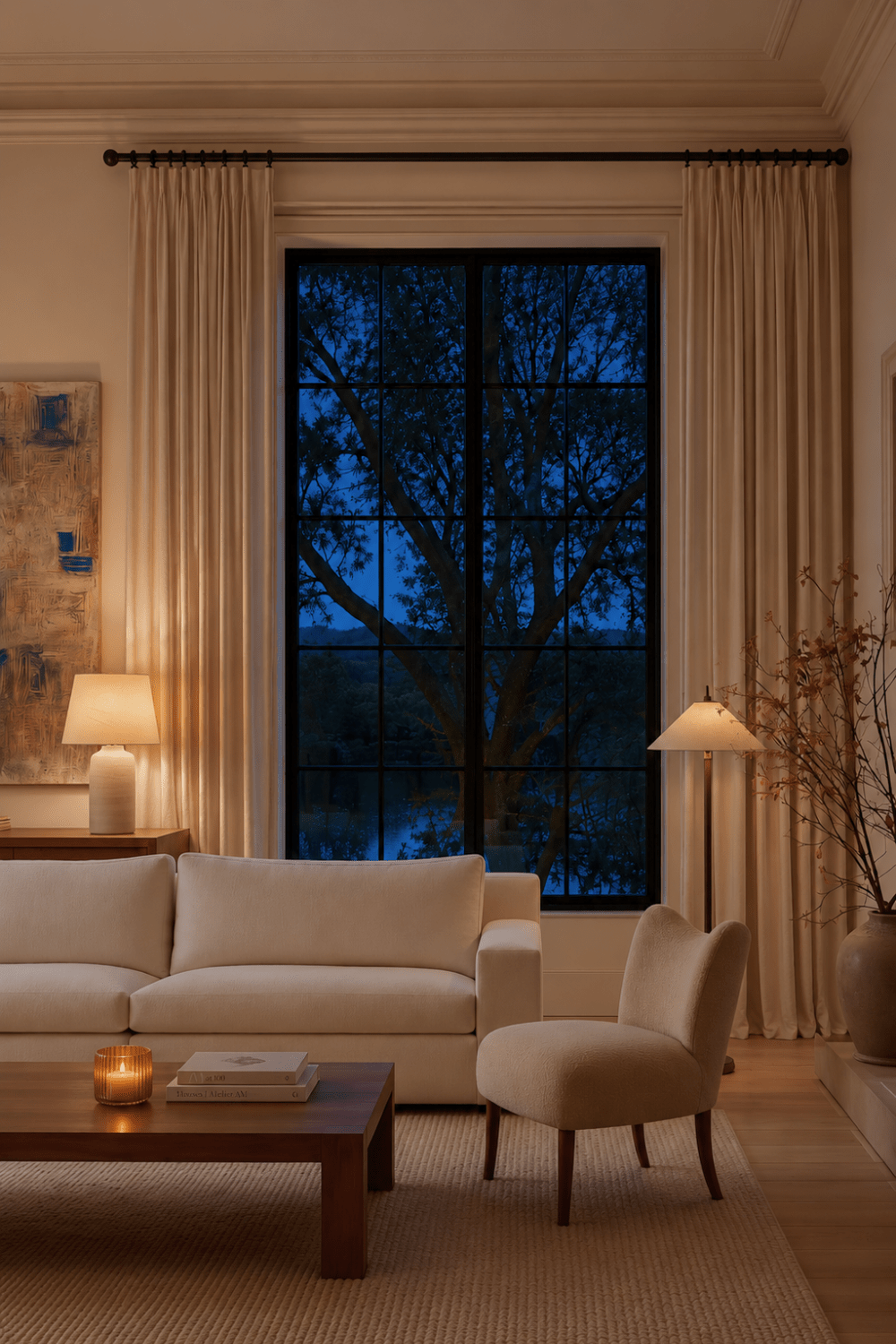
A room can feel completely different once the last of the daylight disappears. The same space that felt warm and effortless in the afternoon can suddenly seem a little too bright, too exposed, or somehow less comforting than it did just an hour earlier. When that happens, it is easy to assume the room needs more decorating. But sometimes the real difference comes down to ambient lighting and the way your home is illuminated when the day begins to wind down.
I love thinking of this as the moment your home reveals its second personality. During the day, sunlight does much of the work for us, bringing depth, warmth, and movement into a room. At night, we have the opportunity to decide what takes its place and, more importantly, what we want the space to feel like.
That shift does not require new furniture, another decorative layer, or an entirely new lighting plan. A few thoughtful changes to where the light comes from, how it moves through the room, and how it feels against the surfaces around it can completely change the atmosphere.
The goal is not simply to make your home look beautiful after dark. It is to create that subtle feeling of arrival at the end of the day, when the rooms around you seem to say, You can settle in now.
And often, creating that feeling begins with changing the light before changing anything else.
1. Lower the Light Source
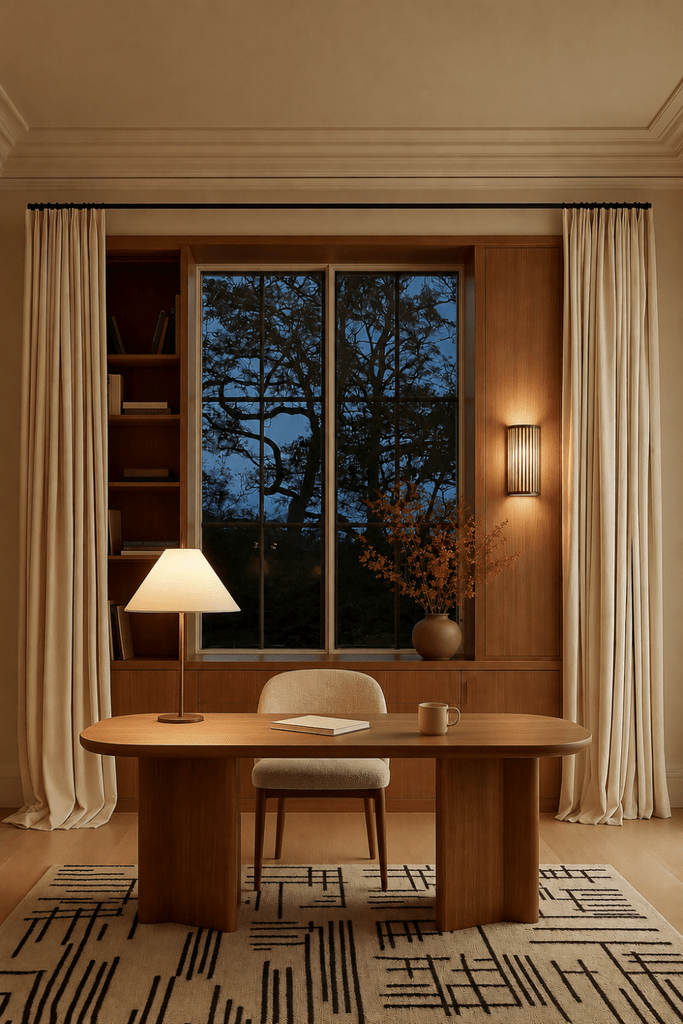
One of the fastest ways to change the mood of a room after sunset is to notice where the light is coming from. When nearly all of it comes from the ceiling, the room may be bright enough to function, but it can also feel flatter, more exposed, and less connected to the places where you actually sit and unwind.
Ambient lighting becomes much more effective when some of that illumination moves closer to human height. A table lamp beside the sofa, a floor lamp near a reading chair, or a pair of wall sconces can create a softer sense of intimacy because the light begins to gather around the activities happening in the room instead of washing over everything from above.
To bring the light closer to where you actually live:
- Add a table lamp beside a sofa, bed, or console.
- Place a floor lamp next to a reading chair.
- Use wall sconces to illuminate a specific zone.
- Turn off unnecessary overhead lighting once your lamps are on.
- Notice whether every light source in the room currently comes from above your head.
Lighting at different heights does not necessarily make a room darker. It makes the illumination feel more intentional. Instead of asking one ceiling fixture to light everything equally, you begin creating quieter areas that naturally draw you toward the places where you want to rest.
Styling Note: Tonight, turn off your main ceiling light and switch on only the lamps you already own. Before buying anything new, notice how differently the room feels.
2. Light More Than One Part of the Room
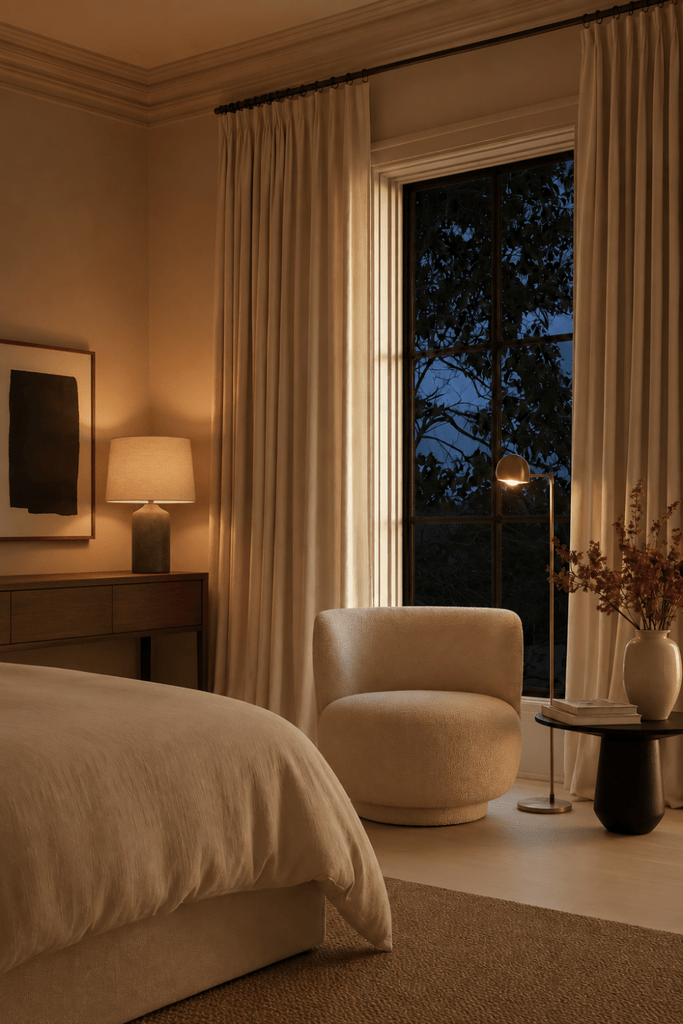
A room can be perfectly bright and still feel strangely flat. That often happens when one fixture is doing all the work. Instead of illuminating the entire space evenly, layered lighting gives different parts of the room their own quiet purpose, allowing the eye to move naturally from one area to another.
This is where ambient lighting begins to create real depth. A table lamp beside the sofa might support conversation, while a floor lamp near a reading chair creates a more intimate corner. A smaller lamp on a console can add warmth farther into the room, while subtle accent lighting near shelving or artwork keeps the background from disappearing completely.
To build more depth after dark:
- Illuminate two or three separate areas instead of relying on one central fixture.
- Place light close to the activities happening in each part of the room.
- Let some corners remain quieter rather than lighting everything equally.
- Use lighting layers at different depths so the room feels dimensional.
- Allow some sources to be brighter than others depending on their purpose.
These separate pools of light can make a large room feel more intimate and a smaller one feel more layered. Instead of one bright field, the room becomes a collection of gentle invitations, drawing you toward the places where you might read, talk, or simply settle in for the evening.
Styling Note: Try turning on three smaller lights in different parts of the room instead of one bright fixture. If your eye begins moving naturally through the space, the lighting is doing more than helping you see. It is shaping the atmosphere.
3. Choose the Warmth of the Evening
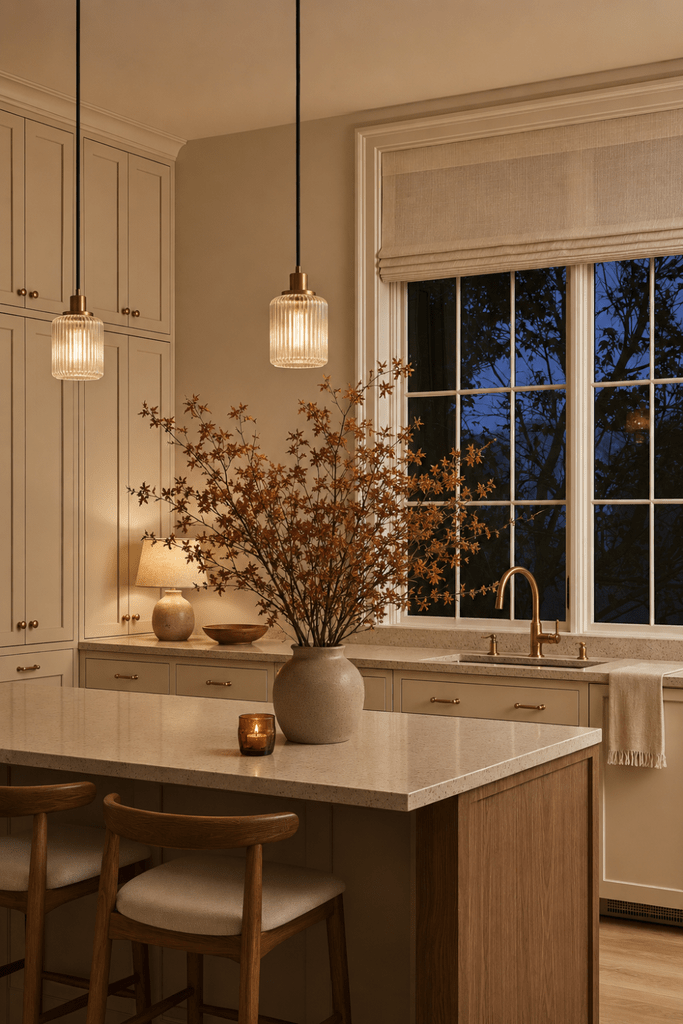
Where the light comes from matters, but so does the quality of the light itself. Two lamps can sit in the same room and create completely different moods depending on the bulb, brightness, and shade. That is why a room can feel beautifully calm under one lamp and surprisingly stark under another.
Color temperature is simply a way of describing whether light appears warmer or cooler. Warmer light tends to flatter the materials already common in Organic Modern interiors, including natural wood, creamy whites, linen, brass, and warm neutrals. Cooler light can be useful for certain tasks, but in spaces meant for winding down, it may feel more alerting or clinical than restful.
To make evening light feel softer rather than simply darker:
- Choose warm light bulbs that complement the tones already present in the room.
- Use dimmable lighting where possible so brightness can shift with the time of day.
- Look for fabric, opaque, or frosted shades that support gentle light diffusion.
- Avoid exposed bulbs at eye level in areas meant for relaxing.
- Adjust brightness based on how the room is being used instead of leaving every fixture at full intensity.
This is where warm lighting becomes part of the evening ritual. Lowering the brightness can act as a quiet signal that the faster part of the day is over and the slower part has begun.
Styling Note: Choose one lamp you use every evening and experiment with a warmer bulb or lower brightness. Small changes in the quality of light can completely change the atmosphere around familiar furniture.
Let the House Get Quieter With You
Creating a softer evening at home does not require lighting every corner or replacing the fixtures you already have. Often, ambient lighting begins with a few small changes: lower it, layer it, and warm it.
Move one lamp closer to where you actually sit. Turn off a ceiling light that feels too bright. Add a second source in another part of the room. Lower the brightness and notice how the space begins to change around you.
That shift can become part of the rhythm of the evening itself. As the day slows down, the light can soften with it, helping your home feel less active and more restorative without asking you to redecorate a thing.
Your rooms do not need to stay equally bright from morning until bedtime. As the day becomes quieter, the house can become quieter too.

Save this post to Pinterest for the next time you want your home to feel softer, warmer, and more inviting after sunset. 🤍
Explore more Design Principles & Tips on Divine Decor Finds for thoughtful ways to create a home that feels beautifully considered and easy to live in. 🌿