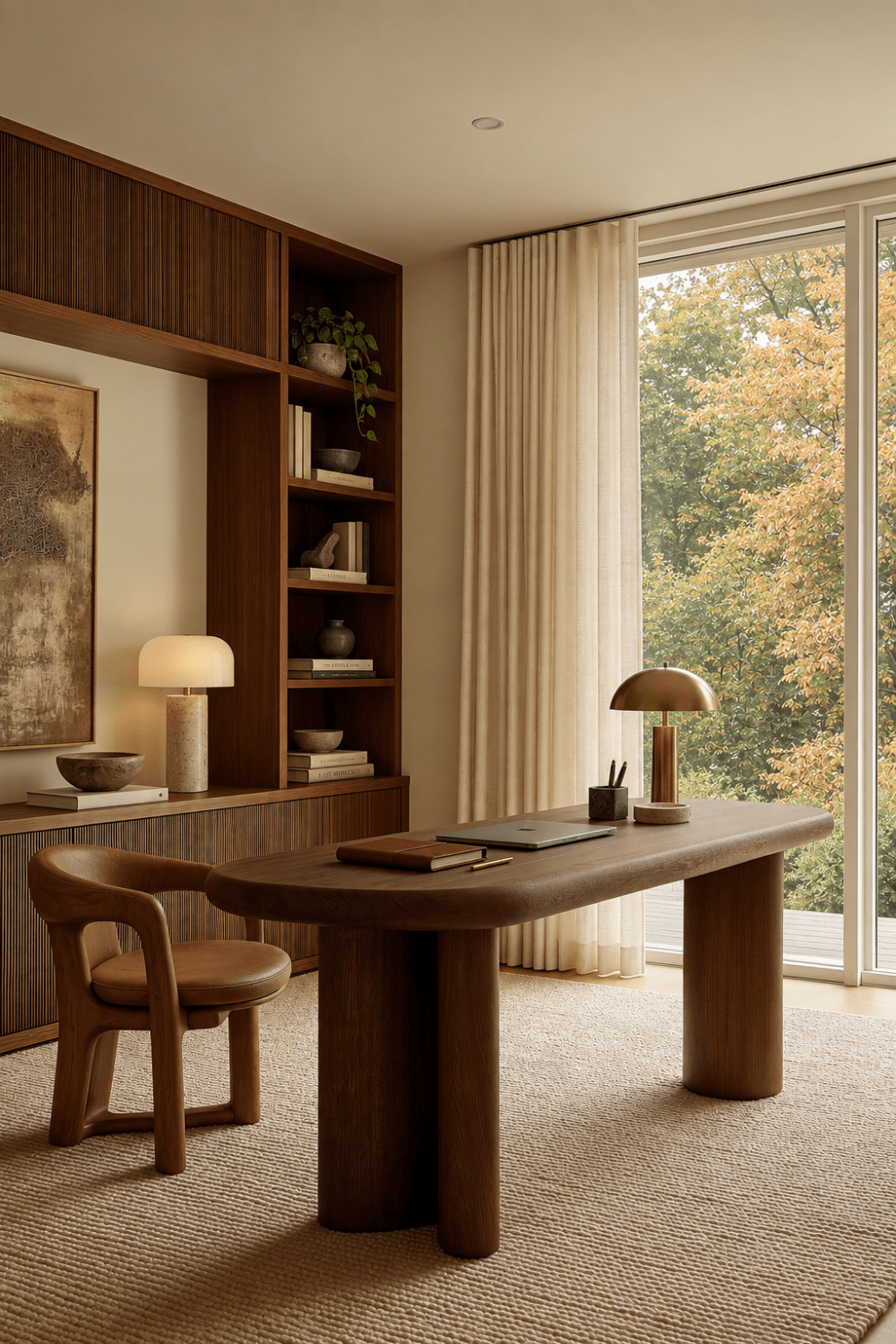
What Would You Do With a Space That Was Truly Yours?
What would you do if one small part of your home asked nothing of you? No guests to impress, no clutter to hide, no household task waiting to be finished. Creating a space for yourself begins with that possibility: choosing somewhere that exists not for what your home needs from you, but for what you might need from it.
Maybe you would read without watching the clock. Write something no one else needs to see. Draw, pray, journal, listen to music, or simply sit quietly long enough to hear your own thoughts again. It does not have to be an entire room. What matters is having somewhere that supports something you rarely make room for in the rest of your day.
That idea is what drew me back to Virginia Woolf’s A Room of One’s Own. Woolf was writing about far more than interiors. Her essay explored the financial independence, privacy, autonomy, and opportunity women needed in order to think and create freely. The room itself became part of a much larger argument about having the conditions to develop an inner and creative life.
It made me wonder what that question might look like inside our homes today. Not What would make this corner prettier? but something more personal:
What would you make room for if one part of your home truly belonged to you?
Claim the Space Before You Decorate It
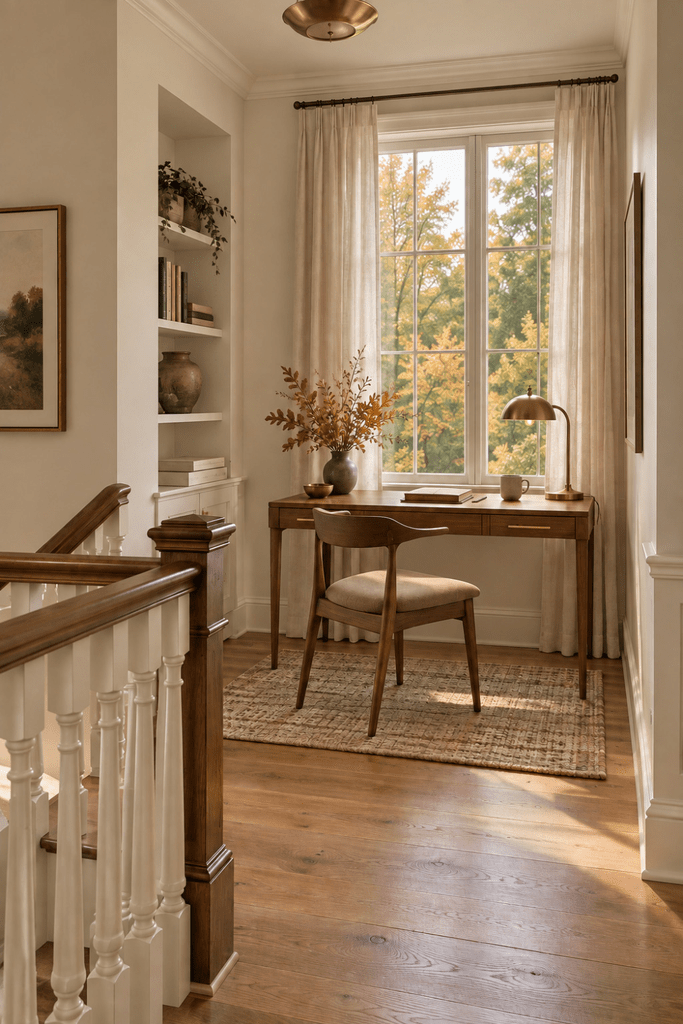
A Room Begins With Permission
Before a room can become beautiful, it has to be allowed to belong to you. That may sound simple, but it is easy to give every unused corner another job before considering whether some part of the home could exist simply to support something you care about.
In A Room of One’s Own, Virginia Woolf’s idea of a room was tied to the conditions that make independent thought and creative work possible. Privacy and autonomy mattered alongside the physical space itself. That is what makes creating a space for yourself feel so meaningful today. You are not simply filling an empty corner. You are deciding that something in your life deserves room to exist.
Look for underused space rather than waiting for an empty room:
- Use one end of a bedroom for a writing desk, chair, or small creative setup.
- Pull a desk beside a window if natural light helps you focus or think.
- Reconsider an unused landing or hallway nook that currently serves no real purpose.
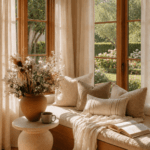
- Turn a window seat into somewhere you actually spend time, rather than treating it as decoration.
- Claim one quiet chair or corner for reading, journaling, prayer, or reflection.
- Use part of a home office or small balcony instead of waiting until you have an entire spare room.
The important question is not whether the space is large enough. It is whether it could support something you wish had a little more room in your life.
Is there somewhere in your home you repeatedly pass by that could become a place for something you keep saying you want more time for?
Styling Note: Do not begin by shopping. First decide what part of the home you are willing to protect for yourself. The purpose should come before the furniture.
Design for What You Want to Happen There
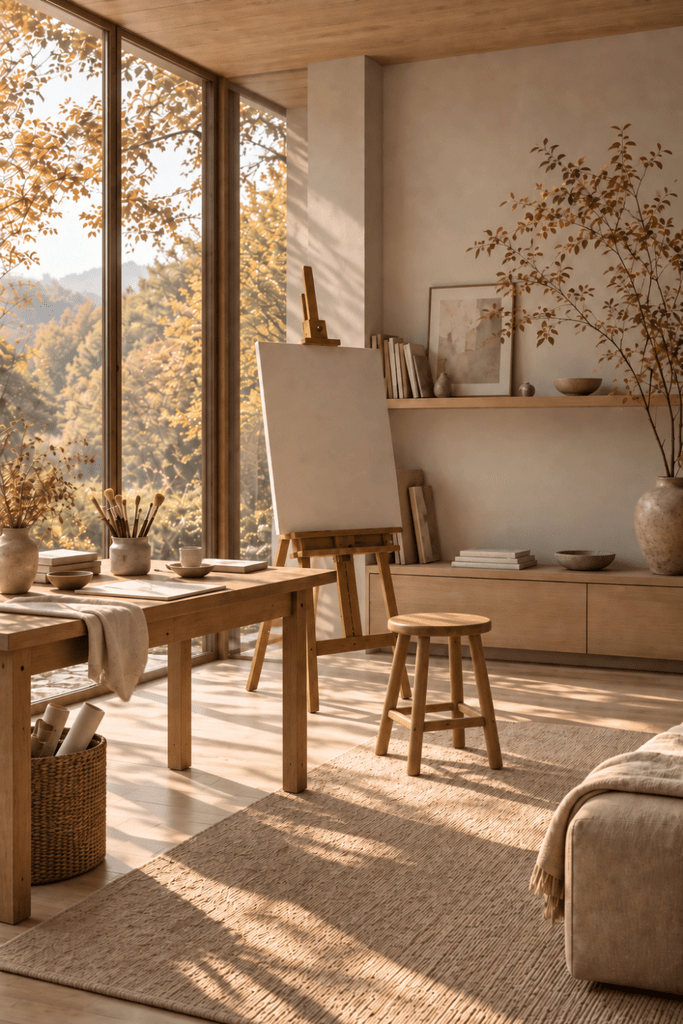
Purpose Before Appearance
Once you have claimed the space, the next question is not How should it look? It is What do I want to happen here? Creating a space for yourself becomes much more meaningful when the design starts with a real activity, something you want more room for in your everyday life.
A space meant for reading needs different support than one meant for writing, painting, journaling, or simply resting. When the room is designed around the ritual first, the furniture and details begin to feel purposeful instead of decorative.
Use this simple formula: Ritual → Need → Design.
- For reading: choose a supportive chair, good light, a nearby surface, and books within easy reach.
- For writing: prioritize proper desk height, an uncluttered work surface, a comfortable chair, and directional lighting.
- For journaling or reflection: create a place to sit comfortably with room for a notebook, tea, and fewer visual distractions.
- For making art: keep supplies accessible, add task lighting, and choose surfaces that can handle actual use.
- For resting: focus on softness, comfort, and fewer demands, with no need to include work-related objects at all.
The goal is not to create a beautiful corner that photographs well. It is to create one that quietly makes something you value easier to return to.
Styling Note: Imagine yourself using the space on an ordinary Tuesday, not posing it for a photograph. That will tell you what it actually needs.
Protect the Space From Interruption
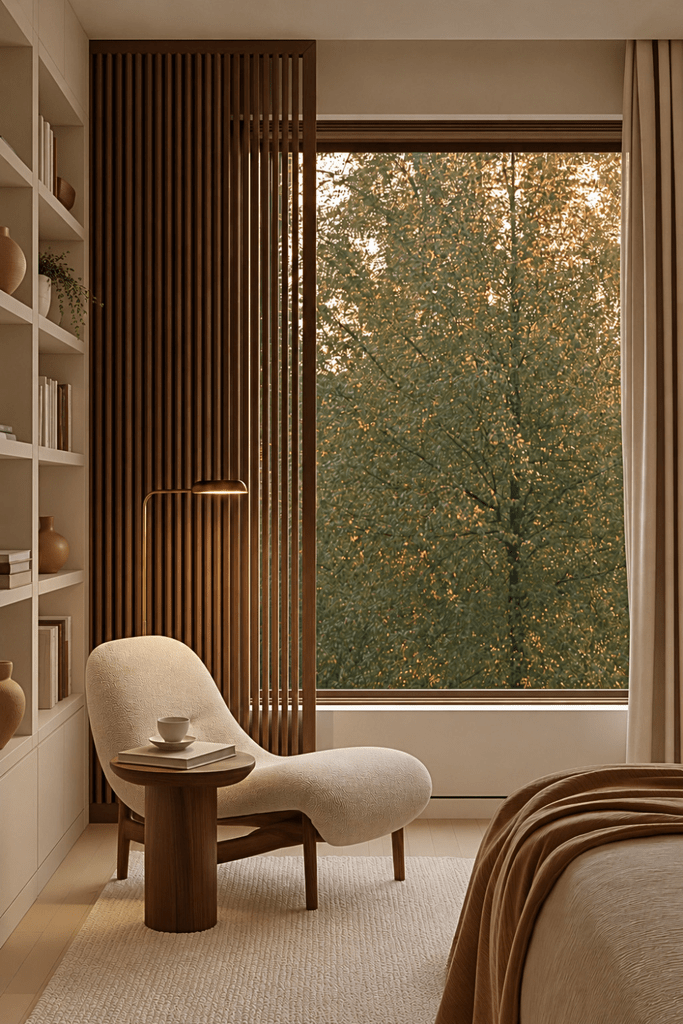
Privacy Is Part of the Design
A personal space can be beautifully designed and still fail you if it is constantly interrupted. A desk that becomes a drop zone, a chair that collects laundry, or a quiet corner that doubles as household storage slowly loses the reason it was created in the first place.
Privacy at home is not always about closing a door. Sometimes it comes from giving a space clear visual and practical boundaries. A rug can define where the area begins, a bookcase or folding screen can create separation, and curtains or upholstered pieces can soften noise. Even a different lamp can signal that this particular corner has a purpose of its own.
Choose at least one boundary that helps protect the way you want to use the space:
- Use a rug to visually separate a quiet corner from the rest of a larger room.
- Add a screen, curtain, or bookcase when you need a little more privacy without building a wall.
- Use softer materials such as drapery and upholstery to reduce some of the sharpness and echo in a hard-surfaced room.
- Give necessary items dedicated storage so the area does not become overflow for the rest of the house.
- Define the space with lighting by using a task lamp or softer localized light instead of relying only on the room’s main fixture.
- Protect the surface itself by deciding that the desk, chair, or table will not become general household storage.
These small boundaries help create a space for solitude and concentration even when the rest of life is happening nearby. The goal is not complete isolation. It is giving your attention somewhere it can remain intact for a little while.
Styling Note: If the space constantly collects things that belong somewhere else, solve that problem before adding decor. A personal space needs boundaries as much as beauty.
Let It Look Like You
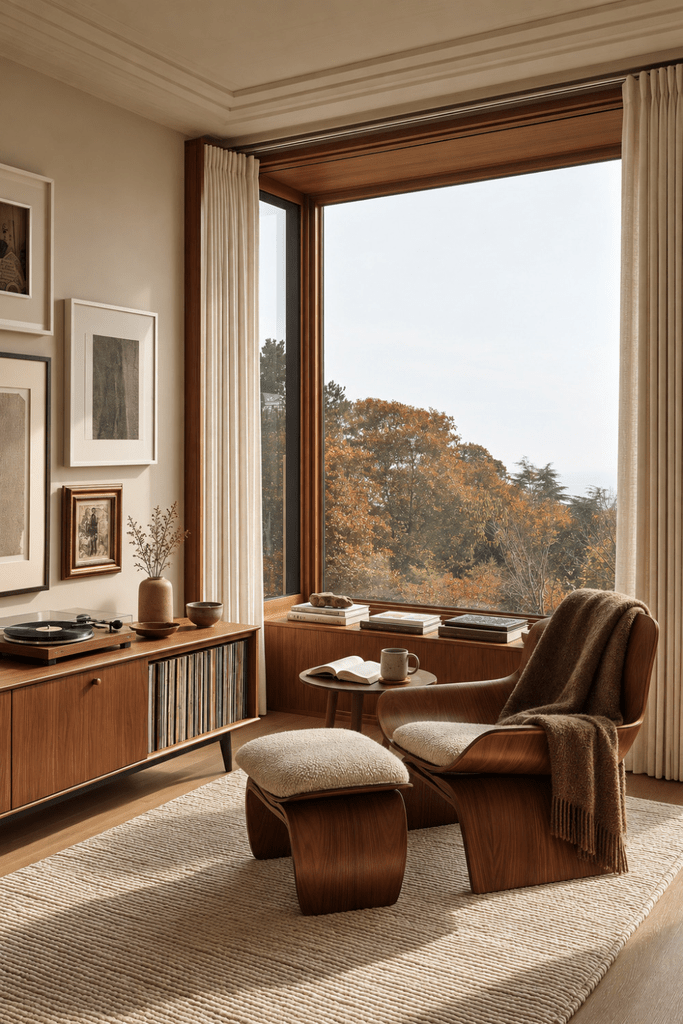
Personal Is Different From Perfect
A room of your own should feel recognizable before it feels impressive. This is the place where your taste, memories, interests, and routines are allowed to become visible, not because they complete a decorating scheme, but because they make the space feel more connected to you.
That might mean displaying the books you return to again and again, a photograph that reminds you of someone you love, a piece of pottery found while traveling, an inherited object, or a notebook filled with ideas you are still working through. Meaningful decor has a different kind of presence because it carries a story or association that cannot be recreated by simply buying something beautiful.
There is an important distinction here between decoration that completes the room and objects that deepen the experience of the room. The first may make a space look finished. The second makes you want to spend time there.
Choose personal pieces slowly and give them enough space to be noticed:
- Keep favorite books within reach rather than styling shelves only for appearance.
- Display collected artwork or photographs that hold a memory, connection, or point of view.
- Bring in handmade or inherited pieces whose imperfections and history add character.
- Include objects connected to what you do there, such as notebooks, sketchbooks, music, or creative tools.
- Use meaningful textiles when a particular color, pattern, or fabric feels personally significant.
- Leave some surfaces open so the room still has breathing room and can continue to evolve.
Personal does not have to mean crowded. In fact, the fewer objects you choose, the more clearly their meaning can come through. A personal retreat should feel layered with identity, but still leave enough room for new interests, memories, and chapters to find their way in.
The most memorable rooms are rarely the ones that look as though every detail was selected at once. They are the ones that reveal something about the person who spends time there.
Styling Note: Choose something for this space that you would still want nearby even if no one else ever saw it.
Leave Room for Who You Are Becoming
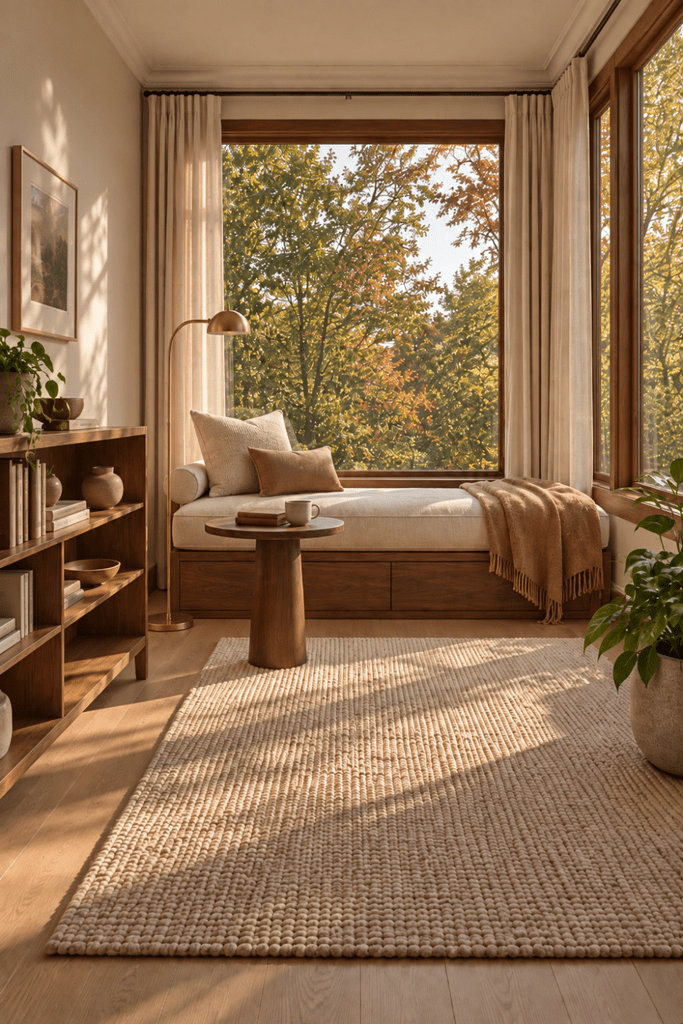
A Personal Space Should Be Allowed to Change
A space that belongs to you should be able to change with you. What supports your life today may look completely different a year from now, and that is part of what makes creating a space for yourself so meaningful. It does not have to preserve one version of who you are forever.
A writing desk might eventually become the place where you paint. A reading chair could become where you study something new. A quiet corner that supports journaling now may later hold a stack of sketchbooks, a musical instrument, or something you have not even discovered yet. When a room is designed too rigidly around one activity or aesthetic, it can become harder to let it evolve naturally.
Give the space enough flexibility to grow with your life:
- Choose furniture that can serve more than one purpose, such as a desk that can support writing, drawing, or creative projects.
- Keep some storage open so new books, supplies, or interests have somewhere to go.
- Leave one wall or shelf unfinished rather than filling every available surface.
- Use movable pieces like small tables, stools, or lamps that can be rearranged as your routines change.
- Avoid buying everything at once. Let some pieces arrive gradually as you learn what the space actually needs.
- Protect a little negative space so the room never feels locked into one version of itself.
There is something hopeful about a room that is not completely finished. It leaves space for curiosity, new routines, and parts of yourself that may still be unfolding.
Your personal retreat does not have to become a monument to who you already are. It can remain open enough to support who you are becoming.
Styling Note: Resist the urge to finish everything at once. A little emptiness gives your interests, routines, and life somewhere to grow.
Give Yourself Somewhere to Return To
Creating a space for yourself does not require an extra room, a major renovation, or an entirely new set of furniture. Sometimes it begins with one chair, one desk, one shelf, or one quiet corner that is given a clear purpose and protected from becoming something else.
Before deciding how that space should look, ask yourself what you wish you had more room for in your life. Reading. Writing. Creating. Thinking. Resting. Learning something new. The answer may tell you more about what the space needs than any decorating trend ever could.
Maybe a room of one’s own begins long before there is an entire room available. It begins with deciding that something inside you deserves physical space in your life.
The chair, desk, window, or corner comes afterward.
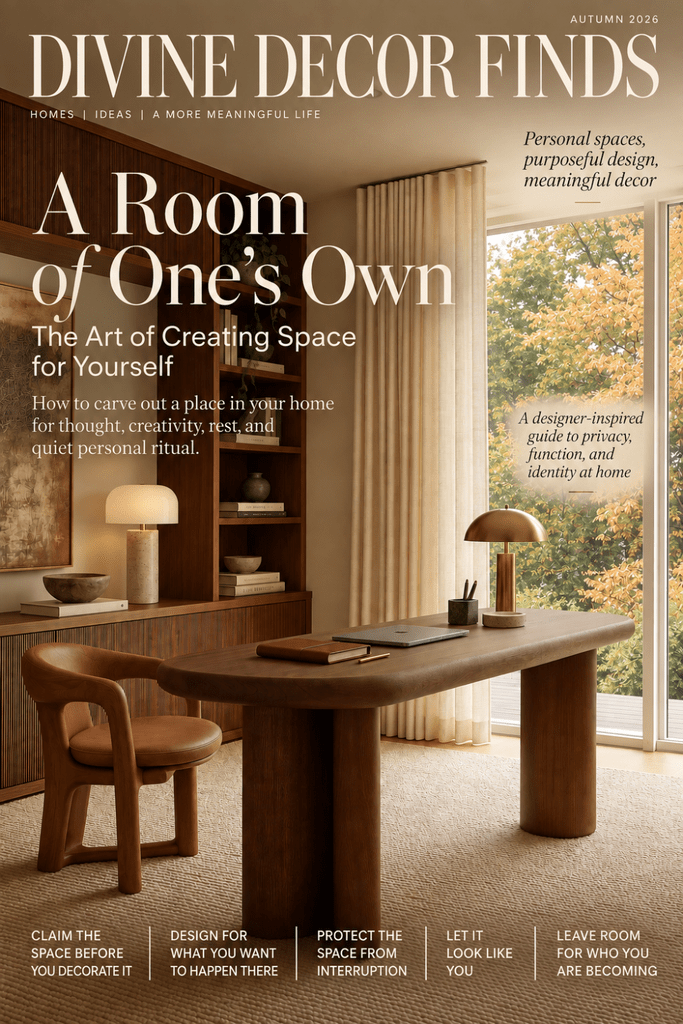
Save this post to Pinterest for the next time you feel like you need more room in your life, when what you may really need is one small place that belongs to you. 🤍
Explore more Designer Inspired ideas on Divine Decor Finds for thoughtful ways to create a home that feels personal, intentional, and beautifully connected to the way you want to live. 🌿
Leave a Reply