When a Beautiful Scent Becomes Too Much
A beautifully scented home rarely announces itself. You notice it in passing, a soft trace of warmth in the air that makes the space feel cared for before you can quite name what you are smelling. But when too many fragrances begin competing at once, that quiet welcome can quickly become heavy. Thoughtful home fragrance layering is less about how much scent you can add and more about creating an atmosphere that feels effortless.
It is easy to assume that another candle, diffuser, or room spray will make a home feel more inviting. In reality, fragrance works much like color or lighting. It needs direction, balance, and enough restraint for the rest of the space to breathe.
A beautifully scented home begins with knowing what you want the atmosphere to feel like. From there, the strength of each fragrance matters just as much as the fragrance itself. Where you place it, how it travels into neighboring rooms, and what happens in each space can all change the way it is experienced.
And not every room needs to smell like something.
Sometimes the most memorable fragrance is the one you only notice for a moment as you walk through the door, settle onto the sofa, or pull back the covers at night. You do not need shelves of candles or a different product in every room to create that feeling. With a few intentional choices, scent can become one of the quietest layers of your home, present enough to shape the atmosphere, but subtle enough that the home itself is what you remember.
Start With One Scent Direction
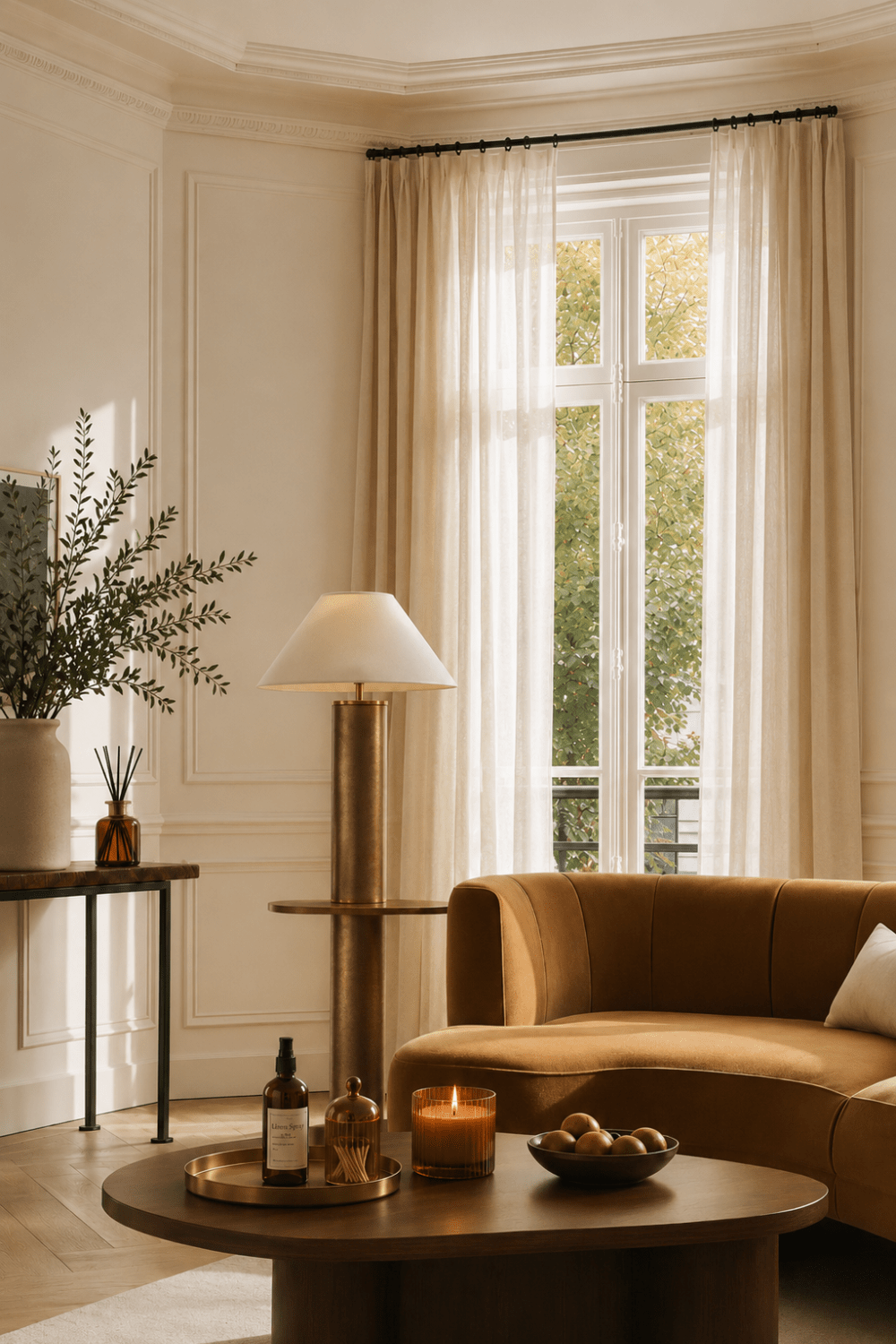
A beautifully layered home begins with a feeling, not a fragrance. Before choosing a candle, diffuser, or room spray, decide what you want the space to communicate when you walk into it. Do you want it to feel warm and grounded, fresh and herbal, softly floral, earthy and green, creamy and comforting, lightly citrusy, or a little smoky and resinous?
This is where home fragrance layering becomes much easier. The scents do not need to match exactly, but they should feel like they belong to the same story. Sandalwood, amber, and vanilla can create a warm, enveloping mood, while bergamot, tea, and cedar feel cleaner and more refined. Eucalyptus, rosemary, and soft woods can feel fresh without becoming sharp, and fig, moss, and warm musk can give a room a deeper, earthier character.
Think of fragrance the same way you would think about a color palette.
- Choose one overall mood before selecting individual products.
- Look for home fragrance combinations that share at least one similar note or feeling.
- Let one fragrance act as the anchor, then layer softer notes around it.
- Avoid combining too many unrelated scent families in neighboring spaces.
- Repeat one or two notes throughout the home to create continuity.
- Let your signature home scent evolve from a family of related fragrances rather than one exact product used everywhere.
When the scent direction feels cohesive, the home begins to feel more intentional. Nothing is competing for attention, and the fragrance becomes part of the atmosphere rather than something you notice as a separate layer.
Styling Note: Choose three words you want your home to feel like, such as warm, grounded, quiet. Let those words guide the scent family before you start shopping.
Layer by Intensity, Not by Quantity
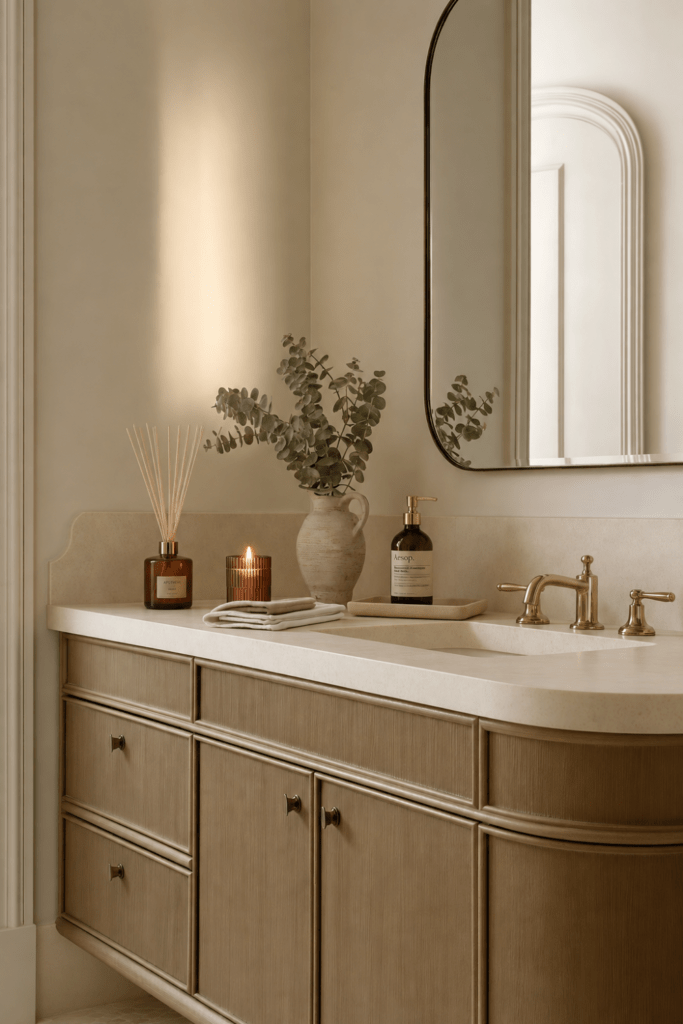
More fragrance does not always create more atmosphere. In fact, one overly strong candle or diffuser can dominate a room far more than several softer sources working together. The goal is to think about fragrance intensity the same way you would think about lighting, with some layers quietly supporting the room while others create a more noticeable moment.
A simple way to think about scent is in three levels:
- Background: a subtle reed diffuser, lightly scented natural materials, or another passive source that gently sits in the room.
- Atmosphere: a candle, a small amount of room spray, or fresh botanicals that become more noticeable when you want to shift the mood.
- Close-range: linen spray, fragranced hand soap, or a bedside or bathroom scent that you experience only when you are nearby.
Not every layer needs to be active at the same time. A candle may be enough in the evening if a diffuser is already providing a subtle home fragrance in the background. Likewise, a small powder room usually needs far less than a large open-plan living space.
Room size, airflow, ceiling height, product concentration, and the number of fragrance sources all influence how scent travels. A fragrance that feels soft in a spacious room can become overwhelming in a smaller one.
This is one of the easiest ways to avoid scent overload. Instead of asking how many products a room can hold, ask how strongly you want the fragrance to register.
Styling Note: If you can identify the fragrance immediately from across the room, reduce one source before adding another. The most sophisticated scent often feels like part of the atmosphere rather than the main event.
Let Scent Flow Between Rooms
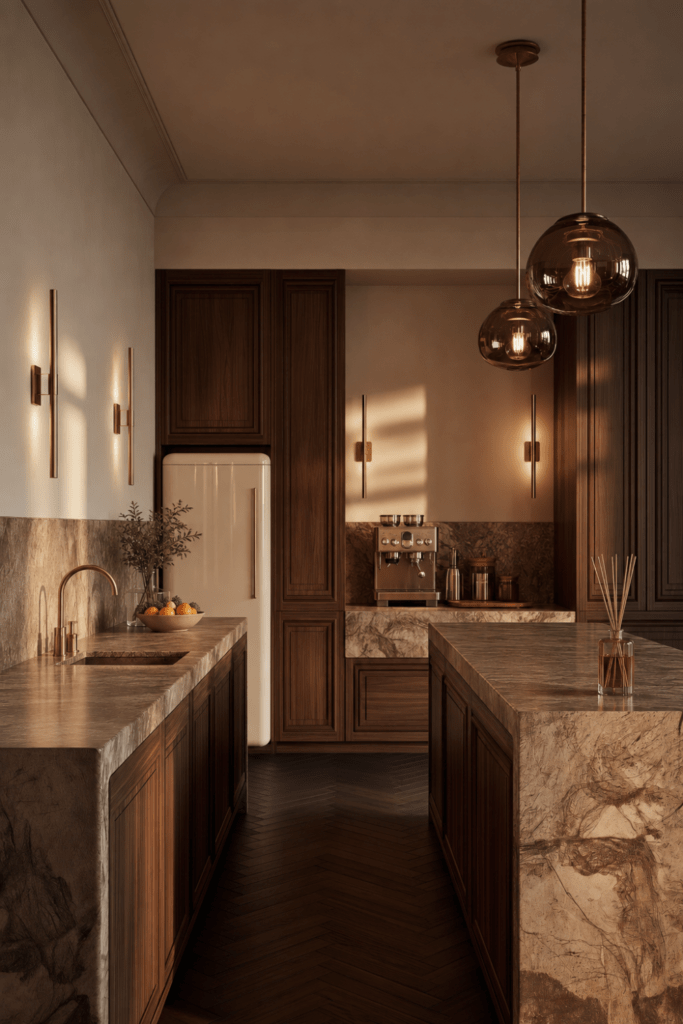
Fragrance does not stop at a doorway. In an open-plan home, or even in rooms connected by wide openings and hallways, one scent naturally drifts into the next. That is why scent flow between rooms matters. If each space has a completely different fragrance identity, the home can begin to feel disjointed instead of calm and cohesive.
Think of the house as one continuous scent story, with each room adding a slightly different chapter.
- Let the living room carry warmer notes such as soft amber, cedar, or sandalwood.
- Keep the kitchen lighter with bergamot, tea, citrus, or fresh herbs.
- Allow the bedroom to soften into linen, gentle woods, or subtle musk.
- Use fresher herbal or mineral notes in the bathroom.
- Repeat one note or feeling between neighboring rooms so the transition feels natural.
- Use stronger fragrance in larger gathering spaces and softer fragrance in bedrooms or other intimate areas.
For example, a kitchen scented with bergamot can transition beautifully into an adjoining living room that combines bergamot with cedar. From there, the bedroom might carry cedar into a softer musk. The rooms do not smell identical, but they still feel related.
This kind of room-by-room fragrance creates continuity without making the entire house smell the same. It is less about choosing one fragrance for every space and more about creating a whole home fragrance experience that unfolds gradually as you move through it.
When the transitions feel intentional, the home becomes more immersive. Instead of noticing a new scent every few steps, you experience one atmosphere gently changing from room to room.
Styling Note: Pay close attention to rooms that share an open doorway. If you can smell both fragrances from the same spot, they should complement each other rather than compete.
Match the Fragrance to What Happens in the Room
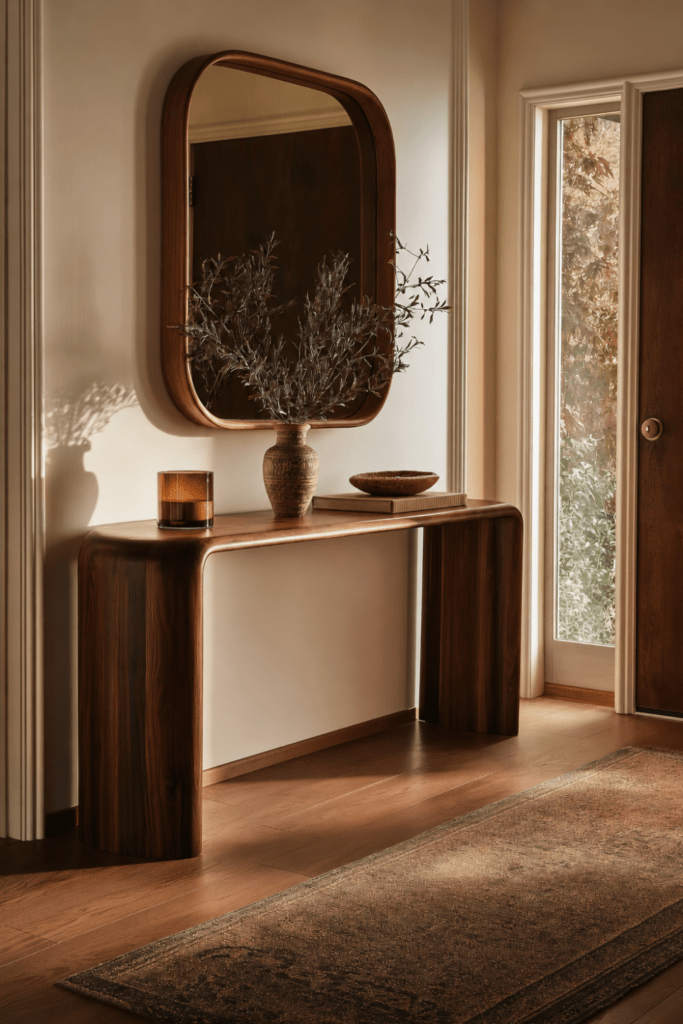
The fragrance that works beautifully in one room can feel completely wrong in another. A kitchen filled with something sugary and heavy may compete with the smell of food, while a crisp herbal scent that feels refreshing in a bathroom might feel too sharp beside the bed. The most thoughtful room-by-room fragrance choices begin with function.
Let the purpose of the room guide the scent.
- Kitchen: Keep things brighter with citrus, herbs, tea, or light woods. These scents tend to sit more comfortably alongside cooking than rich vanilla or dessert-like fragrances.
- Living Room: Warmer notes such as amber, cedar, sandalwood, fig, or subtle florals can make the space feel more inviting without becoming overly sweet.
- Bedroom: Choose softer woods, a light touch of lavender, musk, linen-inspired scents, or gentle vanilla to create a more relaxing home scent.
- Bathroom: Eucalyptus, neroli, herbal notes, and fresh mineral scents can reinforce the clean, restorative feeling of the space.
- Entryway: Keep it simple. One quiet fragrance can introduce the broader mood of the home without trying to tell the entire story at the front door.
Timing matters too. Brighter scents often feel natural during the day, especially when windows are open and fresh air is moving through the house. In the evening, warmer notes can make the same rooms feel softer and more intimate. As the weather cools, richer woods, amber, and gentle spice can feel especially comforting.
This is where scent and mood at home become deeply connected. Fragrance is most effective when it supports what you are already doing, whether that is cooking, gathering, resting, getting ready, or simply walking through the door at the end of the day.
Styling Note: Instead of asking, “What scent do I like?” ask, “How do I want to feel when I use this room?” Let that answer guide where and how you use fragrance.
Know When the Room Has Enough
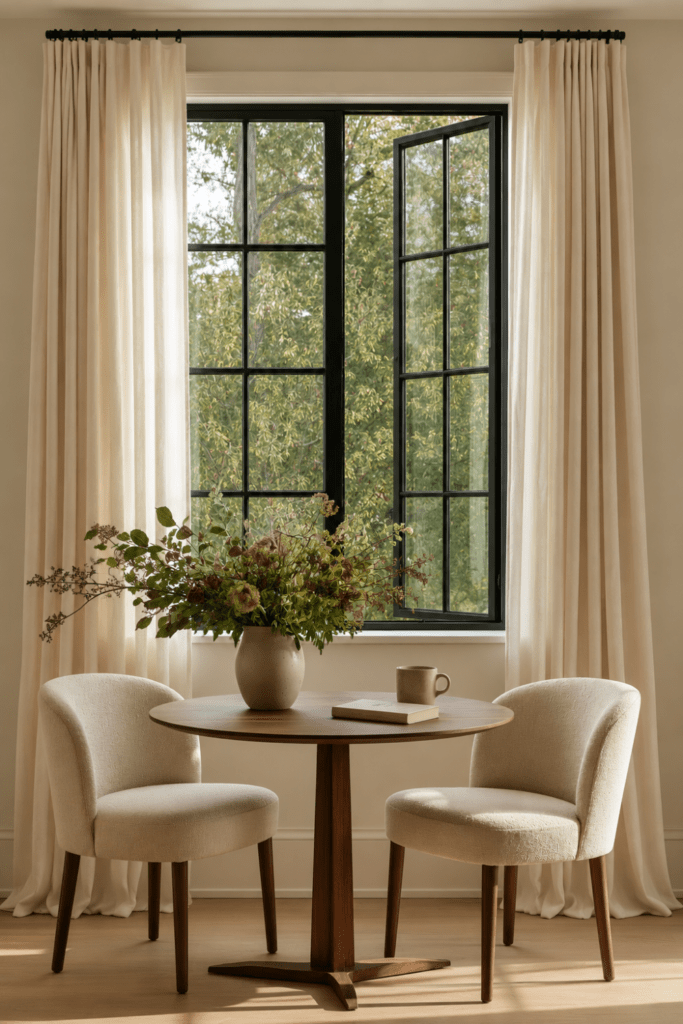
A beautifully scented room should still leave space for everything else you love about being there. Fresh air through an open window, coffee in the kitchen, clean linen on the bed, flowers on the table, and the natural scent of wood or stone should not disappear beneath fragrance. When scent becomes the first thing you notice and the last thing you stop noticing, the room may simply have too much.
A few signs the fragrance has crossed that line:
- You notice the scent constantly instead of catching it in gentle moments.
- Fragrances from neighboring rooms begin competing with one another.
- The scent masks food, fresh air, flowers, or natural materials.
- Guests immediately comment on how strong the room smells.
- The room feels noticeably more intense after you step outside and return.
One reason this happens is fragrance fatigue. After being around the same scent for a while, your nose begins to adapt, so you may stop noticing it even though someone entering the room can still smell it clearly. That can make it tempting to add more, when the better choice is often to reduce or pause a source.
This is where restraint becomes an important part of home fragrance layering. Rotate fragrances rather than stacking them, turn off or remove one source before introducing another, and open the windows regularly so fresh air becomes part of the experience. It can also be helpful to leave certain areas completely unscented. A hallway, stair landing, or quiet transition space can give the senses a moment to reset before entering the next room.
A sensory-friendly home does not need to smell fragranced everywhere. In fact, the most refined spaces often allow scent to appear and disappear naturally throughout the day.
Styling Note: Walk outside for ten minutes, then come back in through the front door. Pay attention to what you notice first. That fresh impression will tell you far more about the strength of your fragrance than sitting inside it all day.
Let Scent Be the Background, Not the Main Event
A beautifully scented home does not need to announce itself the moment you walk through the door. The most memorable spaces often reveal fragrance slowly, a soft trace in the entryway, something warmer in the living room, a cleaner note in the bathroom, or a gentle scent waiting beside the bed.
That is the heart of home fragrance layering. Choose one clear direction, control the intensity, let neighboring rooms relate to one another, match the fragrance to what actually happens in each space, and stop before scent begins to overpower everything else.
You also do not need fragrance in every room. Start with one or two spaces and notice how the scents travel before adding anything new. Sometimes leaving a hallway, kitchen, or bedroom unscented creates the breathing room that makes the fragranced areas feel even more intentional.
Sophisticated fragrance is often less about how many products you use and more about knowing when enough is enough.
When scent becomes one of the quieter layers of home, it can deepen the atmosphere without competing with the things that already make the space meaningful, fresh air through an open window, flowers on the table, warm wood, clean linen, dinner cooking in the kitchen, or the familiar feeling of settling in at the end of the day.
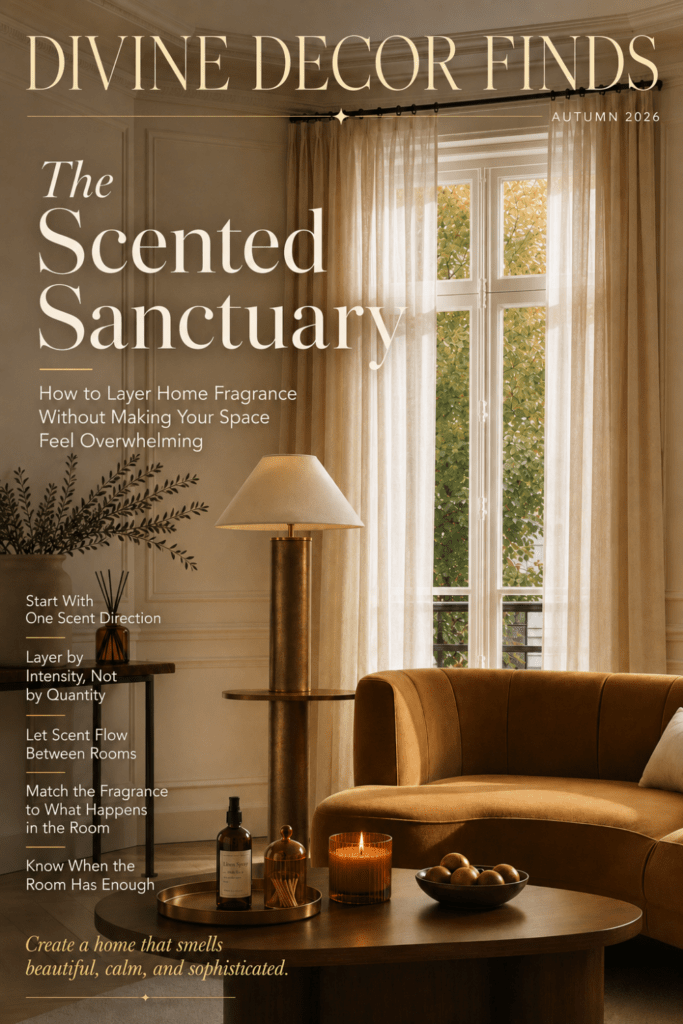
Save this post to Pinterest for the next time you want your home to smell beautiful without overwhelming the senses. 🤍
Explore more Design Principles and intentional home styling ideas on Divine Decor Finds. 🌿