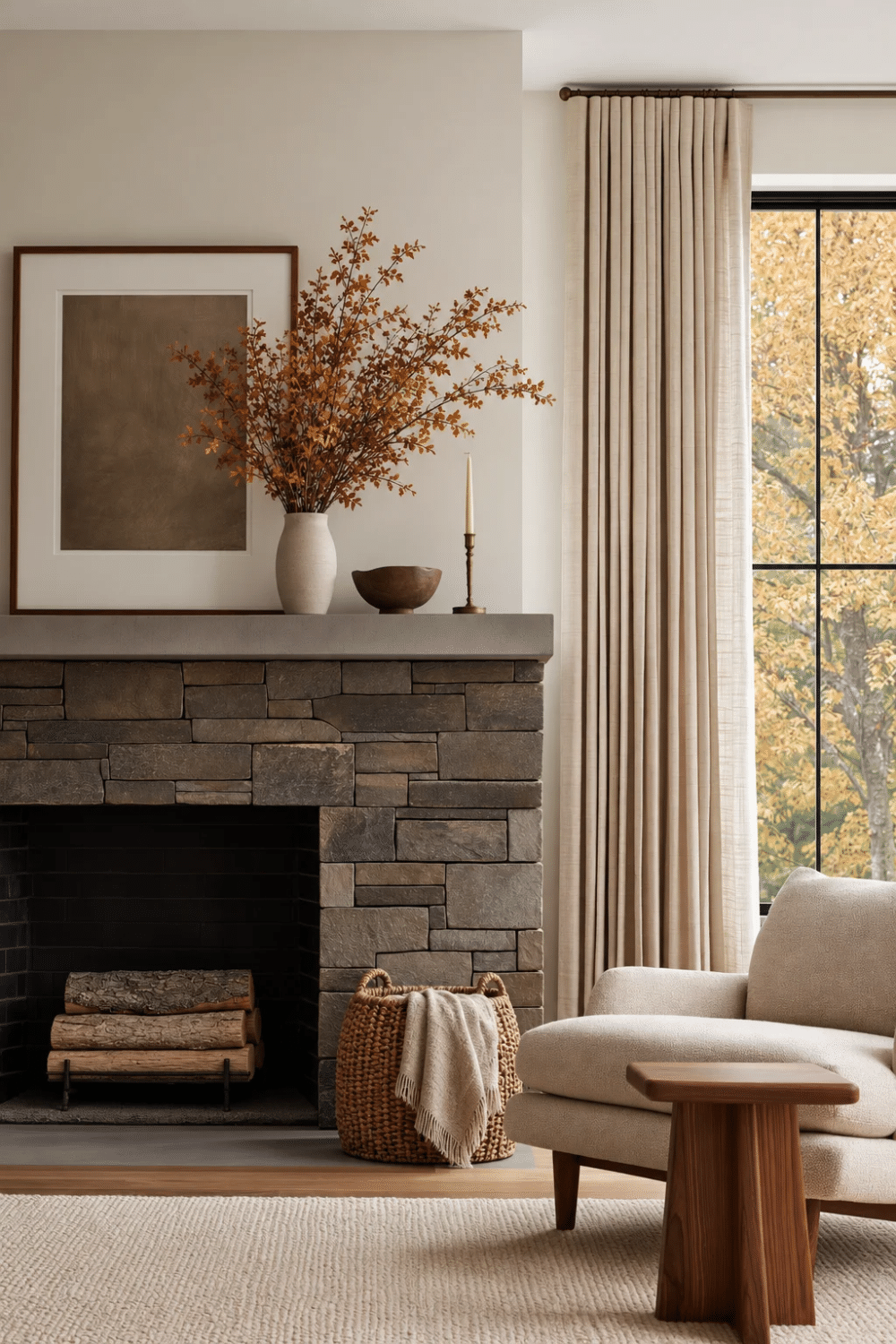
When a Mantel Starts Feeling More Decorated Than Collected
There is something about the first crisp days of autumn that makes you want your home to feel a little warmer, softer, and more inviting. You bring out a favorite candle, tuck in a few branches, add a small pumpkin, then step back and wonder why the fireplace suddenly feels busier than you imagined. Thoughtful fall mantel decor can make a room feel warmer and more seasonal, but adding too many small pieces can quickly make the fireplace feel crowded.
The problem is not always that you have chosen the wrong things. Sometimes, it is simply that a mantel offers very little visual space, so every object carries more weight than it would on a larger surface. A few beautiful pieces can begin competing with one another before you realize it, especially when you are decorating one object at a time instead of looking at the arrangement as a whole.
Designers approach a mantel less like a shelf that needs to be filled and more like a composition. Scale, rhythm, depth, and open space all work together to determine where your eye lands and how the arrangement feels. When those elements are balanced, you can create warmth and character with surprisingly few pieces.
Ahead, we will look at five ways to make your mantel feel collected, intentional, and beautifully suited to the season without covering every inch of it. You may even find that the best place to begin is not by buying something new, but by looking at what you already own and asking a different question: What will make these pieces feel more intentional?
Build a Silhouette, Not a Row of Decor
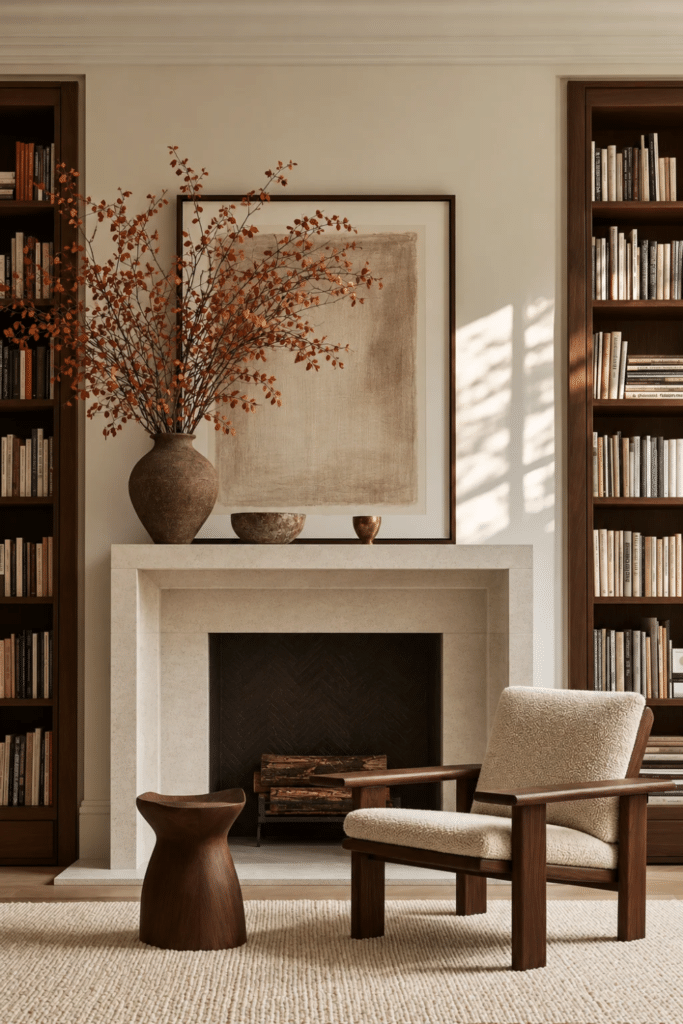
One of the easiest ways for a mantel to start feeling cluttered is to treat it like a shelf that needs to be filled from one end to the other. When every object is spaced evenly, sits at a similar height, or competes for attention, the eye has nowhere to settle. Instead of reading as one thoughtful arrangement, the mantel begins to feel like a collection of individual things.
A more refined approach to mantel styling is to think about the overall silhouette first. Designers often establish one dominant anchor, then build around it with a taller supporting element, one or two lower pieces, and plenty of open space. That creates visual hierarchy and gives the arrangement a clear shape. Your anchor might be oversized artwork, a substantial mirror, framed vintage art, a large ceramic vessel, or even an architectural object. It does not need to feel seasonal. In fact, a timeless anchor makes it much easier to refresh the smaller details as the seasons change.
A simple formula to remember is: Anchor + Height + Low Element + Space.
- Begin with one substantial piece that gives the mantel a clear focal point.
- Add height with branches, a tall vessel, or a slim candlestick.
- Bring in one or two lower objects to create contrast in scale.
- Avoid spacing every piece evenly across the entire mantel.
- Leave visible stretches of open surface so the composition can breathe.
- Let smaller objects support the anchor rather than compete with it.
When the silhouette feels balanced, a collected mantel can look finished with surprisingly few pieces. The goal is not to decorate every inch. It is to create one composition that feels complete from across the room.
Styling Note: Take a few steps back and squint slightly at the fireplace. You should notice the shape of the arrangement before you notice every individual accessory.
Suggest Autumn Instead of Spelling It Out
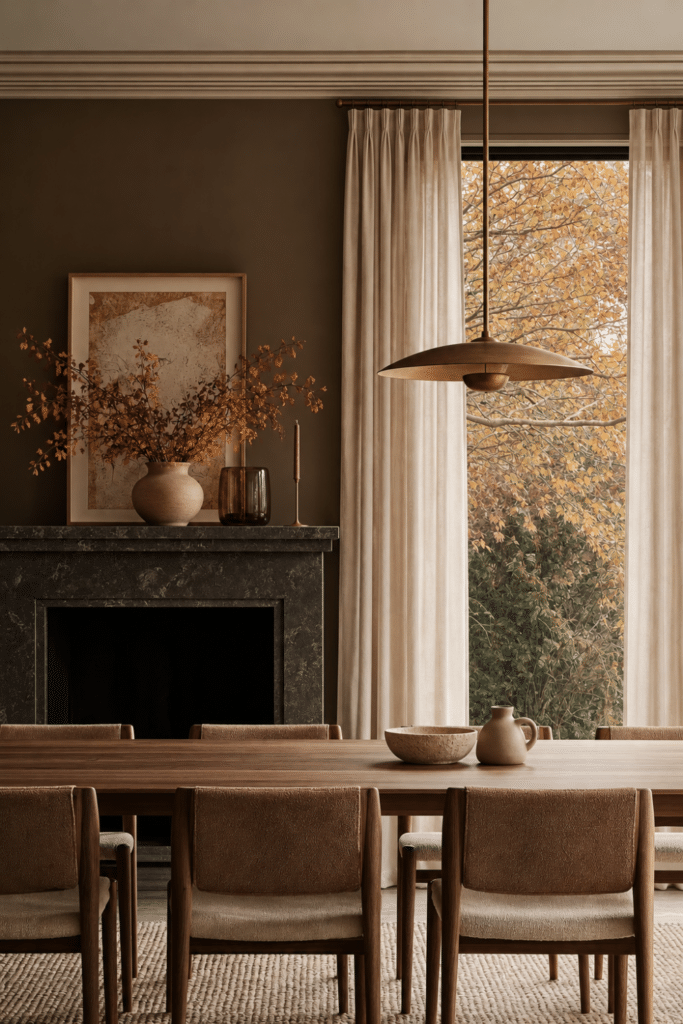
A room can feel deeply seasonal without relying on obvious symbols of the season. In fact, some of the most beautiful autumn spaces do not include pumpkins, signs, or themed accessories at all. They simply borrow the colors, textures, and materials you naturally associate with this time of year and weave them into the room in a quieter way.
That is the idea behind seasonal translation. Instead of decorating with literal autumn objects, you translate the feeling of the season through rust-colored branches, dark walnut, aged brass, amber glass, handmade pottery, woven fibers, stone, and deeper textiles. Fall mantel decor often feels more timeless when autumn is suggested through materials and color rather than repeated through obvious seasonal objects.
Think of the season as a palette and mood, not a theme.
- Use rust or copper-toned branches to bring in seasonal color naturally.
- Let walnut or another dark wood add warmth and visual weight.
- Introduce aged brass for a soft reflective note that catches the light beautifully.
- Add amber or smoky glass for depth without making the mantel feel busy.
- Use pottery, stone, and woven fibers to reinforce the natural feeling of the season.
- Echo outdoor foliage with subtle camel, tobacco, or cinnamon tones.
Natural fall decor feels especially inviting because it connects the fireplace to the world outside. The season begins to feel as though it has quietly entered the room rather than being placed on top of it.
Styling Note: Choose one seasonal cue you love, such as rust-colored branches, then let the surrounding materials support it instead of adding several more obvious fall symbols.
Style in Clusters, Not From End to End
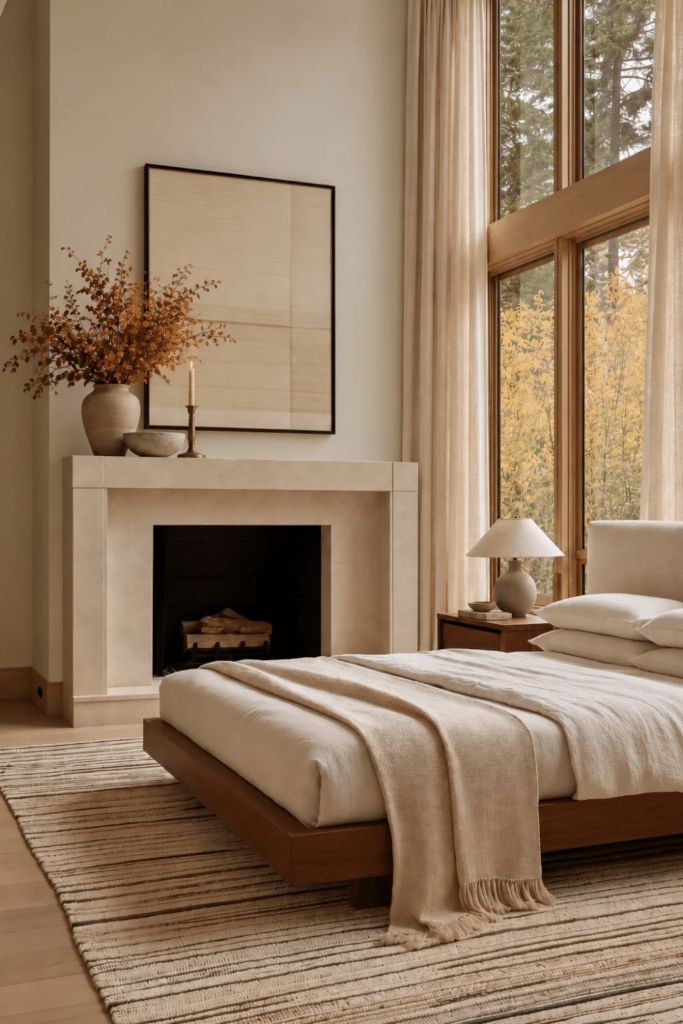
A mantel can start feeling busy even when you have not used very many objects. Often, the problem is not the number of pieces, but the way they are spread across the surface. When everything is evenly spaced from one side to the other, each object becomes its own separate visual moment, and the eye has to work harder to take it all in.
Designers often create a calmer look by grouping related pieces into one or two intentional clusters. Within each cluster, objects can overlap slightly, vary in height, and relate through color, material, shape, or mood. A tall vase, slim candlestick, and low bowl placed together will usually feel more collected than those same three pieces stretched across the entire mantel. Odd-number groupings can help, but they are not a rule. What matters most is that the arrangement feels connected.
Think in moments, not in inches of mantel to fill.
- Create one dominant grouping rather than scattering objects evenly.
- Overlap pieces slightly so they read as one composition.
- Vary the heights within each cluster for a more natural rhythm.
- Let a second grouping stay smaller and quieter, if you use one at all.
- Connect objects through similar tones, materials, or shapes.
- Leave generous stretches of the mantel completely undecorated.
This approach works especially well for seasonal mantel decor because it creates warmth without allowing small accessories to take over. The open space between groupings gives the eye somewhere to rest and makes each chosen piece feel more important.
Styling Note: If your mantel feels busy, try moving a few objects closer together before removing anything. Sometimes the issue is not too much decor, but too many separate visual moments.
Create Depth From Front to Back
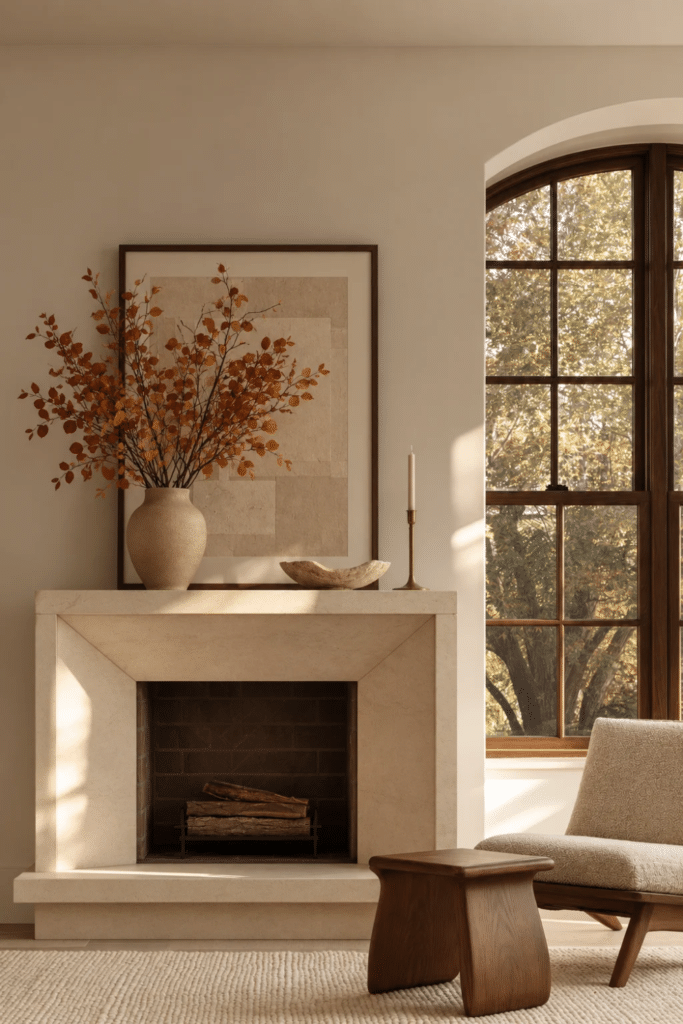
A mantel can look beautifully styled and still feel a little flat when every object sits in the same straight line. Because the surface is shallow, it is natural to push everything toward the back edge, but that can make even lovely pieces read more like a display than a composition.
One of the easiest ways to add visual depth is to think in layers. Let a framed piece or mirror establish the back plane, place a taller vessel or branches slightly in front of it, then bring one lower object forward. Adding a little front-to-back depth can make fall mantel decor feel layered and substantial without increasing the number of pieces.
Think in three simple visual planes: Back + Middle + Front.
- Use artwork, a mirror, or a framed piece as the back layer.
- Position branches, a candlestick, or a taller vessel in the middle plane.
- Bring a low bowl or small sculptural object slightly forward.
- Overlap pieces by a few inches instead of lining everything up perfectly.
- Let branches cross in front of artwork without covering it completely.
- Keep the layering subtle so the mantel feels dimensional, not stacked.
This kind of mantel styling creates the feeling that the arrangement came together gradually over time. The pieces begin to relate to one another, and the fireplace feels richer without becoming busier.
Styling Note: Look at the mantel from the side as well as from the front. If every object sits in one perfectly straight line, shifting just one or two pieces forward can give the entire arrangement more depth.
Let the Hearth Echo, Not Repeat, the Mantel
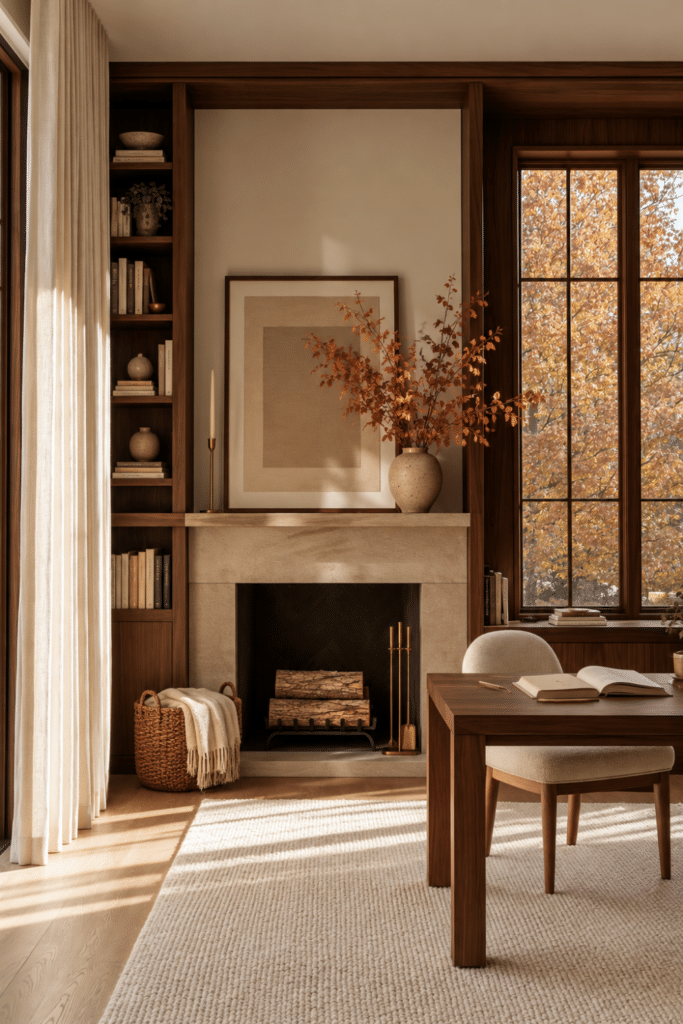
A beautifully styled mantel can lose some of its impact when the hearth below is trying just as hard to be noticed. Because the two areas are visually connected, it helps to think of the fireplace as one composition rather than two separate surfaces to decorate. If the mantel carries the stronger seasonal moment, the hearth can stay quieter and simply echo one detail from above.
That repetition might come through material, color, or finish. Rust-colored branches on the mantel can relate to a cognac-toned basket below. Warm brass above can be repeated through fireplace tools. Pottery on the mantel can pair naturally with a stone vessel near the hearth. Even neatly stacked firewood can reinforce the warmth of walnut or other deeper wood tones elsewhere in the room.
A simple principle to remember is: Mantel leads + hearth echoes.
- Let the mantel carry the main seasonal statement.
- Repeat one material, color, or finish below for cohesion.
- Use one woven basket, vessel, or set of fireplace tools rather than several decorative pieces.
- Keep firewood neatly stacked so it feels intentional and functional.
- Leave enough open space around the hearth so the fireplace still feels usable.
- If the fireplace is active, keep throws, baskets, branches, and other combustible materials safely away from the firebox and follow the manufacturer’s clearance guidance.
This approach keeps fall fireplace decor feeling layered without becoming repetitive. The hearth supports the story the mantel has already started, but it does not need to tell the same story twice.
Styling Note: Stand far enough away to see the entire fireplace at once. If your eye is bouncing between the mantel and the hearth, simplify the supporting area until one clearly leads and the other quietly follows.
Let Autumn Feel Collected, Not Crowded
A beautifully styled fireplace does not need more seasonal pieces. It usually needs a clearer sense of composition. A stronger silhouette, one natural autumn cue, a thoughtful cluster, a little front-to-back depth, or a quieter hearth can be enough to make the entire fireplace feel more intentional.
Before buying anything new, try editing what you already have. Remove the pieces that feel unnecessary, then reintroduce only what contributes to the overall arrangement. Shift one object forward. Move scattered accessories into a cluster. Let one branch arrangement carry the season. Simplify the hearth so the mantel has room to lead.
The most beautiful fall mantel decor does not necessarily contain the most seasonal pieces. It simply gives a few thoughtful elements enough room to create the feeling of autumn.
Your fireplace does not need to announce the season. It only needs to make the room feel a little warmer because autumn is here.
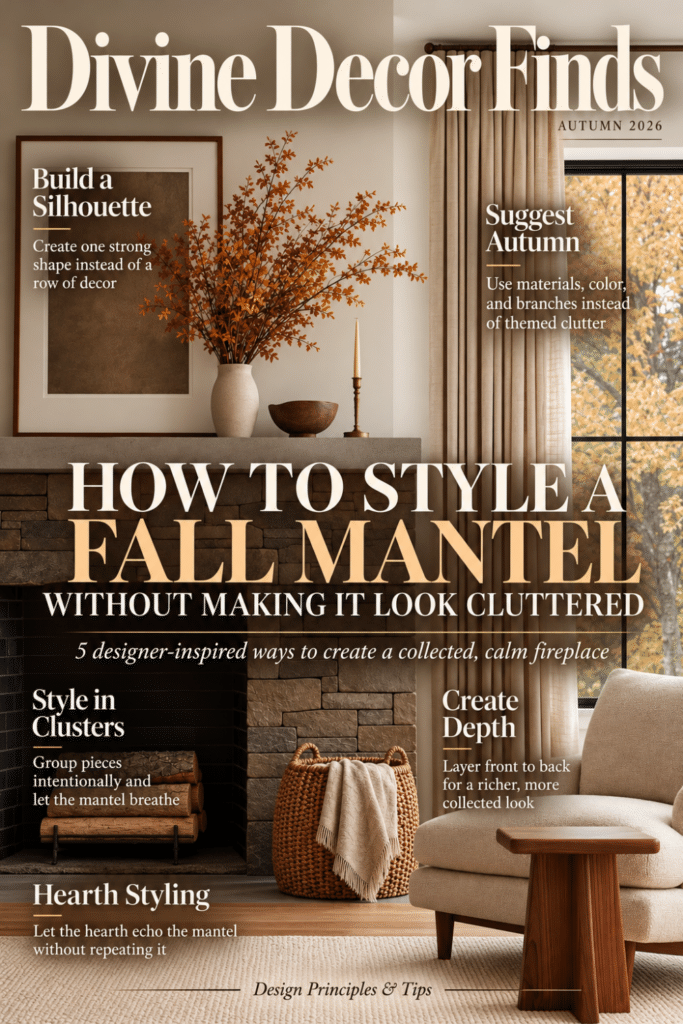
Save this post to Pinterest for the next time your mantel feels a little too busy and you want a more collected, intentional look.
Explore more Design Principles & Tips on Divine Decor Finds for thoughtful ways to create a home that feels warm, balanced, and beautifully yours. 🌿

Leave a Reply