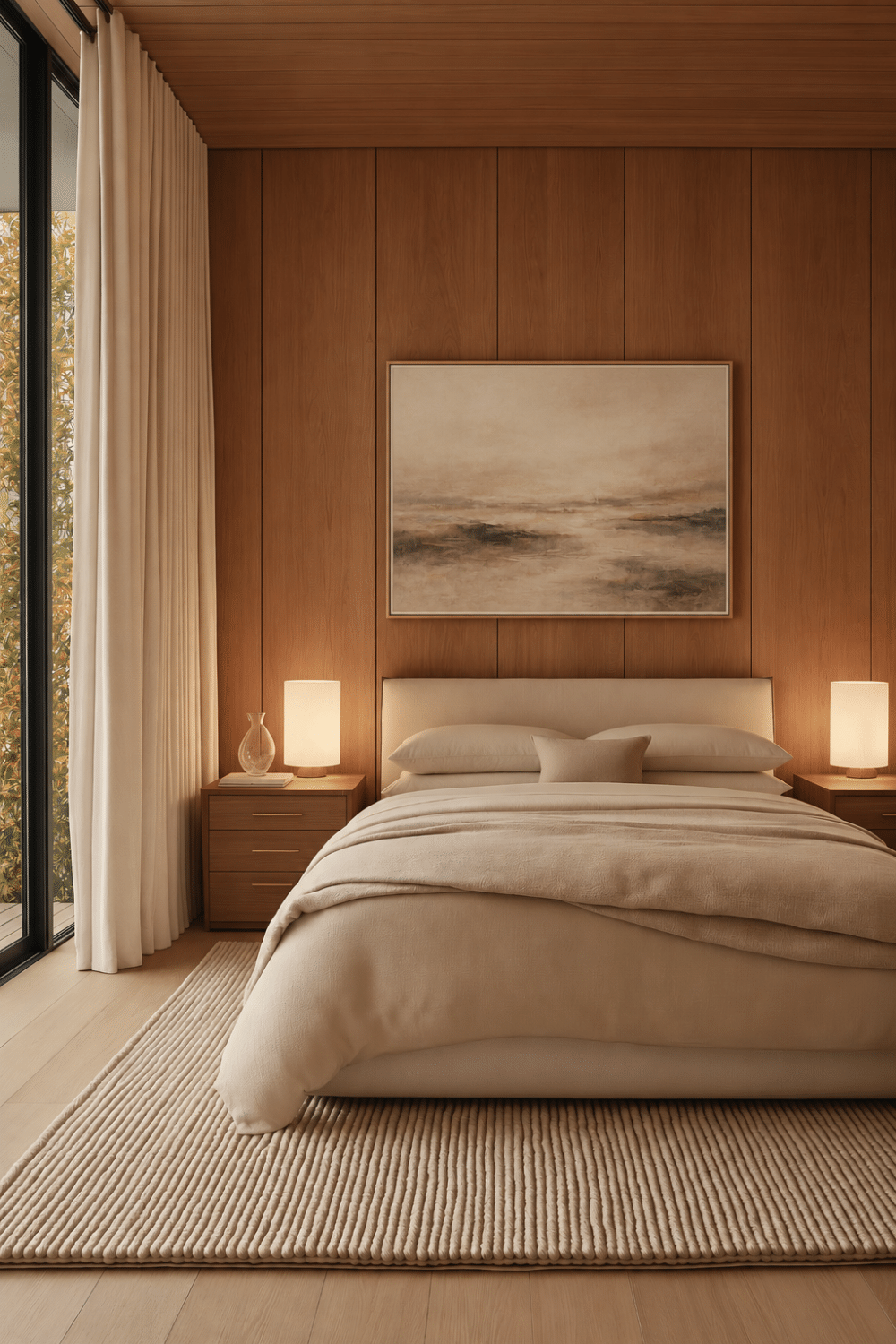
Why Does a Beautiful Hotel Room Feel Different?
There’s a certain feeling that washes over you when you step into a beautiful boutique hotel bedroom. Your shoulders soften. Your mind seems to quiet down. The bed looks impossibly inviting, the lighting feels gentle, and somehow, before you have even unpacked your bag, the room seems to whisper, You can stop now. Everything you need is here. It’s a small kind of relief that can make you wonder why your own bedroom doesn’t always make you feel the same way.
What’s interesting is that this feeling usually has very little to do with how expensive the room is. It comes from the way everything has been considered. The placement of the bed, the softness of the light, the amount of empty space, the textures you want to reach out and touch, even the small details waiting beside you all work quietly together to make your stay feel effortless.
And that may be the real secret worth bringing home.
You don’t need to turn your bedroom into a copy of somewhere you stayed on vacation. What you can borrow is the intention behind the experience. Ahead, we’ll look at the subtle design choices that make these rooms feel so restful, why they affect us more than we may realize, and how you can use the same principles to create a bedroom that feels calmer, more considered, and genuinely good to come home to.
Boutique Hotels Reduce Decision Fatigue
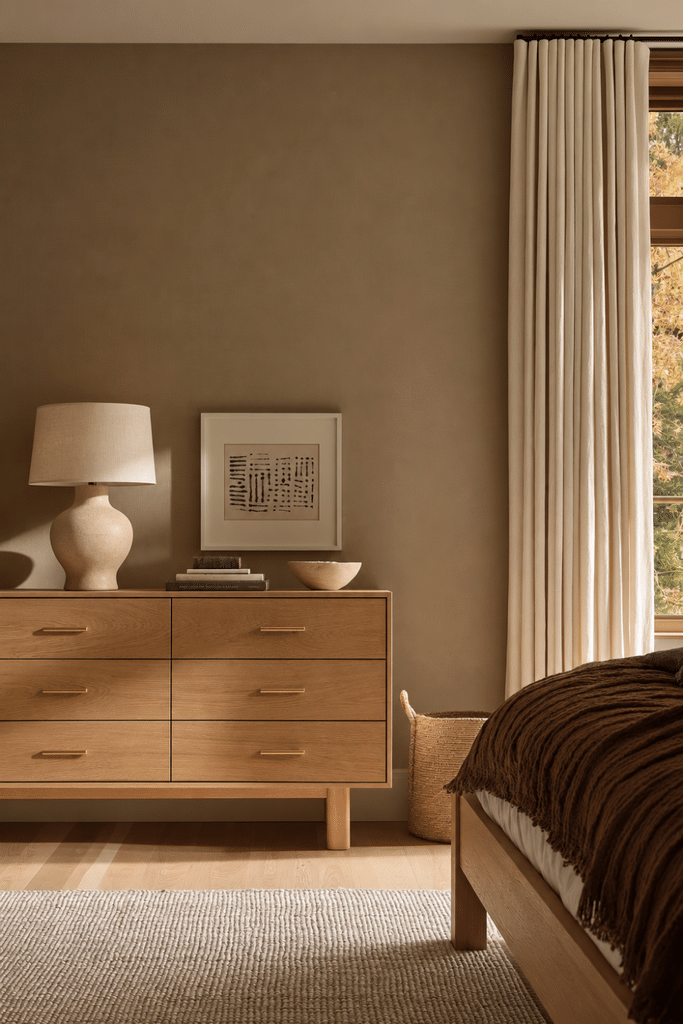
One reason a boutique hotel bedroom feels so peaceful is that very little in the room is competing for your attention. At home, laundry on a chair, chargers on the floor, products on the nightstand, and other small reminders of unfinished life can quietly make the room feel busier than we realize.
Boutique hotels create a clearer visual hierarchy. Furniture feels purposeful, surfaces are edited, and necessary items have a designated place. That gives the eye fewer things to process and makes the room feel calmer almost instantly.
To create more visual breathing room in your bedroom:
- Clear one or two major surfaces.
- Give chargers, books, and daily necessities a designated home.
- Create a proper landing place for worn clothing.
- Keep the bedside table simple.
- Hide cords where possible.
- Leave some negative space around decor.
A restful bedroom does not need to feel empty. It simply needs enough quiet space for your eyes, and your mind, to settle.
Styling Note: Before asking, What else does this room need? ask, What could I remove so the room has more room to breathe?
The Bed Creates a Sense of Enclosure
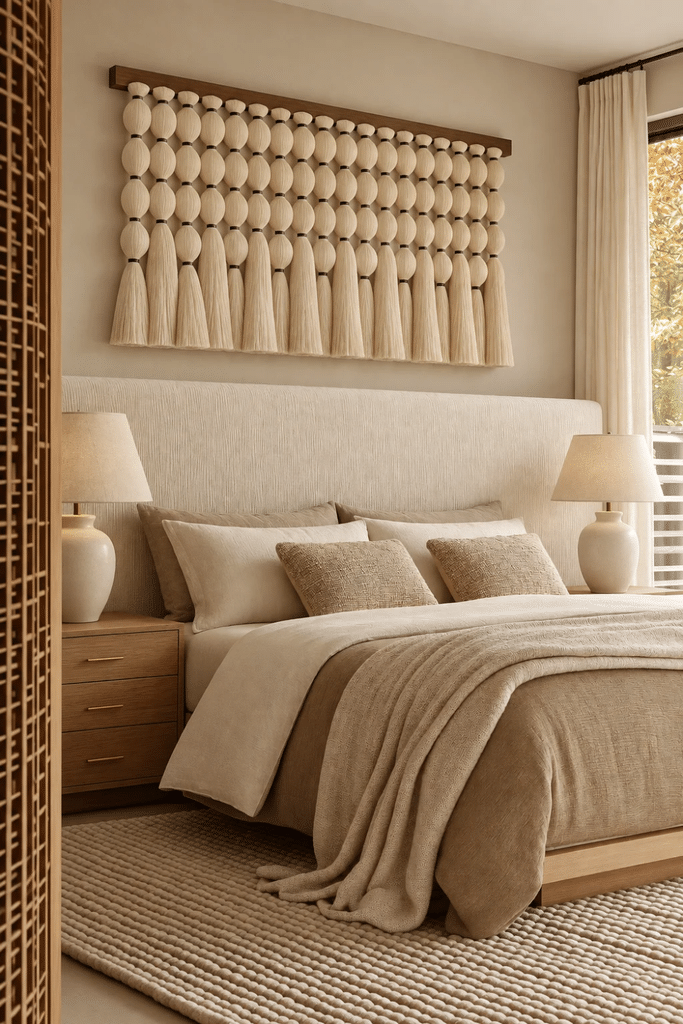
In a beautiful hotel room, the bed rarely feels like a piece of furniture simply pushed against a wall. It feels protected, anchored, and almost cocooned. That sense of enclosure is part of what makes the room feel so inviting, because the sleeping area reads as its own quiet destination rather than just one more zone in the room.
Designers create that feeling by framing the bed from every direction. A substantial upholstered headboard adds softness behind it, bedside tables and lamps create visual boundaries on either side, curtains soften the edges of the room, and a rug helps define the sleeping area from below. Layered bedding and repeated natural materials tie everything together, making the bed feel more settled and intentional.
To create a more cocooned feeling around your bed:
- Choose a larger or more substantial headboard if the wall feels visually empty.
- Use bedside lamps with enough presence to help frame the bed.
- Let the area rug extend beyond the sides and foot of the bed.
- Add fuller curtains to soften the perimeter of the room.
- Layer in one soft throw blanket for texture and warmth.
- Keep accent pillows limited and tactile rather than overly decorative.
When these elements work together, the bed begins to feel like a room within the room. The effect is subtle, but it can make the entire space feel more restful and complete.
Styling Note: If your bed still feels unfinished, look at the space around it before adding another pillow. The missing piece may be framing, not more decor.
Boutique Hotels Design the Evening, Not Just the Room
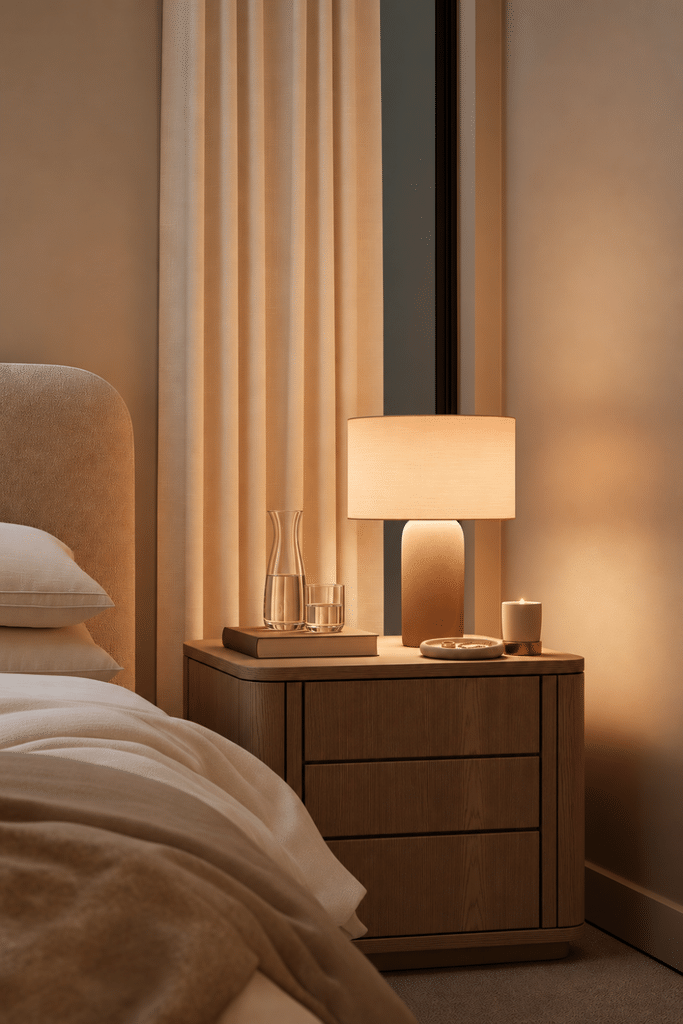
The best boutique hotel bedroom feels completely different at night than it does in the middle of the afternoon. During the day, the room feels open and functional. By evening, softer light, drawn curtains, and a few quiet details make the space feel more intimate, almost as if the room is gently winding down with you.
That shift is intentional. Instead of relying on one bright ceiling fixture, layered bedroom lighting creates different levels of illumination throughout the day. Bedside lamps and sconces lower the visual energy of the room, while curtains or shades help close off the outside world. Even a small bedside ritual, like placing a book or glass of water nearby, can reinforce the feeling that the active part of the day is ending.
To create a softer evening transition in your bedroom:
- Use lamps or sconces instead of relying on overhead lighting after dark.
- Choose warm light sources that feel gentle rather than stark.
- Close curtains or shades as part of your evening routine.
- Keep one or two small comforts within reach, such as a book, carafe, or candle.
- Create a simple sequence that helps the room shift from functional to restful.
A helpful rhythm to remember is:
Overhead light → lamps → curtains → bedside light → sleep
When the room changes with the evening, rest begins to feel less abrupt. The bedroom becomes part of the transition, helping you move from the pace of the day into something quieter.
Styling Note: Once evening begins, turn off the overhead fixture and let your lamps do the work. That one change can completely transform the mood of the room.
Great Hotel Rooms Use Restraint, Then Add One Memorable Moment
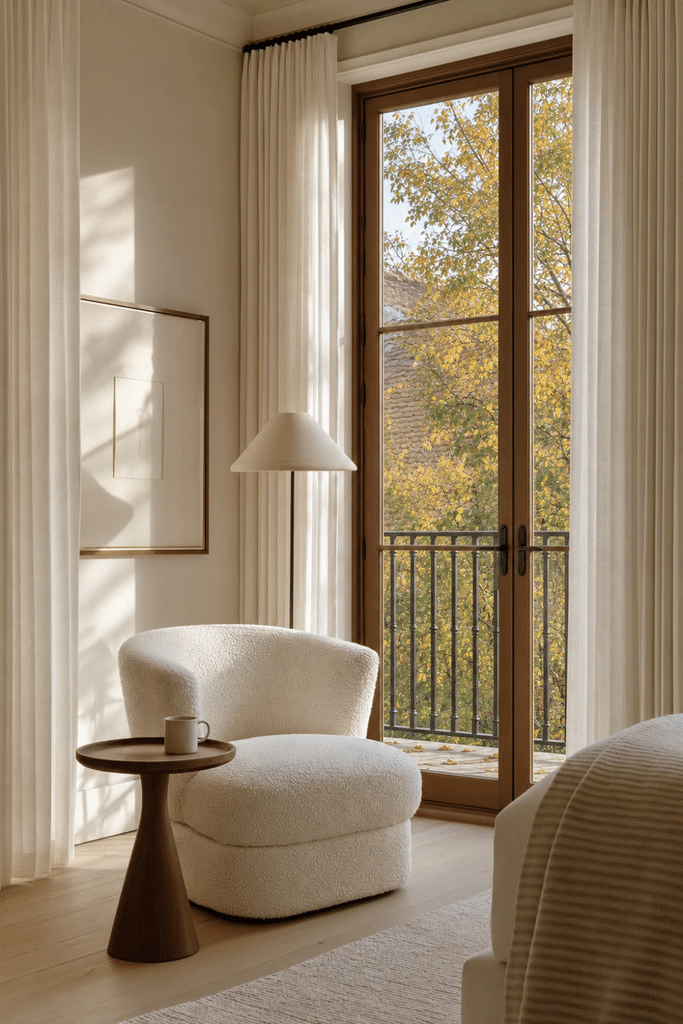
Some of the most beautiful hotel rooms are surprisingly quiet. The palette is restrained, the materials feel connected, and nothing is competing too hard for attention. Then there is one element that makes you pause, perhaps an oversized headboard, a sculptural pendant, or a beautiful piece of art that gives the room its personality.
That balance is what keeps a neutral room from feeling either bland or overly styled. Natural materials like wood, linen, wool, stone, and ceramic create warmth and depth, while one stronger feature gives the eye somewhere to land. When every object tries to be special, the room can feel busy. When one element leads, everything else can support it.
Try the formula: quiet foundation + one hero element.
- Keep the main palette cohesive and relatively simple.
- Repeat a few natural materials throughout the room for continuity.
- Choose one feature to carry more visual weight.
- Let surrounding decor stay quieter so that feature can stand out.
- Avoid adding extra accessories simply because a surface feels empty.
- Use texture to create richness without introducing too many competing colors or patterns.
This is one of the easiest ways to make a room feel more considered. Luxury bedroom styling often has less to do with how much is in the space and more to do with knowing when to stop.
Styling Note: Before buying something new, ask yourself: What should the eye notice first when I walk in? Once you know the answer, let the rest of the room play a supporting role.
Borrow the Hospitality Mindset, Not the Hotel Look
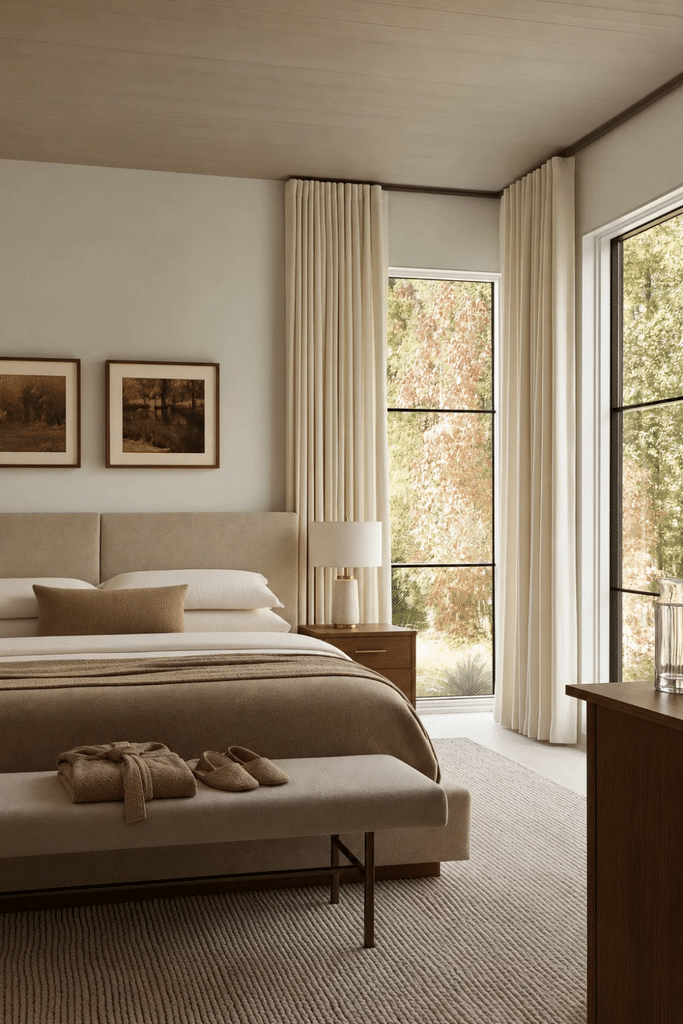
What makes a boutique hotel bedroom feel luxurious is often less about what it contains and more about how carefully comfort has been anticipated. Imagine preparing your bedroom for someone you deeply care about. You probably would not leave them with nowhere to set a glass of water, harsh lighting, scratchy bedding, or a chair buried under clothes.
That is the quiet strength of hospitality design. It notices small needs before they become annoyances. At home, that same mindset can turn a bedroom from a space you simply sleep in into one that feels genuinely supportive.
To make your bedroom feel more caring and considered:
- Choose bedding that feels good against your skin.
- Keep the nightstand clear enough for what you actually use.
- Make lighting easy to reach from the bed.
- Create a dedicated spot for water, a book, or your evening essentials.
- Add something soft underfoot for the first and last moments of the day.
- Make sure curtains or shades close easily and fully.
A thoughtful bedroom does not have to feel impersonal or overly polished. The goal is simply to give yourself the same consideration you would naturally offer a guest.
Styling Note: Ask yourself, What is one small inconvenience I tolerate in this room every night? Fix that first. It may make a bigger difference than adding another decorative object.
Bring Home the Feeling
Your bedroom does not need to look like a hotel to feel restorative. The most meaningful ideas to borrow are much simpler: reduce what competes for your attention, create a sleeping area that feels protected, let the room soften as evening arrives, use restraint, and make comfort easy to reach.
These shifts do not require a full makeover. You can make them gradually, one thoughtful choice at a time. Clear a surface. Add softer lighting. Rework the space around the bed. Replace one small inconvenience. Often, the details that make the biggest difference are the ones that help your room feel easier to live in.
The best lesson to borrow from a boutique hotel bedroom is not how to make your home look like somewhere else. It is how to make your own space feel more considered, restorative, and caring. And in many ways, the version you create at home can feel even better because it holds your routines, your memories, and the details that make it unmistakably yours.
Luxury at home is not simply being surrounded by beautiful things. It is living in a space that seems to have anticipated what you need.

Save this post to Pinterest for the next time you want to create a bedroom that feels calm, luxurious, and thoughtfully designed around your comfort.
Explore more Designer-Inspired ideas on Divine Decor Finds for beautiful ways to bring elevated, intentional design into your home. 🌿



Leave a Reply