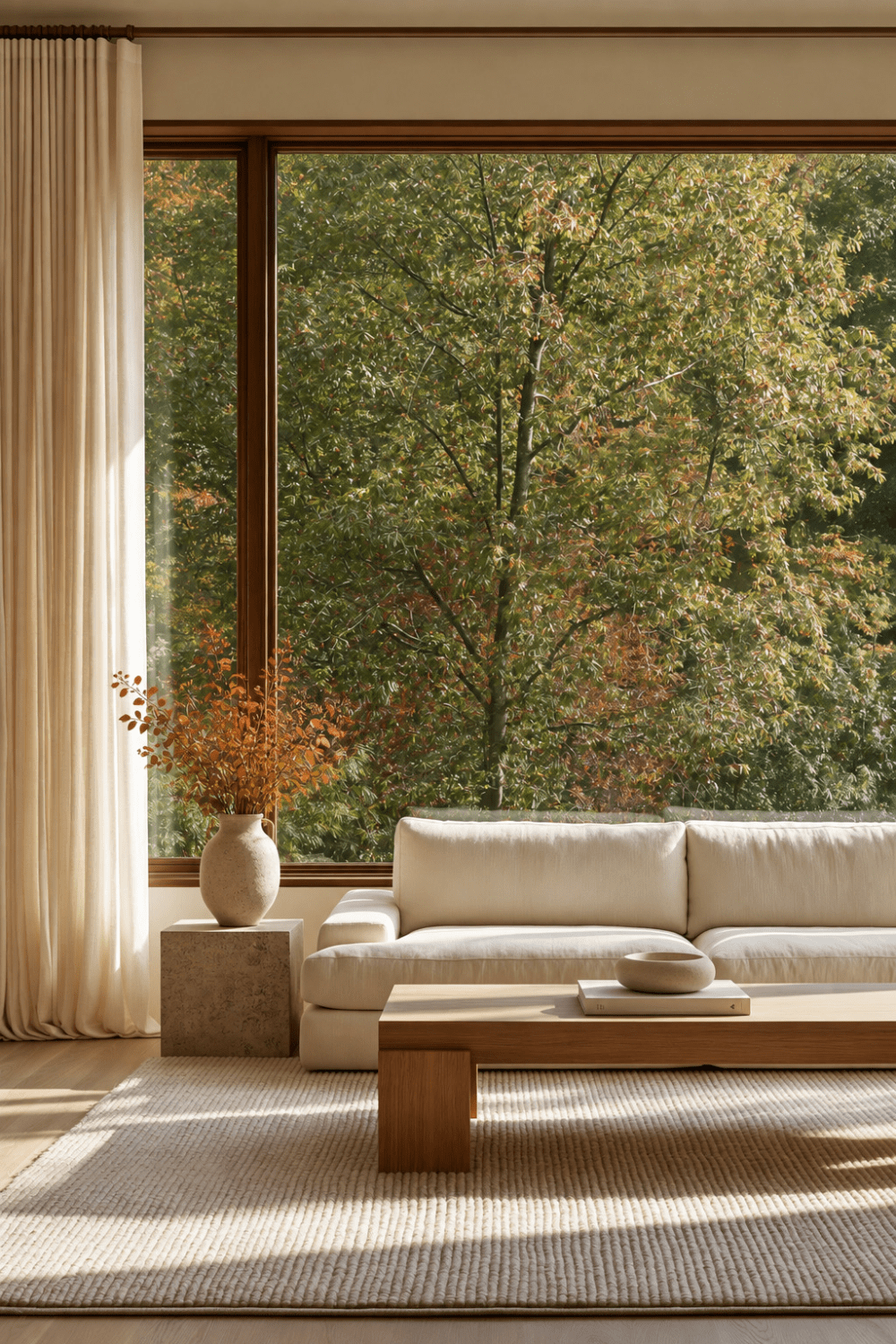
When a Room Feels Grounded Before You Know Why
A neutral room can be beautifully styled and still feel strangely flat. Then another room, using almost the same amount of color and decoration, feels warmer, richer, and far more inviting. One of the reasons decorating with natural materials can have such a noticeable effect is that the feeling of a room is shaped by more than what we initially see.
What surrounds us influences how a space holds light, how comfortable it feels to live in, and how connected it seems to the world outside. Those quieter details can create depth without requiring more furniture, stronger color, or layers of decoration.
In this post, we are looking beyond appearance to understand why certain choices make a home feel more grounded. Because sometimes the thing a room is missing is not another object at all. It is a different way of thinking about what the room is made from.
Let the Materials Change the Light
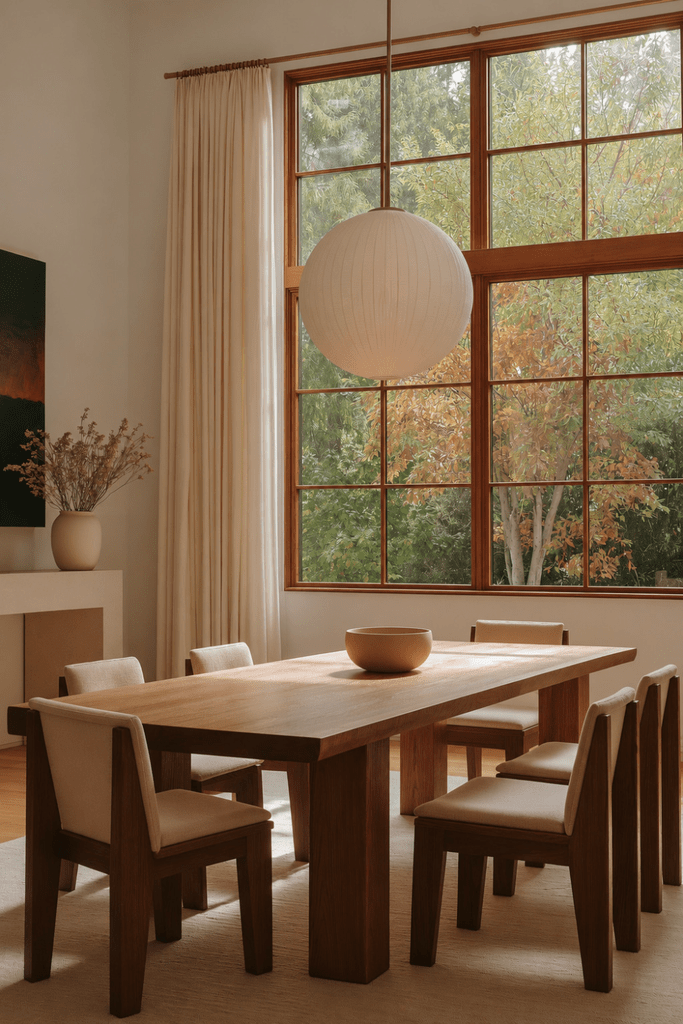
A room can feel softer in the morning, richer in the afternoon, and almost glowing just before sunset, even when nothing in it has moved. One of the quiet benefits of decorating with natural materials is that their surfaces respond to those shifts in daylight, giving the room a sense of movement and depth throughout the day.
Unlike perfectly uniform or highly reflective finishes, natural wood, honed stone, and softly woven surfaces contain subtle variations that catch, absorb, and diffuse light differently. That is why two neutral rooms can use nearly identical colors yet feel completely different. Sometimes the missing warmth is not another color at all, but a surface that gives the light something interesting to interact with.
To help your materials work beautifully with natural light:
- Place wood where daylight can skim across the grain so its tonal variation becomes more visible.
- Consider honed stone over a high-gloss finish when you want a softer, quieter reflection.
- Use linen curtains to filter strong daylight and create a gentler glow through the room.
- Balance matte and reflective finishes rather than letting every surface respond to light in the same way.
- Look at the room at different times of day before deciding it needs more color or decor.
When the surfaces in a room change subtly with the daylight, even a restrained neutral palette can feel layered and alive.
Styling Note: If a neutral room feels flat, try changing a finish before adding another color. Sometimes a little texture is all the light needs to create the depth you were looking for.
Design for More Than the Eye
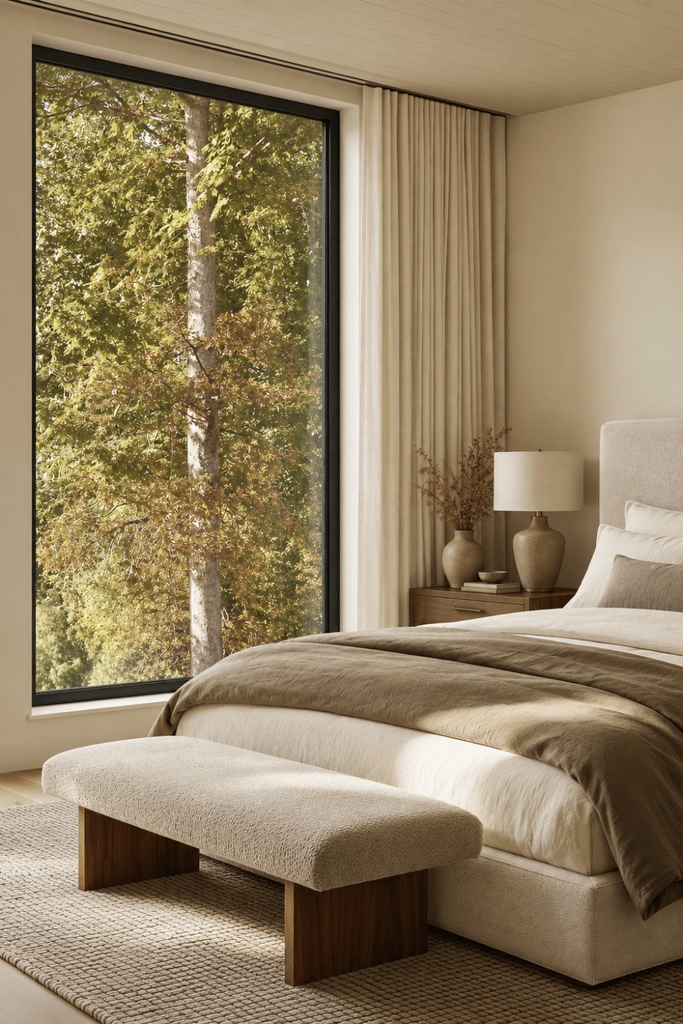
A room becomes more inviting when it gives you something to experience, not just something to admire. The softness of linen, the cool weight of stone, the warmth of wood beneath your hand, or the quiet underfoot of a wool rug can all shape how comfortable a space feels.
That is why texture matters beyond appearance. Different materials affect touch, temperature, sound, and even our sense of weight and stability. Soft furnishings can make a room feel quieter, while stone, timber, and handmade pottery add a sense of substance. The key is contrast. Too many soft surfaces can feel just as flat as a room made entirely of hard ones.
To create a room that feels good in more than one way:
- Add something you want to touch, such as washed linen, wool, boucle, or unfinished wood.
- Balance soft and solid materials so the room feels comfortable without losing structure.
- Use rugs, curtains, and upholstery to soften sound in spaces with harder surfaces.
- Introduce visual weight with stone, timber, or substantial handmade pottery.
- Layer natural fibers at different scales, from a wool rug to a linen accent pillow or woven detail.
When tactile materials are thoughtfully layered, a room begins to feel more inhabitable. It invites you to walk barefoot, settle into the sofa, or reach out and touch the grain of the table.
Styling Note: Include at least one surface in every room that you genuinely enjoy touching. That small sensory detail can make a beautiful space feel much more personal and comfortable.
Create a Material Hierarchy
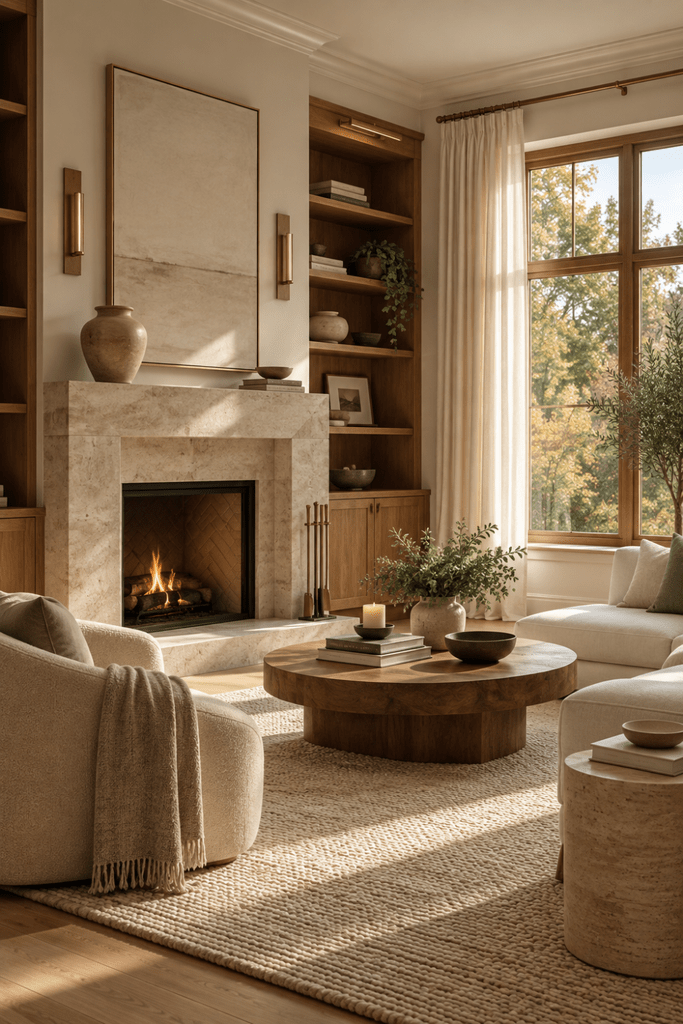
A room feels more grounded when a few materials are allowed to lead instead of everything competing for attention. That is one of the most useful ways to think about decorating with natural materials. Rather than filling a space with small pieces that all say “natural,” choose one substantial element to set the tone, then let the rest of the room support it.
Designers often create this sense of balance through hierarchy. A large oak table, a limestone fireplace, or a beautifully grained cabinet can become the anchor. Softer elements such as linen drapery or a wool rug keep that anchor from feeling too heavy, while smaller ceramic, woven, or aged brass accents add contrast without overwhelming the room.
Try this simple formula: Anchor + Softener + Contrast.
- Choose one material to lead. Let scale give it visual authority, such as a substantial wood table or stone fireplace.
- Add one softer layer. Linen curtains, wool textiles, or upholstered seating can balance heavier materials.
- Introduce one or two contrasting finishes. A handmade ceramic vessel or aged brass detail may be all the room needs.
- Repeat materials quietly. A small echo of the anchor material elsewhere can create cohesion without looking overly coordinated.
- Edit the smaller accessories. Too many baskets, branches, beads, trays, and tiny pottery pieces can make the room feel themed rather than grounded.
A clear material hierarchy gives the room breathing room. Instead of asking several decorative objects to create the atmosphere, the architecture and larger furnishings do more of the work, leaving the space feeling calmer, more intentional, and quietly confident.
Styling Note: Before buying another small natural accessory, ask whether one larger material choice could create a stronger effect.
Let the Materials Become Part of the Color Palette
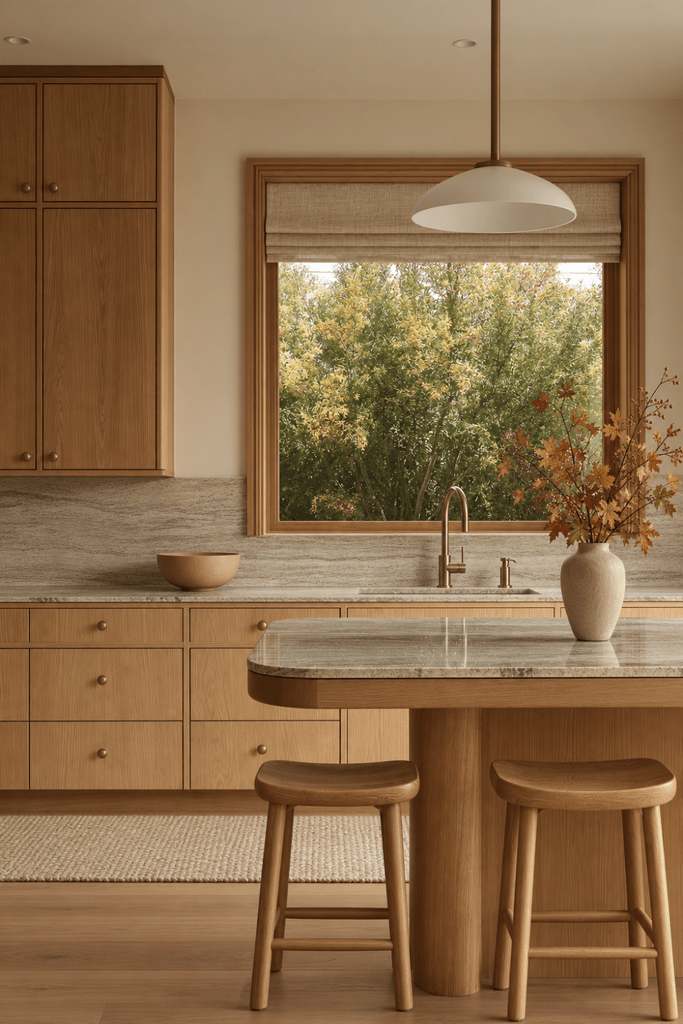
A neutral room does not need to rely on paint or decorative accents to feel rich with color. Some of the most beautiful shades are already present in the materials themselves. White oak can bring in wheat and honey, travertine can introduce sand and taupe, while flax linen and wool add soft variations of oatmeal, cream, and beige.
That built-in tonal variation is part of what gives natural finishes so much depth. Instead of reading as one flat neutral, wood grain, stone veining, woven fibers, and handmade pottery contain subtle shifts that make a room feel layered without making it busier.
Before adding another accent color, look for the palette already hiding in your materials:
- Pull from the wood grain. Repeat a warm honey, walnut, or soft brown tone in a nearby textile or accessory.
- Study the stone veining. Cream, taupe, gray, rust, or gold can quietly guide the rest of the room.
- Look closely at your textiles. Flax linen and wool often contain several tones within what first appears to be one neutral.
- Use pottery for subtle variation. Handmade finishes can introduce earthy color without feeling like a bold accent.
- Repeat one undertone softly. A shade echoed two or three times can create cohesion without making the room feel overly coordinated.
Nature rarely gives us one perfectly flat color, and interiors often feel more interesting when they follow the same principle. Letting those subtle tones repeat throughout a room can create warmth and harmony while keeping the overall palette calm.
Styling Note: Before introducing another accent color, look closely at the materials already in the room. The palette you need may already be there.
Bring Nature In Without Decorating About Nature
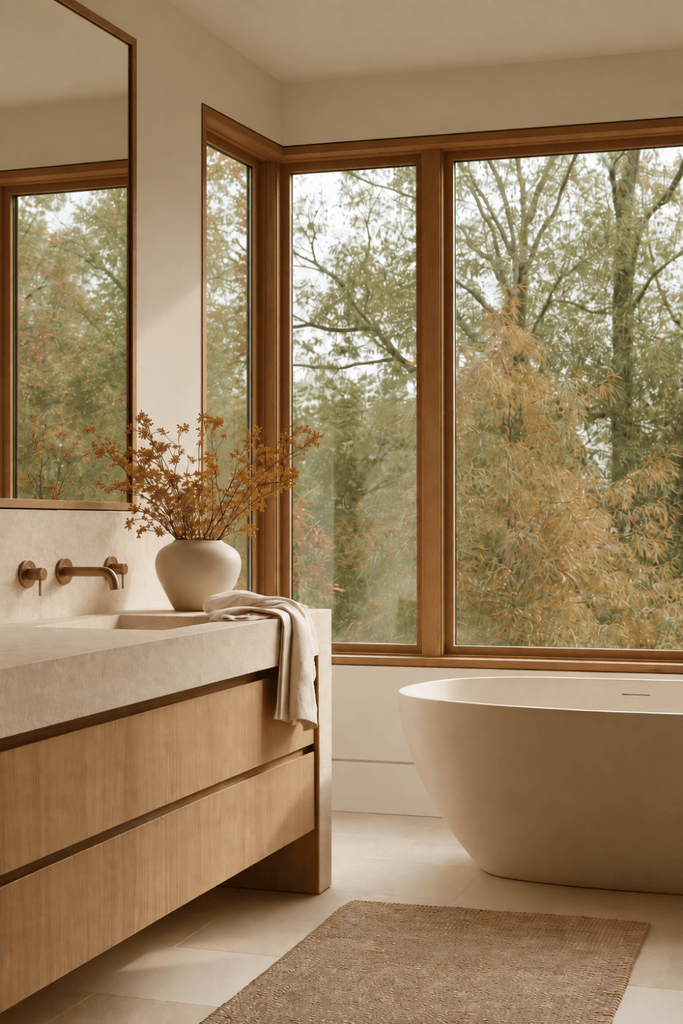
A room can feel deeply connected to the outdoors without being filled with plants, branches, or obvious botanical references. One of the most beautiful things about decorating with natural materials is that the connection is already built into what the room is made from. The grain of wood, coolness of stone, softness of linen, and irregular surface of handmade clay all carry a quiet reminder of the natural world.
That connection often feels strongest when it is understated. A substantial real wood piece can create more presence than several small accessories trying to communicate the same idea, while an outdoor view can become part of the room when the interior is restrained enough to let it be noticed. Leaving negative space around beautiful materials also gives their texture and character room to register.
You can strengthen that connection at almost any level of commitment:
- Start small with a handmade ceramic lamp, linen accent pillow, or simple wooden tray.
- Make a moderate change with linen curtains, a wool rug, or a solid wood side table.
- Invest in one substantial element such as an oak dining table, natural wood cabinetry, or stone fireplace surround.
- Let the outdoors participate. Keep the area around a beautiful window relatively quiet so the changing view becomes part of the design.
- Choose authenticity over abundance. One beautiful piece of real wood, stone, or handcrafted pottery can have more impact than several faux-natural accents.
The goal is not to make your home look like nature. It is to let the qualities we respond to in nature, variation, texture, simplicity, and authenticity, become part of how the room feels. When that happens, the connection can be present even when there is not a plant in sight.
Styling Note: When beautiful materials are already creating the atmosphere, give them room to breathe. You may need fewer accessories than you think.
Let the Room Be Grounded by What It Is Made From
A grounded home is not created by adding more. Often, it comes from choosing materials that bring warmth, texture, variation, and a quiet connection to nature into the room.
Decorating with natural materials does not require a full redesign. Start with the space that feels a little too flat or polished and change one thing, perhaps a wool rug, a solid wood table, linen curtains, or a piece of stone.
The rooms that feel closest to nature are not always filled with reminders of it. Sometimes that connection lives quietly in the grain of wood, the softness of linen, the coolness of stone, or the way afternoon light settles across a surface.
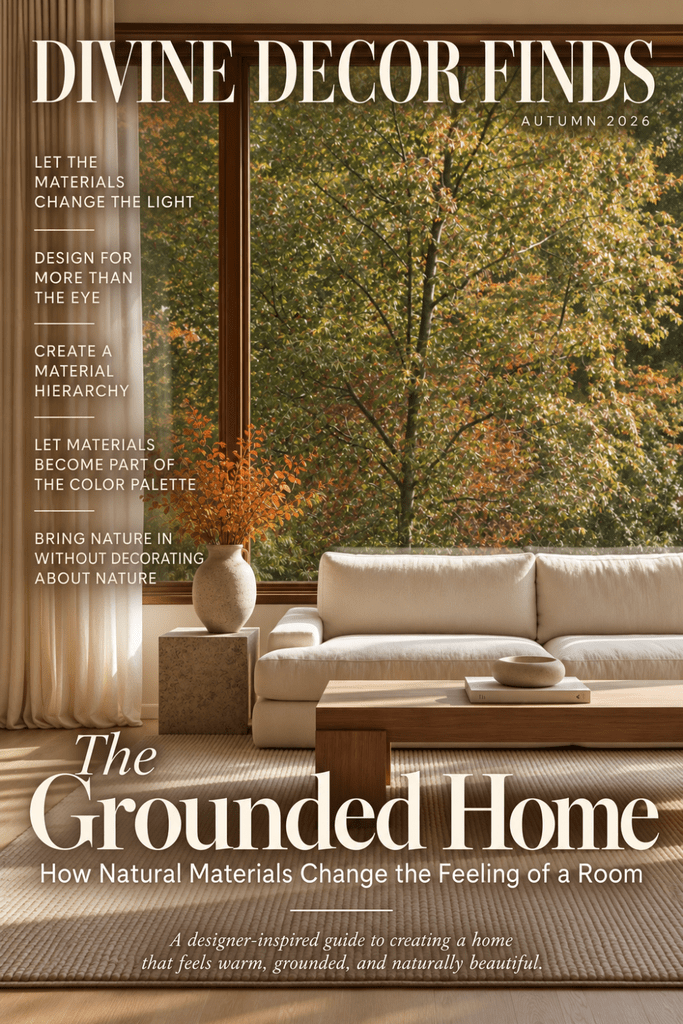
Save this post to Pinterest for the next time a room feels a little flat, when what it may really need is more warmth, texture, and connection to nature. 🤍
Explore more Discover Organic Modern inspiration on Divine Decor Finds for thoughtful ways to create a home that feels warm, grounded, and naturally beautiful. 🌿

Leave a Reply