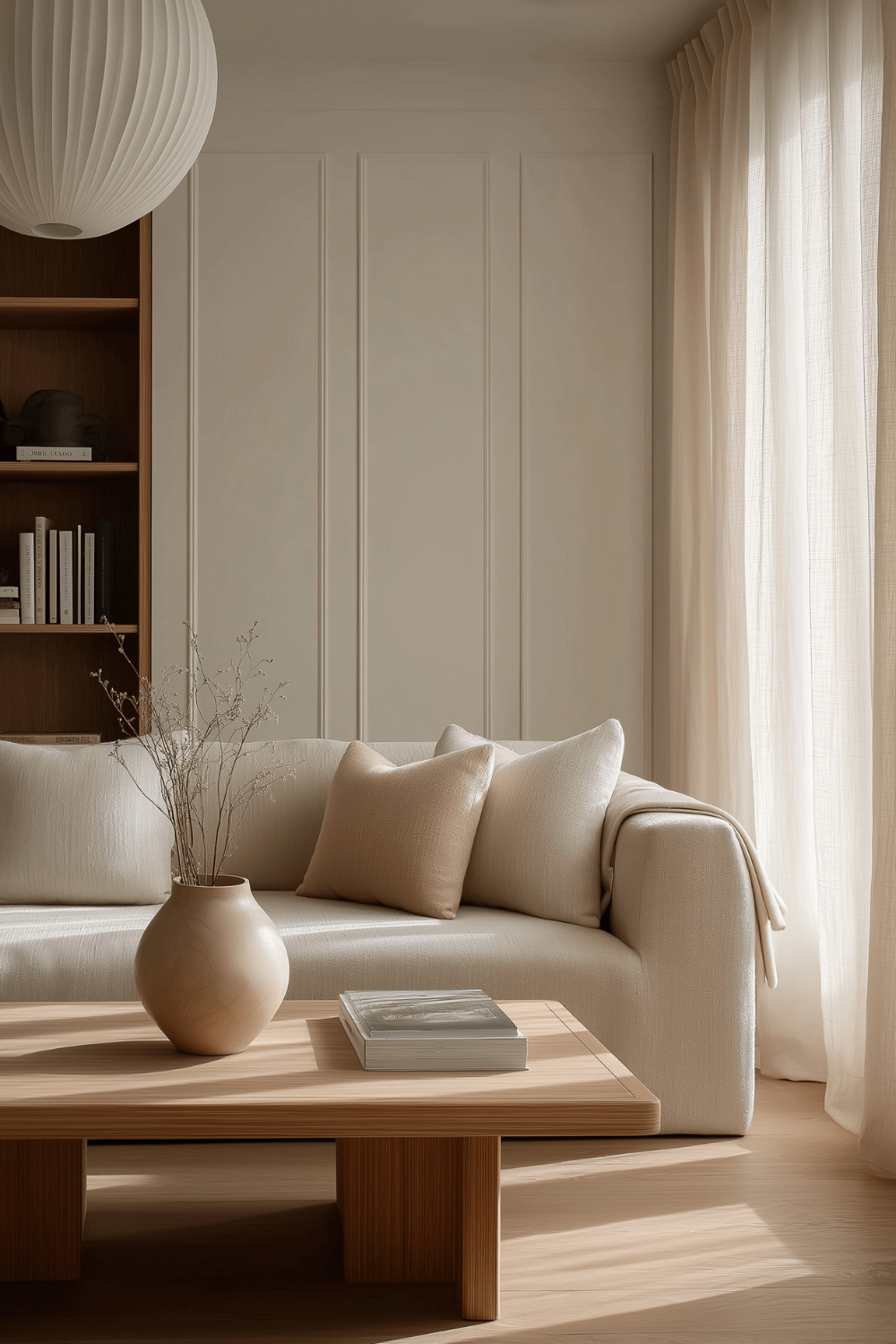
Why Less Can Feel Like More
Learning how to create a calm home often begins with a realization that feels almost counterintuitive: calm rarely comes from adding more. It comes from allowing there to be less. Many of us carry a quiet visual fatigue without realizing it. Surfaces become filled gradually over time. Decor is added with good intention. Layers accumulate. And even though each item may be beautiful on its own, together they create a subtle tension. The eye keeps searching for a place to rest, but never fully finds it.
We are often taught that improvement means addition. That if a space feels incomplete, the solution is to fill it. But calm does not come from fullness. It comes from relief. It comes from removing the visual pressure that builds when every surface asks for your attention. When you allow openness to exist, something begins to shift. The room feels lighter. Your nervous system softens. Empty space is not an absence of something. It is a presence of intention.
This is not about strict minimalism or forcing yourself to let go of things you love. It is about releasing the pressure to fill every corner and allowing your home to support how you want to feel. Calm is not created through perfection. It is created through intention.
Why Empty Space Feels So Good to the Nervous System
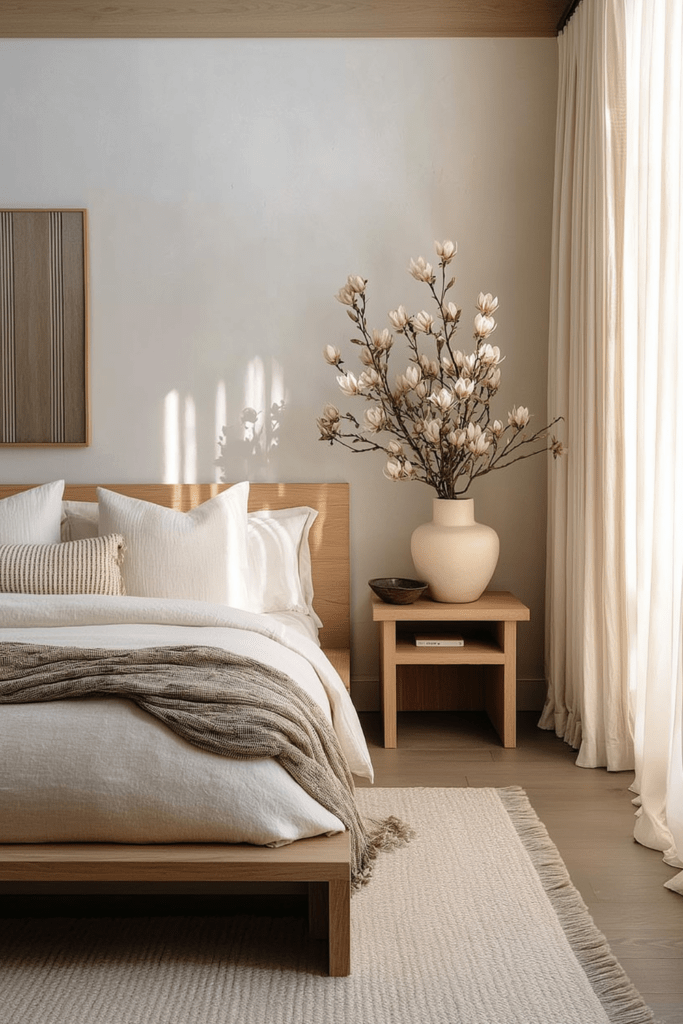
Your home is not just something you see. It is something your nervous system experiences.
Every object in your environment requires your brain to process information. Shapes, textures, and visual contrasts are constantly being interpreted, even when you are not consciously paying attention. When a space holds too many competing elements, your nervous system remains subtly engaged. The eye keeps moving. The brain keeps working. Over time, this creates a quiet form of fatigue that makes it harder to fully relax.
Visual simplicity allows your system to soften. When there is less to interpret, your brain no longer needs to remain in a state of low-level alertness. Open space creates visual quiet, and visual quiet supports emotional regulation.
This shift happens in small but meaningful ways:
- Fewer visual inputs reduce subtle, ongoing stress
- The eye has space to rest instead of constantly scanning
- The nervous system receives cues of safety and stability
- Mental tension softens without conscious effort
- Your environment begins to feel supportive rather than demanding
This is why calm interior design ideas often feel grounding the moment you enter a room. The sense of ease comes not from perfection, but from reduced stimulation. Nothing is competing for your attention. Nothing is asking more of you than necessary.
Minimalist interior styling supports this clarity by removing visual noise and allowing space to exist intentionally. Your home begins to feel quieter, lighter, and more aligned with how you want to feel within it.
Calm is not created by adding the right things. It is created by allowing there to be less.
Calm Is Often Created by Removing, Not Adding
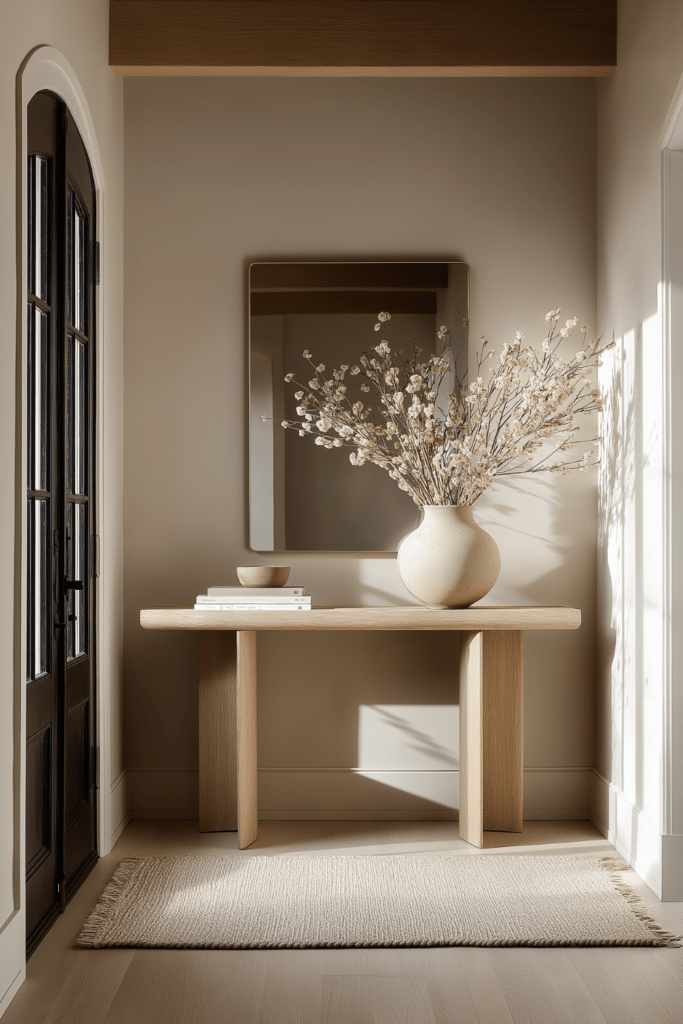
Many of us have been taught to approach home improvement through acquisition. If a space feels incomplete, the instinct is to add something new. A decorative object. A tray. Another styled arrangement. But over time, this accumulation often creates visual tension rather than relief. The eye keeps moving, searching for a place to rest.
In reality, how to create a calm home often begins with subtraction rather than addition. Removing visual noise creates immediate emotional relief. When fewer objects compete for your attention, the entire room begins to feel quieter and more supportive without anything new being introduced.
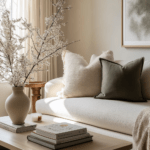
Editing your home allows meaningful pieces to stand out naturally. When a surface holds fewer objects, each one gains presence. A single ceramic vase feels intentional. A small stack of books feels grounded. Calm emerges when the eye has space to settle, and what remains is chosen with care.
You can begin with small, simple shifts:
- Clear one surface completely, such as a nightstand, console, or kitchen counter
- Remove purely decorative items that do not serve an emotional or functional purpose
- Reduce layered objects that compete for attention
- Allow one meaningful object to exist on its own
- Let empty space remain without feeling the need to fill it
These small edits create immediate visual quiet. When the eye can rest, your nervous system follows.
Style Tip: After clearing a surface, live with it empty for a few days before adding anything back. This allows you to experience the emotional difference openness creates. When you reintroduce an object, choose something with natural texture, such as ceramic, wood, or linen, so it adds warmth without reintroducing visual noise.
Calm is not something you add. It is something you allow by removing what no longer supports you.
Empty Space Allows Your Home to Breathe
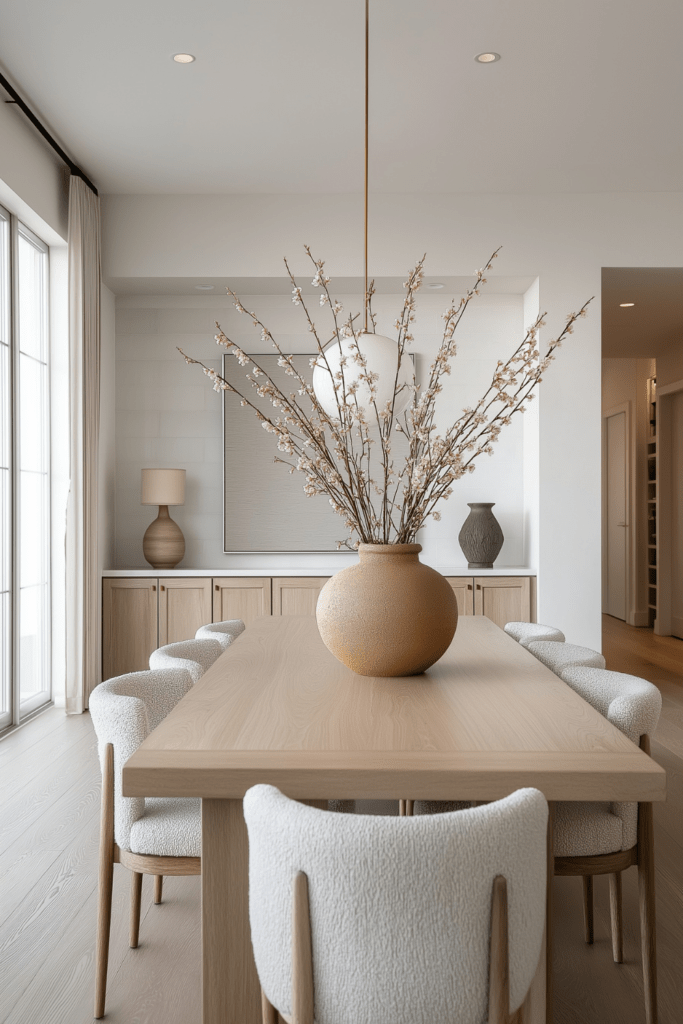
Empty space is often misunderstood as something unfinished, when in reality, it is one of the most powerful design elements you can use. It is not passive. It actively shapes how your home feels, how light moves, and how you move within it. When space is left open intentionally, your home begins to feel calmer, lighter, and more supportive.
One of the most immediate shifts happens in how you move through the space. Open areas create physical and visual ease:
- Clear pathways allow movement to feel natural and uninterrupted
- Surfaces feel calmer when they are not visually crowded
- The room no longer creates subtle resistance or tension
- Your body and attention can move more slowly and comfortably
Empty space also allows light to expand more freely. Instead of being absorbed or blocked by excess objects, light reflects across open surfaces, softening the entire room. Calm minimalist interiors often feel brighter and more peaceful because nothing interrupts this natural flow.
This openness enhances your appreciation of what remains:
- Natural textures like wood, linen, and ceramic feel more present
- Meaningful objects stand out without competing for attention
- Each element feels intentional rather than incidental
- The eye can move gently, creating a sense of visual rhythm
Minimalist interior styling uses empty space to create this rhythm, allowing the room to feel balanced and emotionally grounding. With fewer visual interruptions, your home begins to support slow living naturally. There is less to manage, less to adjust, and more space to simply exist.
Style Note: When styling a room, think of empty space as part of the composition, not something to fix. Leave space between objects, allow walls to remain partially open, and avoid pushing furniture too close together. This breathing room allows light, texture, and form to be experienced more fully.
When you allow your home to breathe, it begins to breathe with you.
Fewer Objects Create Stronger Emotional Anchors
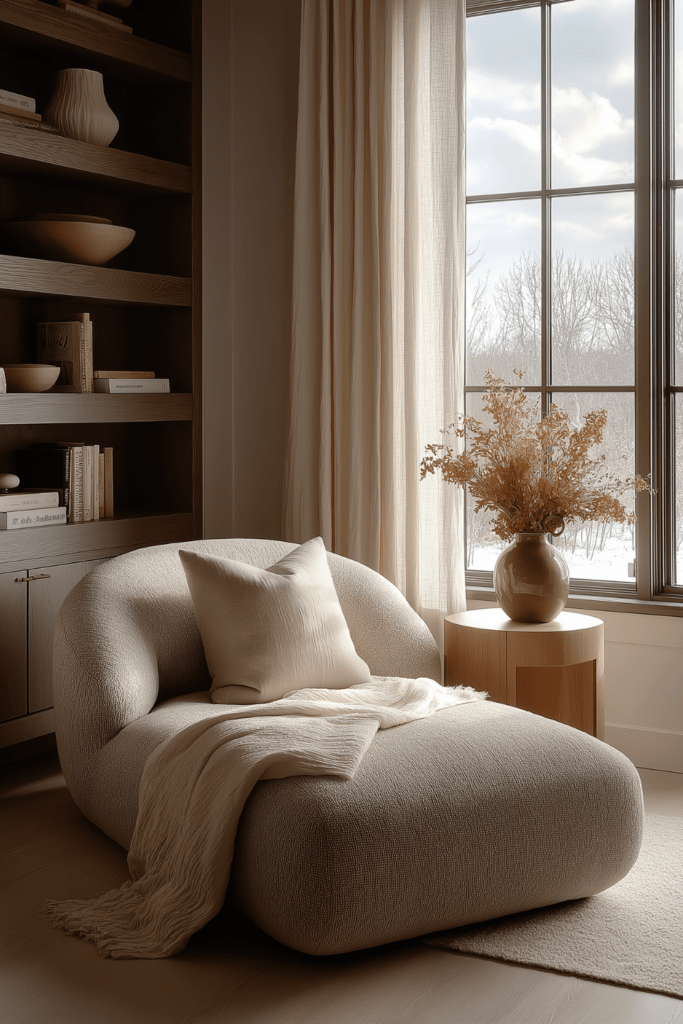
There is a common misconception that creating a calm home requires removing everything until a space feels empty. But in truth, how to create a calm home is not about removing everything, but about allowing what remains to matter more. Calm is not created through absence. It is created through clarity.
When objects are not crowded together, your relationship with them changes. Instead of blending into the background, they become visible again. You notice their texture. Their shape. The quiet presence they bring to the room. Meaningful pieces begin to feel grounded rather than decorative.
Intentional interior design strengthens this emotional connection by allowing each object to exist with purpose. When fewer items are present, your attention can settle more fully. You are no longer visually overwhelmed. You are able to experience your home in a slower, more conscious way.
This shift creates emotional anchors within your space:
- One ceramic vessel placed on its own becomes a focal point rather than visual noise
- One chair positioned near a window becomes an invitation to pause and rest
- One styled surface feels calm and intentional instead of crowded and performative
- Each object contributes to the emotional tone of the room
Creating calm through home decor is not about abundance. It is about choosing what truly belongs and allowing it to exist without competition. When everything is given equal visual weight, nothing feels meaningful. But when space surrounds an object, it gains presence.
This is where calm begins to deepen. Your home becomes less about styling and more about connection.
Style Note: Choose objects that carry emotional resonance or natural beauty, and give them space to stand alone. Materials like ceramic, wood, linen, and stone feel especially grounding when they are not surrounded by excess. Allow each piece to exist as part of the room’s quiet rhythm, rather than filling space out of habit.
Open Space Improves How You Move Through Your Home
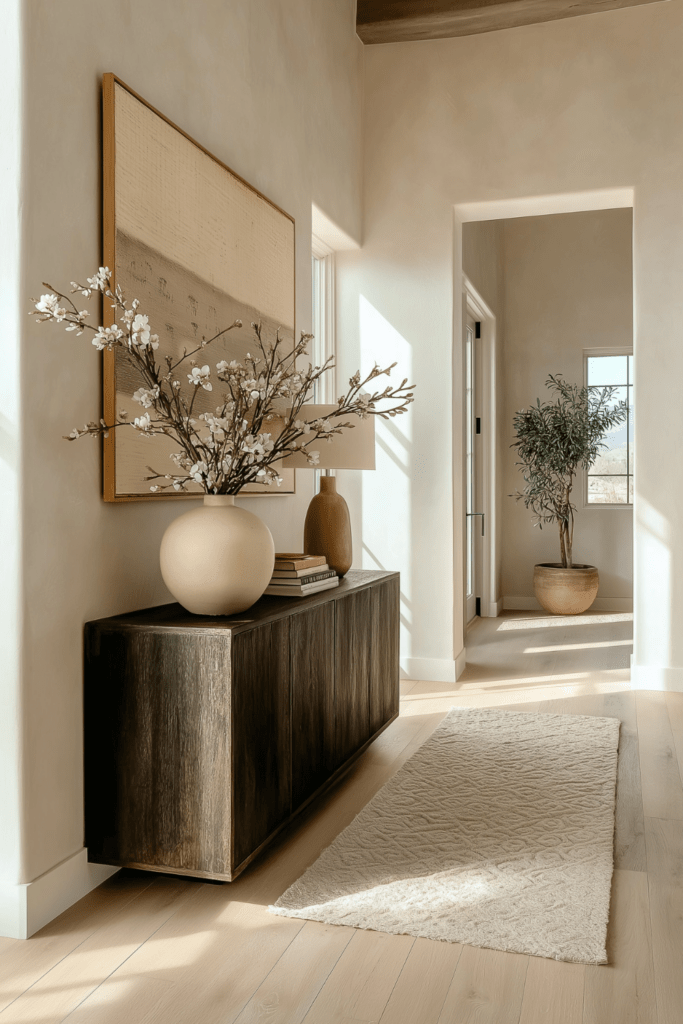
The way you move through your home shapes how you feel within it. When spaces are crowded or pathways are obstructed, your body must constantly adjust. You step around objects. You navigate tight areas. Even small interruptions create subtle friction that builds over time.
Open space removes that friction. When pathways are clear, movement becomes smoother and more intuitive. You are able to move naturally from one area to another without resistance. This physical ease creates emotional ease. Your home begins to feel supportive rather than demanding.
Visual openness plays an equally important role. When your eye can move freely through a room, your nervous system follows. Less visual clutter reduces the sense of urgency and tension that crowded spaces can create. Calm home styling ideas often prioritize openness because it allows both the body and mind to relax simultaneously.
This shift supports your daily routines in meaningful ways:
- Clear pathways allow you to move through your home without interruption
- Less visual clutter reduces subtle mental and physical tension
- Open areas create a sense of calm and spaciousness
- Your home feels easier to maintain and exist within
- Movement becomes slower, more conscious, and more grounded
Styling a peaceful home is not only about how it looks, but how it allows you to live. When your environment flows naturally, your routines begin to feel calmer and more supported. There is less resistance in your day. Less urgency. Less noise competing for your attention.
Visual openness also creates emotional openness. When your surroundings feel spacious, your internal state often reflects that same sense of ease. Your home becomes a place where you can move freely, think clearly, and settle more fully into yourself.
Style Note: Walk through your home slowly and notice where your movement feels interrupted. Look for areas where furniture, decor, or excess objects create subtle obstacles. Creating even small amounts of additional open space can dramatically improve how your home feels and functions.
When your home allows you to move with ease, calm becomes part of your daily rhythm.
Calm Homes Are Designed for Feeling, Not Filling
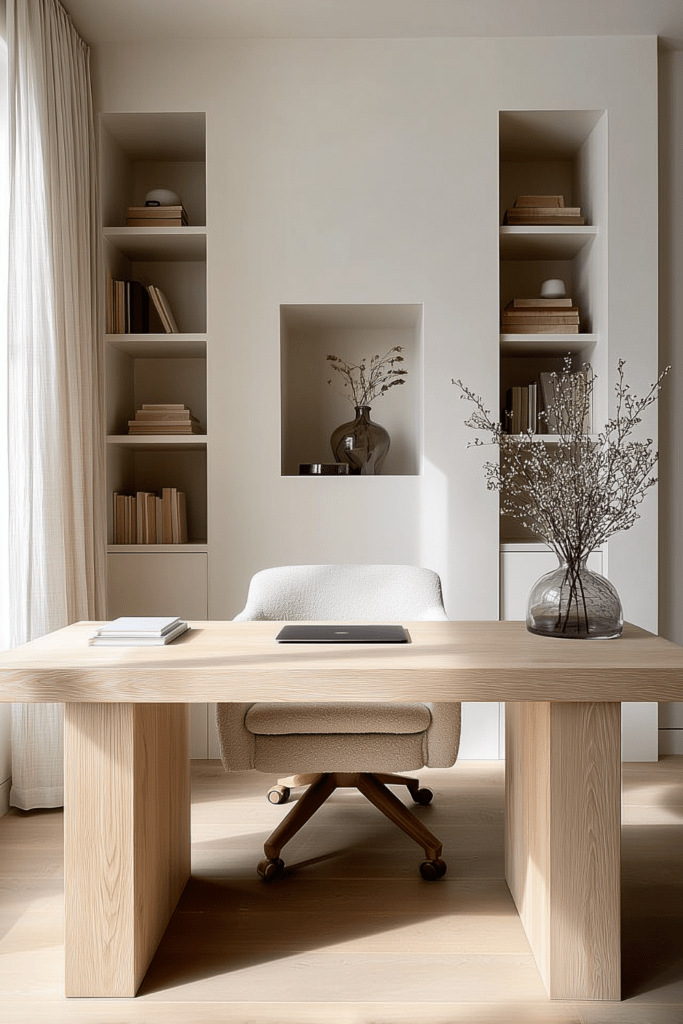
It is easy to believe that every surface needs something. That empty corners should be styled. That shelves should be filled. That a room is not complete until every space has been addressed. But over time, this mindset can turn your home into something you manage, rather than something that supports you.
In truth, how to create a calm home is ultimately about supporting how you feel, not filling every space. Calm homes are not designed to impress. They are designed to restore. Each choice is made with intention, not obligation. The goal is not to achieve visual fullness, but emotional ease.
When your home is guided by feeling, styling becomes supportive rather than performative. You are no longer adding objects simply to meet an expectation. Instead, you allow space to exist where space is needed. This restraint creates flexibility. Your home can evolve naturally over time without feeling crowded or fixed.
Slow living home styling embraces this openness. It allows your environment to remain adaptable, responding to your needs rather than dictating them. Peaceful home decor ideas are rooted in this same philosophy. Calm is created not by how much you add, but by how thoughtfully you choose.
This shift is reflected in simple but powerful ways:
- Empty corners are allowed to remain open and intentional
- Surfaces are styled sparingly, with room for visual breathing space
- Each object serves a purpose, emotionally or functionally
- Your home feels supportive rather than demanding your attention
Restraint creates longevity. When your home is not filled to capacity, it has room to evolve with you. You are free to adjust, refine, or simply exist within it without pressure.
Style Note: When you feel the urge to fill an empty space, pause and ask whether the space itself already serves a purpose. Often, openness is what allows a room to feel calm, balanced, and complete.
Calm is not created by filling your home. It is created by allowing it to support you.
The Power of Letting Your Home Be Enough
Calm is not created through constant refinement. It is created through intention, space, and restraint. When you release the pressure to improve every corner, your home begins to feel more supportive, exactly as it is.
Empty space allows your home to exist without demand. It gives your eye a place to rest. It gives your nervous system permission to soften. Over time, this openness creates a quiet emotional shift. Your home no longer feels like something you need to manage. It becomes a place that restores you.
Calm builds slowly, through small, thoughtful changes. You do not need to transform your entire home to feel the difference. Begin with something simple:
- Remove one unnecessary item from a surface you see every day
- Allow one space to remain open without feeling the need to fill it
- Notice how the room feels when your eye has space to rest
Less is often more supportive than more. When fewer objects compete for your attention, what remains begins to feel more meaningful.
Empty space is not missing something. It is making room for peace.
If this post resonated with you, save it to Pinterest for calm home inspiration, and explore more slow living and Organic Modern styling ideas here on Divine Decor Finds. 🤍
Leave a Reply